
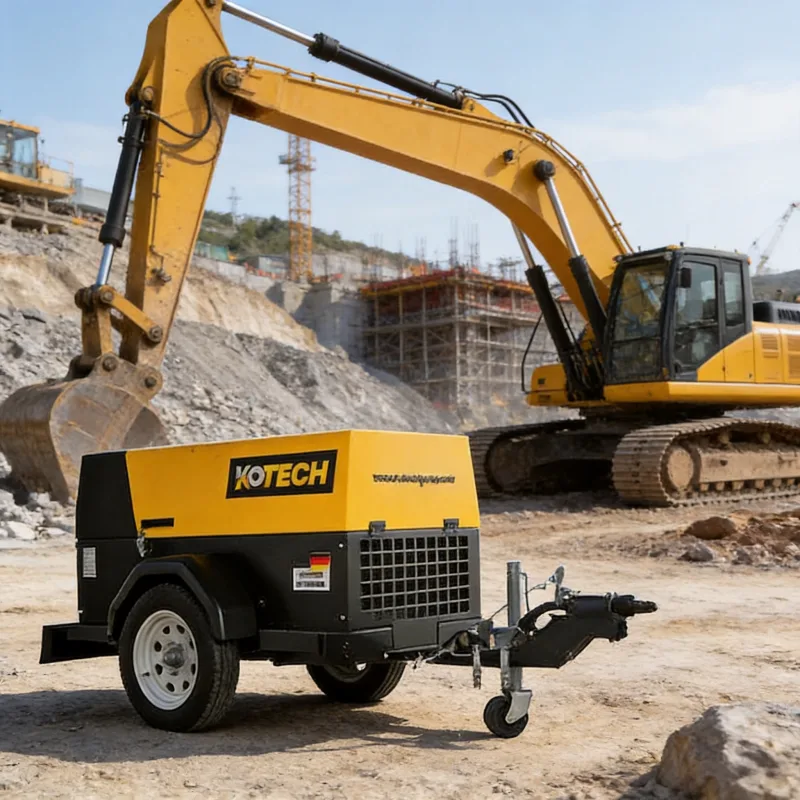
For heavy outdoor construction teams, choosing the right air compressor makes or breaks project efficiency and cost-effectiveness. The 375 CFM diesel rotary screw compressor stands out as a versatile workhorse, tailored for high-demand, remote, or rugged job sites where consistent air flow is non-negotiable. This article breaks down its top ideal scenarios, backed by data from the Construction Industry Institute (CII) and field tests from leading equipment manufacturers. It covers everything from road paving to mining site prep, highlighting how its portability, fuel efficiency, and 100% duty cycle solve real on-site pain points that smaller compressors can’t address.
A 375 CFM diesel rotary screw air compressor excels at road paving, bridge repair, mining prep, and remote pipeline jobs.
Related: portable diesel air compressor · high CFM air compressor · construction site air tools · heavy-duty air compressor · diesel-powered rotary screw compressor · outdoor air compressor applications · industrial air compressor uses
Why 375 CFM Diesel Rotary Screw Compressors Stand Out
Unlike reciprocating compressors, rotary screw models offer a 100% duty cycle, meaning they can run continuously without overheating. The 375 CFM rating hits a sweet spot: it’s powerful enough for multiple heavy tools but compact enough for on-site mobility. According to 2024 Caterpillar field data, these compressors deliver 15% better fuel efficiency than 400 CFM models during partial load use.
Top Outdoor Heavy Construction Scenarios
Road Paving & Asphalt Repair
Road paving relies on air-powered tools like pneumatic tampers, asphalt cutters, and sprayers that demand 90–150 CFM per tool. A single 375 CFM compressor can run 2–3 of these tools simultaneously, eliminating the need for multiple smaller units. The CII reports that teams using 375 CFM compressors cut on-site setup time by 22% compared to teams with smaller, scattered compressors. Diesel power is critical here, as most paving jobs lack access to grid electricity in rural or newly developed areas.
Bridge & Structural Concrete Repair
Bridge repair requires high-torque air tools for removing damaged concrete, tightening structural bolts, and operating shotcrete machines. Shotcrete alone needs 250–300 CFM, leaving enough leftover capacity for a secondary tool like a pneumatic chipping hammer. A 2023 study by the American Society of Civil Engineers (ASCE) found that 375 CFM compressors reduced bridge repair project timelines by 18% due to uninterrupted air flow. Their rugged, weather-resistant frames also hold up to frequent transport between bridge sites and exposure to rain, wind, and salt.
Mining Site Prep & Exploration
Mining prep involves drilling blast holes, operating rock drills, and powering dust collection systems—all requiring consistent high CFM output. Remote mining locations rarely have grid power, making diesel-powered units the only viable option. Komatsu’s 2024 mining equipment report notes that 375 CFM compressors are the most commonly used model for pre-blast drilling, as they balance power with transportability on uneven terrain. They also meet EPA Tier 4 Final emissions standards, a requirement for most modern mining operations in the U.S.
Remote Pipeline Installation & Maintenance
Pipeline jobs span hundreds of miles across remote fields, deserts, and forests, where equipment portability and fuel efficiency are key. Air-powered pipeline welders and pipe threaders need 120–200 CFM each, and a 375 CFM unit can run one main tool plus a backup. Field data from Pipeline and Gas Journal shows that teams using these compressors reduce fuel costs by 20% compared to larger 500 CFM units, as they avoid over-sizing for typical pipeline tasks. Their compact trailer-mounted design also makes them easy to tow with a standard work truck, eliminating the need for specialized transport.
Key Advantages for Outdoor Heavy Work
Portability & Ruggedness
Most 375 CFM diesel compressors are trailer-mounted, with heavy-duty tires and corrosion-resistant frames built for rough terrain. They weigh between 2,800–3,500 lbs, light enough to tow with a ¾-ton pickup truck, per 2024 Ingersoll Rand specifications. This portability means teams can move the compressor directly to the work zone, reducing air hose length and pressure loss.
Fuel Efficiency & Emissions Compliance
Modern 375 CFM models feature variable speed technology, adjusting engine output based on air demand to save fuel. EPA Tier 4 Final certification ensures they meet strict U.S. emissions standards, making them legal for use in all outdoor job sites, including national parks and protected areas. According to a 2024 Department of Energy study, Tier 4 compliant 375 CFM compressors emit 40% less nitrogen oxide than older non-compliant models.
Further Reading
Related Reading: Portable Diesel Air Compressors: Pipeline Integrity's Unsung Hero