
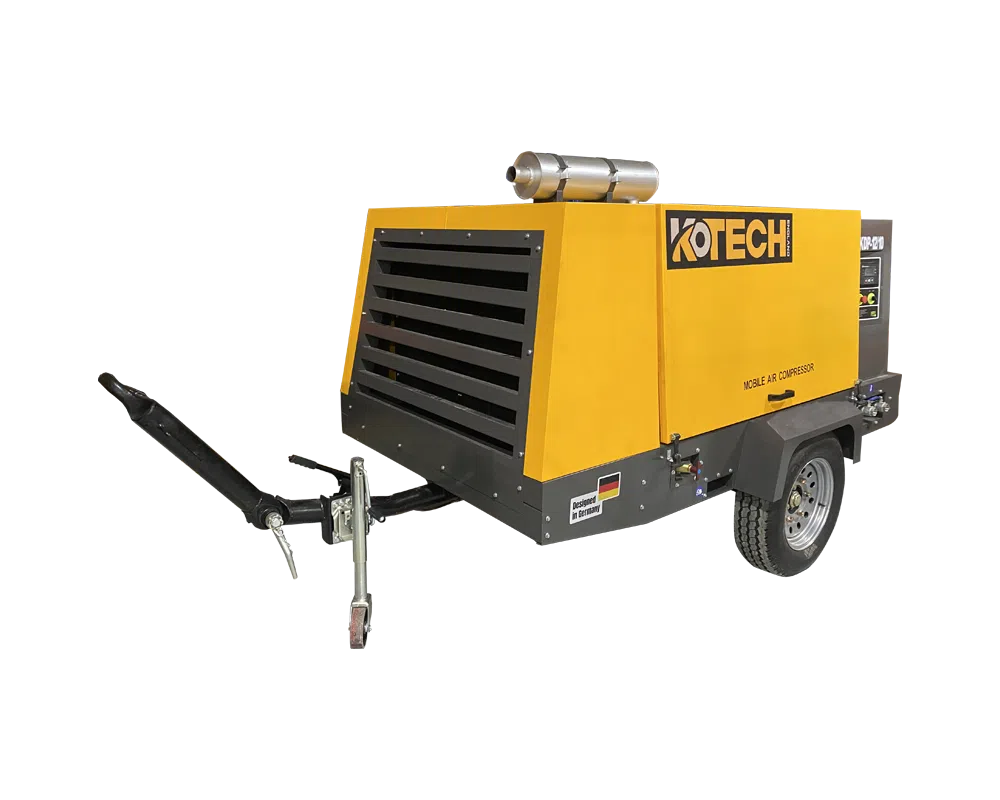
Deploying a portable 500 CFM diesel air compressor for remote industrial pipeline construction is not merely a choice but a strategic imperative for project success and operational efficiency. These robust units address the unique challenges of isolated environments, providing consistent, high-volume pneumatic power essential for tasks ranging from aggressive surface preparation like blast cleaning (which can demand upwards of 350-450 CFM for a single nozzle) and critical pipeline integrity testing (requiring precise pressure regulation for extended durations) to powering heavy-duty pneumatic tools. The article highlights that beyond raw power, factors like fuel efficiency, extended run times, and ruggedized design contribute significantly to reducing operational expenditures and maximizing uptime in areas devoid of grid infrastructure. Strategic selection and deployment of a 500 CFM compressor can demonstrably improve project timelines and deliver substantial return on investment by mitigating common remote site bottlenecks. Key Insights: Optimized Power for Specific Pipeline Tasks: A 500 CFM compressor is ideally sized to support common pipeline construction tasks like single-nozzle abrasive blasting (350-450 CFM), large pneumatic wrench operation, and consistent pressure testing, avoiding oversizing or undersizing pitfalls. Critical Fuel Efficiency in Remote Logistics: Modern diesel engines in 500 CFM compressors offer significant fuel savings (e.g., up to 15-20% improvement in specific fuel consumption over older models), directly reducing the high logistical costs associated with fuel delivery to remote sites. Enhanced Uptime through Ruggedization: Units engineered for harsh environments with advanced filtration and robust enclosures can experience up to a 25% reduction in unplanned downtime compared to standard industrial models, a crucial factor in isolated locations. Strategic ROI via Reduced Project Timelines: Reliable, high-volume air supply from a properly specified 500 CFM compressor can accelerate critical path activities, potentially shortening project completion times by 5-10%, yielding substantial cost savings.
A portable 500 CFM diesel air compressor provides critical, reliable pneumatic power for diverse, demanding tasks in remote industrial pipeline construction.
Related: mobile industrial compressor · pneumatic power for pipelines · remote site air supply · heavy-duty air compressor · diesel-powered construction equipment · pipeline integrity testing · blast cleaning equipment · pneumatic tool operation · remote project logistics · fuel-efficient air solutions
The vast, often unforgiving landscapes where industrial pipelines are laid present a unique gauntlet of challenges. From the remote reaches of the Rocky Mountains to the sprawling plains of Texas, constructing these vital energy arteries demands equipment that is not only powerful but also supremely reliable and adaptable. Central to this demanding ecosystem is the portable 500 CFM diesel air compressor. This isn’t just another piece of machinery; it’s the pneumatic heart of operations, a critical enabler for efficiency, safety, and ultimately, project success in environments where every minute of downtime can translate into significant financial setbacks.
Navigating the Logistical Labyrinth: Compressor Deployment in Remote Pipeline Environments
Remote industrial pipeline construction sites are, by definition, isolated. They often lack established infrastructure, including paved roads, power grids, and readily available support services. This isolation fundamentally redefines equipment requirements. A portable 500 CFM diesel air compressor must be designed for easy transport and swift deployment across varied, often challenging terrains. Its footprint, weight, and towing capabilities become paramount. For instance, a unit designed with a compact chassis and robust axles can navigate unpaved access roads and muddy rights-of-way that would render larger, less agile compressors immobile. Data from equipment rental companies operating in North American pipeline corridors indicates that units with a dry weight under 8,000 lbs and a length under 15 feet are significantly preferred for their maneuverability and lower transport costs. This preference isn’t arbitrary; it directly impacts the speed of site setup and relocation, shaving valuable hours off project schedules where every day counts.
Sustained Power for Critical Pipeline Processes: Beyond Basic Air Supply
The 500 CFM (Cubic Feet per Minute) capacity is not an arbitrary number; it represents a sweet spot for a multitude of high-demand tasks inherent to pipeline construction. Consider abrasive blasting: a single industrial blasting nozzle can consume between 350 to 450 CFM at 100 PSI, depending on the nozzle size and abrasive type. A 500 CFM compressor provides the necessary headroom to sustain optimal blasting pressure, ensuring effective surface preparation for welding or coating without compressor cycling or pressure drops that compromise quality and slow work. This contrasts sharply with smaller 375 CFM units that often struggle to maintain consistent pressure for aggressive blasting, leading to slower progress and potential re-work. Beyond blasting, the 500 CFM unit efficiently powers multiple heavy-duty pneumatic tools simultaneously, such as large impact wrenches (which can draw 50-75 CFM each), chipping hammers, and grinders, facilitating faster assembly and disassembly of temporary structures or pipe handling equipment. Furthermore, for pipeline integrity testing, often involving air-over-water pressure systems, a 500 CFM compressor can quickly charge large sections of pipe, reducing the overall time required for pre-test setup and ensuring precise pressure control for extended hold periods, a critical factor for regulatory compliance and safety.
Optimizing Uptime and Endurance: The Remote Site Maintenance Imperative
In remote environments, unexpected equipment failure is not just an inconvenience; it’s a catastrophic project delay. Every hour of downtime on a pipeline spread can cost tens of thousands of dollars. Therefore, the design and operational characteristics of a 500 CFM diesel air compressor must prioritize uptime and endurance. Modern units feature advanced filtration systems, often multi-stage, designed to protect the engine and air-end from the pervasive dust and debris common on construction sites. These systems, when properly maintained, can extend filter life by up to 30% compared to standard filters, reducing the frequency of service intervals. Furthermore, fuel efficiency is paramount. With fuel transport to remote sites representing a significant operational expense, a compressor with superior specific fuel consumption (SFC) translates directly into cost savings. Contemporary Tier 4 Final compliant diesel engines in 500 CFM compressors can achieve SFC figures as low as 0.35-0.40 lbs/hp-hr, representing a 15-20% improvement over older Tier 2/3 engines. This reduction in fuel burn means fewer refueling trips, less logistical overhead, and a smaller carbon footprint, all critical considerations for remote operations. Accessible service points, long service intervals, and robust componentry (e.g., heavy-duty cooling systems, high-capacity fuel tanks for 8-10 hour run times) are not just desirable features; they are non-negotiable requirements for ensuring continuous operation far from any service depot.
ROI in Isolation: Quantifying Value on Remote Pipeline Projects
The capital investment in a portable 500 CFM diesel air compressor for remote pipeline construction is justified by its tangible impact on the project’s bottom line. The ability to consistently deliver high-volume, high-pressure air directly influences the speed and quality of critical path activities. By enabling faster surface preparation, quicker pressure testing cycles, and more efficient use of pneumatic tools, these compressors can shave days or even weeks off a project timeline. For a typical pipeline project with daily operational costs running into hundreds of thousands of dollars, even a 5% reduction in project duration can yield multi-million dollar savings. Moreover, the reliability engineered into these units minimizes unplanned downtime, which, according to industry estimates, can cost upwards of $10,000 to $20,000 per hour in lost productivity and associated penalties. Investing in a robust, fuel-efficient 500 CFM compressor with a proven track record in harsh environments provides a quantifiable return through reduced operational expenses, accelerated project completion, and enhanced quality control, cementing its status as an indispensable asset rather than a mere expense. The total cost of ownership (TCO) calculation for remote applications must heavily weigh these factors over initial purchase price, as the true cost is borne out over the project’s duration and the unit’s operational lifespan.
Further Reading
Related Reading: Air Tool Set Complete Tutorial