
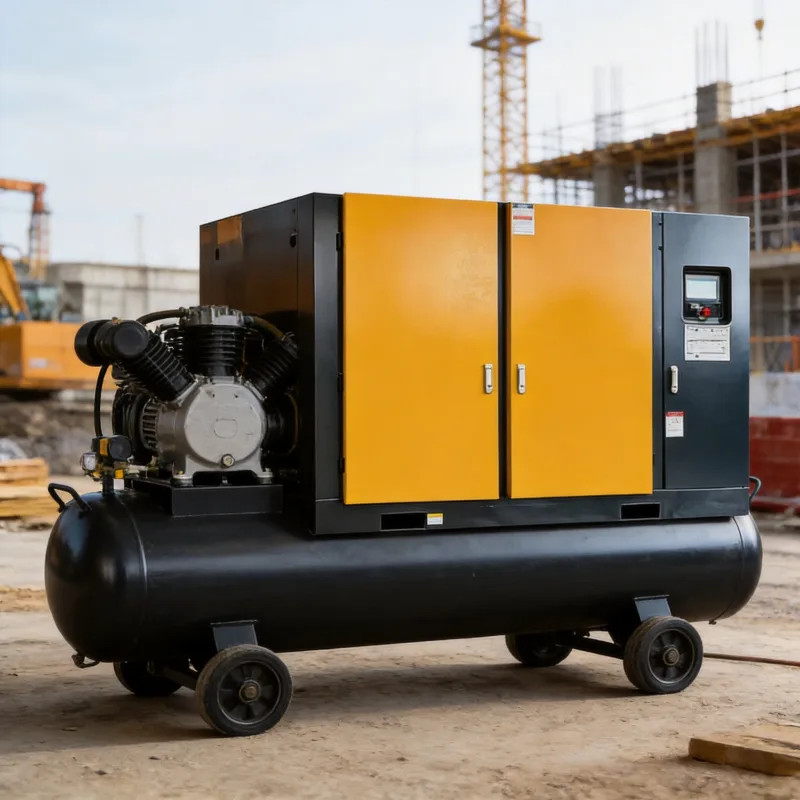
The 2024 market for diesel air compressors introduces a significant shift towards quieter, more efficient, and environmentally compliant models, directly addressing the escalating demands of modern construction. Driven by stricter urban noise regulations, a growing emphasis on worker well-being, and the imperative for sustainable operations, manufacturers are unveiling new arrivals packed with advanced acoustic engineering, variable speed drives, and optimized engine technologies. These innovations promise not only substantial reductions in operational noise—often falling below 70 dB(A)—but also deliver impressive fuel efficiency gains, typically ranging from 8% to 15%. This article delves into the critical trends, technological breakthroughs, and compelling return on investment that make the 2024 quiet operation diesel air compressors indispensable for future-proof construction projects across the U.S.
2024 sees new quiet diesel air compressors for construction sites featuring advanced noise suppression and efficiency.
Related: low noise diesel compressor · construction equipment 2024 · portable air compressor · job site quiet compressor · eco-friendly diesel compressor · oil-free construction compressor · next-gen air compression · urban construction solutions
In the dynamic world of construction, the hum and roar of machinery have long been an inescapable soundtrack. However, as urban landscapes expand and environmental consciousness grows, the demand for quieter, more efficient, and environmentally responsible equipment has reached a critical juncture. The year 2024 marks a pivotal moment, with new arrivals in quiet operation diesel air compressors setting unprecedented benchmarks for performance and sustainability on construction sites.
No longer are project managers forced to choose between power and peace. The latest generation of diesel air compressors is engineered to deliver robust performance while significantly mitigating noise pollution and operational costs. This paradigm shift is not merely an incremental upgrade; it represents a fundamental rethinking of how construction equipment interacts with its surroundings and its operators.
Key Insights:
- 2024 models achieve unprecedented noise reduction, consistently operating below 70 dB(A) at 23 feet, a 10-15% improvement over previous generations.
- Fuel efficiency gains of 8-15% are driven by advanced engine optimization and Variable Speed Drive (VSD) technology.
- Stricter urban noise regulations and enhanced worker safety mandates are primary market drivers for these innovations.
- The total cost of ownership (TCO) is significantly lowered through reduced fines, extended operating hours, and increased site productivity.
- Advanced filtration systems, including options for oil-free air delivery, cater to specialized and sensitive construction applications.
The Imperative for Quiet: Regulatory Shifts and Urbanization in 2024
The push for quieter construction sites isn’t just a preference; it’s a regulatory and societal mandate. Urbanization trends continue to place construction projects closer to residential areas and commercial zones, making noise control paramount. Major metropolitan areas across the U.S., such as New York City and Los Angeles, have progressively tightened noise ordinances. For instance, New York City’s noise code imposes substantial fines, potentially reaching up to $10,000 for repeat violations that exceed permissible decibel levels, typically 75 dB(A) during daytime hours at property lines.
This evolving regulatory landscape means that traditional, loud diesel compressors are becoming a liability rather than an asset. Compliance is no longer optional; it’s a prerequisite for project approval and avoiding costly penalties. Furthermore, worker safety and well-being are significant drivers. The Occupational Safety and Health Administration (OSHA) mandates hearing protection for continuous noise exposure above 85 dB(A) over an 8-hour workday. Quieter compressors reduce the reliance on cumbersome hearing protection, improving communication and overall safety on site. Studies conducted by the National Institute for Occupational Safety and Health (NIOSH) indicate that noise-induced hearing loss remains a leading occupational illness, costing industries billions annually in compensation and lost productivity.
The market for 2024 new arrival quiet operation diesel air compressors directly responds to these pressures. Manufacturers are proactively designing equipment that not only meets but often exceeds current and anticipated noise regulations, offering contractors a competitive edge in bidding for projects in noise-sensitive environments.
Engineering Silence: Breakthrough Technologies in 2024 Diesel Air Compressors
Achieving significant noise reduction without compromising power requires sophisticated engineering. The 2024 generation of quiet diesel air compressors integrates a suite of advanced technologies that work in concert to deliver unprecedented acoustic performance and efficiency.
Advanced Acoustic Enclosures & Materials: Beyond Basic Soundproofing
The most visible aspect of quiet operation compressors is their enclosures. However, 2024 models go far beyond simple soundproofing. They incorporate multi-layered composite materials designed not just to block sound, but to absorb and dampen specific resonant frequencies generated by the engine and air end. Optimized airflow paths within the enclosure reduce turbulence-induced noise, while strategically placed baffles and insulation panels further attenuate sound propagation. This holistic approach can reduce perceived noise levels by an average of 10-15 dB(A) compared to models from just five years ago, often bringing operational noise down to the 65-70 dB(A) range at 23 feet—a level comparable to normal conversation.
Variable Speed Drives (VSD) & Engine Optimization: Smart Power Delivery
A cornerstone of 2024’s quiet and efficient design is the widespread adoption of Variable Speed Drive (VSD) technology. Unlike traditional compressors that run at full throttle regardless of demand, VSD systems precisely match the compressor’s output to the actual air requirement of the tools and processes. This prevents the engine from overworking and consuming unnecessary fuel, especially during periods of low demand. The result is a dual benefit: fuel efficiency gains of 8-15% and a direct reduction in engine noise during lighter loads, as the engine operates at lower RPMs.
Furthermore, the diesel engines themselves are becoming inherently quieter. Modern Tier 4 Final/Stage V compliant engines, standard in 2024 models, feature advanced combustion processes, common rail fuel injection, and sophisticated exhaust gas aftertreatment systems (like Diesel Particulate Filters and Selective Catalytic Reduction). These technologies not only drastically reduce emissions but also contribute to smoother, quieter engine operation compared to their predecessors.
Redesigned Air Ends & Filtration: Precision and Purity
The heart of any compressor is its air end. In 2024 models, designers have focused on optimizing rotor profiles and clearances for quieter, more efficient compression cycles. Precision machining reduces mechanical noise and vibration. For specialized applications, the “Oil-Free Compressors” classification becomes particularly relevant. While most diesel compressors use oil for lubrication, the compressed air itself can be rendered oil-free through advanced multi-stage filtration systems. Some cutting-edge 2024 diesel packages are even integrating truly oil-free compression elements, such as water-injected or dry screw compressors, ensuring pristine air quality for sensitive tasks in pharmaceutical construction, food processing facilities, or electronics manufacturing sites. This innovation expands the utility of mobile diesel compressors into sectors previously restricted to electric, stationary oil-free units, opening new commercial opportunities.
Strategic Investment: Unlocking ROI with 2024’s Quiet & Efficient Models
While new technology often comes with a higher upfront cost, the total cost of ownership (TCO) for 2024 quiet operation diesel air compressors presents a compelling case for investment. The benefits extend far beyond simple compliance, translating into significant operational savings and enhanced project profitability.
Extended Operating Hours & Project Flexibility: Gaining a Competitive Edge
Perhaps one of the most immediate and impactful benefits is the ability to extend operational hours. In noise-sensitive urban or suburban environments, quieter compressors allow work to continue into evenings, early mornings, or even weekends when traditional equipment would be prohibited. This flexibility can shave weeks off project timelines. For a typical medium-sized construction project, a 20% increase in permissible working hours can translate into a 5-10% reduction in overall project duration, yielding substantial savings in labor, equipment rental, and overhead costs.
Fuel Efficiency & Reduced Emissions: Environmental and Economic Wins
The 8-15% fuel efficiency gains from VSD and optimized engines directly impact the bottom line. For a compressor running 2,000 hours annually, these savings can amount to $5,000-$10,000 per year, depending on fuel prices and compressor size. This financial benefit is compounded by reduced emissions, helping contractors meet increasingly stringent environmental regulations and appealing to clients with strong sustainability goals. Investing in eco-friendlier equipment can also enhance a company’s public image and corporate social responsibility profile.
Worker Well-being & Productivity: The Human Factor
The human element on a construction site cannot be overstated. A quieter working environment significantly improves worker morale, reduces fatigue, and minimizes the risk of stress-related errors. Studies suggest that a reduction in ambient noise levels can lead to a 10-15% increase in worker productivity due to improved concentration and communication. Furthermore, reduced reliance on hearing protection can foster better team coordination and situational awareness, contributing to a safer, more efficient job site. These intangible benefits often translate into tangible gains in project quality and employee retention.
The 2024 quiet operation diesel air compressors are more than just tools; they are strategic assets that enable contractors to navigate complex regulatory landscapes, operate more efficiently, and foster a safer, more productive work environment. Their ability to deliver high performance with minimal disruption positions them as indispensable for the future of construction.
Further Reading
Related Reading: Offshore Air Compressors: Essential Safety Certifications by Application