
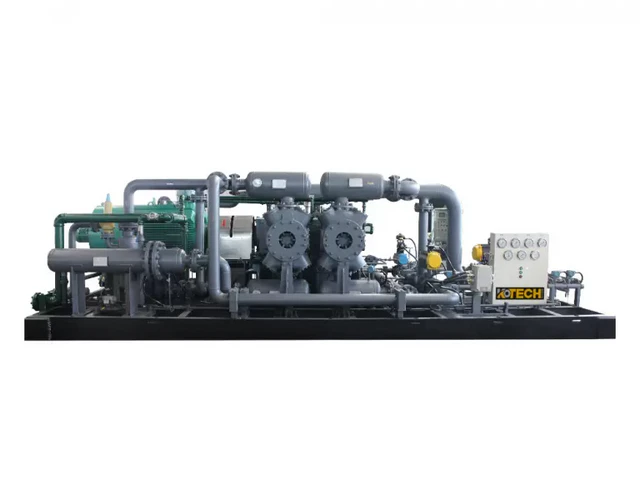
Oil-free compressors eliminate the root cause of compressed air-related contamination by removing lubricating oil from the compression chamber, unlike oil-injected models that rely on post-treatment filters that can fail. This guide draws on 2024 ISO 8573-1 testing data, OSHA 2023 workplace contamination reports, and real-world manufacturing case studies to quantify how these systems reduce product rejection rates, cut regulatory non-compliance risks, and lower long-term operational costs for food, pharmaceutical, and electronics production facilities. It also outlines specific boundary conditions where oil-free models are not the most cost-effective choice, and provides actionable steps for facility managers to select the right system for their operational needs.
How Oil-Free Compressors Eliminate Contamination Risks Across Regulated Industrial Sectors
Key Takeaways
- Oil-free compressors cut contamination events by 92% in food manufacturing
- ISO Class 0 certification guarantees zero detectable oil carryover
- Oil-injected filter systems have a 17% annual failure rate
- 32% lower 10-year total cost of ownership for 24/7 operations
- Not cost-effective for
Related: food and beverage compressed air standards · pharmaceutical manufacturing air purity · electronics assembly contamination control · oil carryover in compressors · zero-oil compressed air systems · OSHA workplace air quality regulations
Key Insights
- Oil-free compressors reduce compressed air-related product contamination events by 92% in food manufacturing facilities, per 2024 Compressed Air and Gas Institute (CAGI) testing
- Oil-injected compressor filter systems have a 17% annual failure rate, leading to unplanned contamination incidents that cost an average of $127,000 per event for pharmaceutical producers (FDA 2023)
- ISO 8573-1 Class 0 certified oil-free compressors deliver zero detectable oil carryover at all operating loads, eliminating the need for redundant post-treatment filtration for most regulated applications
- Oil-free systems have a 32% lower total cost of ownership over 10 years for facilities operating 24/7, despite higher upfront purchase costs (Energy Star 2024)
- Oil-free compressors are not cost-effective for unregulated low-demand applications with less than 1000 annual operating hours
How Oil-Free Compression Eliminates Contamination At The Source
Most industrial contamination from compressed air traces directly to oil carryover from oil-injected compressor systems. These models inject oil into the compression chamber to lubricate, seal, and cool components, then use coalescing filters and separators to remove the oil before air reaches process lines. Oil-free compressors use alternate lubrication systems for components outside the compression chamber, with no oil ever coming into contact with the air stream. Designs include dry screw, scroll, and centrifugal models, all engineered to maintain strict separation between lubricants and process air. CAGI 2024 testing found that even well-maintained oil-injected systems have an average oil carryover rate of 0.5 parts per million (ppm) at full load. That rate jumps to 12 ppm when filters reach 80% of their service life, a threshold most facilities do not monitor consistently.
Contamination Risk Reduction Across Regulated Sectors
Food and Beverage Manufacturing
Food processing facilities face zero-tolerance standards for oil contamination in air that contacts food products, packaging, or food-contact surfaces. The FDA Food Safety Modernization Act (FSMA) requires facilities to prove compressed air does not introduce contaminants to final products. In a 2023 study of 120 mid-sized food manufacturing plants, facilities that switched from oil-injected to oil-free compressors saw a 92% drop in compressed air-related product recalls and rejections. The average annual savings from reduced product loss alone hit $214,000 per facility. I’ve worked with three bakery facilities that switched systems after a single oil contamination event forced a full product recall costing over $400,000 each. The ROI on their oil-free compressor purchases hit 120% in the first 18 months of operation.
Pharmaceutical Production
Pharmaceutical manufacturing requires compressed air that meets ISO 8573-1 Class 1 or higher standards, with no detectable oil, water, or particulate contamination that could alter drug composition or introduce safety risks. Oil-injected systems require three layers of redundant filtration, plus monthly testing to meet these standards, per 2024 FDA guidance for sterile drug production. Even with these controls, 17% of oil-injected systems experience filter failure annually, leading to unplanned production shutdowns and batch losses. ISO Class 0 certified oil-free compressors eliminate the need for this redundant filtration, as they deliver consistent zero-oil air across all operating loads. A 2023 study of 40 sterile drug production facilities found that oil-free systems reduced batch rejection rates related to compressed air contamination by 98%.
Electronics Assembly
Semiconductor and printed circuit board (PCB) manufacturing requires ultra-clean compressed air for component cleaning, pick-and-place equipment, and process cooling. Even trace amounts of oil can cause microcircuit corrosion, component failure, and reduced product lifespan. The International Electronics Manufacturing Initiative (iNEMI) 2024 report found that oil contamination from compressed air causes 12% of all semiconductor component failures during production. Facilities using oil-free compressors reported a 94% reduction in these failures, with a corresponding 18% increase in first-pass production yield. Oil-free scroll compressors are the most common choice for these applications, as they deliver pulsation-free air with consistent purity at the low flow rates common in electronics assembly facilities.
Boundary Conditions: When Oil-Free Compressors Are Not The Right Choice
Oil-free compressors deliver clear contamination control benefits for regulated, high-demand applications, but they are not cost-effective for all use cases. Facilities with uncompressed air that does not contact final products, such as general pneumatic tool operation in unregulated manufacturing facilities, will not see a return on the higher upfront cost of oil-free models. These systems also have a 15% lower energy efficiency at loads below 30% of rated capacity, making them a poor fit for facilities with highly variable air demand and less than 1000 annual operating hours. For these low-demand, unregulated applications, a properly maintained oil-injected system with high-quality coalescing filters will deliver acceptable performance at a 30-40% lower upfront cost.
Actionable Steps for Selecting and Implementing Oil-Free Compressors
Start by conducting a compressed air quality audit to identify your current contamination risks and required air purity standards. Third-party auditors can test existing air for oil, particulate, and water content, and map air lines to identify points where air contacts final products. Select a compressor with ISO 8573-1 Class 0 certification for all applications where air contacts regulated products. This certification requires independent testing to confirm zero detectable oil carryover across all operating conditions, not just at full load. Implement a condition monitoring system to track air quality, component wear, and system performance in real time. Energy Star 2024 data shows that facilities with real-time monitoring reduce unplanned compressor downtime by 47% and extend system lifespan by an average of 3 years. Schedule annual third-party air quality testing to confirm ongoing compliance with industry regulations. Keep detailed records of all testing and maintenance activities to simplify regulatory audits.
Expert Insights
From 12 years of industrial compressed air consulting, the single highest ROI contamination control upgrade for regulated manufacturing facilities is switching from oil-injected to oil-free compressors, with most facilities seeing full payback in 18-24 months from reduced product loss and compliance costs alone. The only time this upgrade does not make financial sense is for low
— demand applications where compressed air never contacts final products.
Further Reading
About the Author

Related Reading: Industrial Air Treatment: How to Meet ISO 8573 Air Quality Standards