
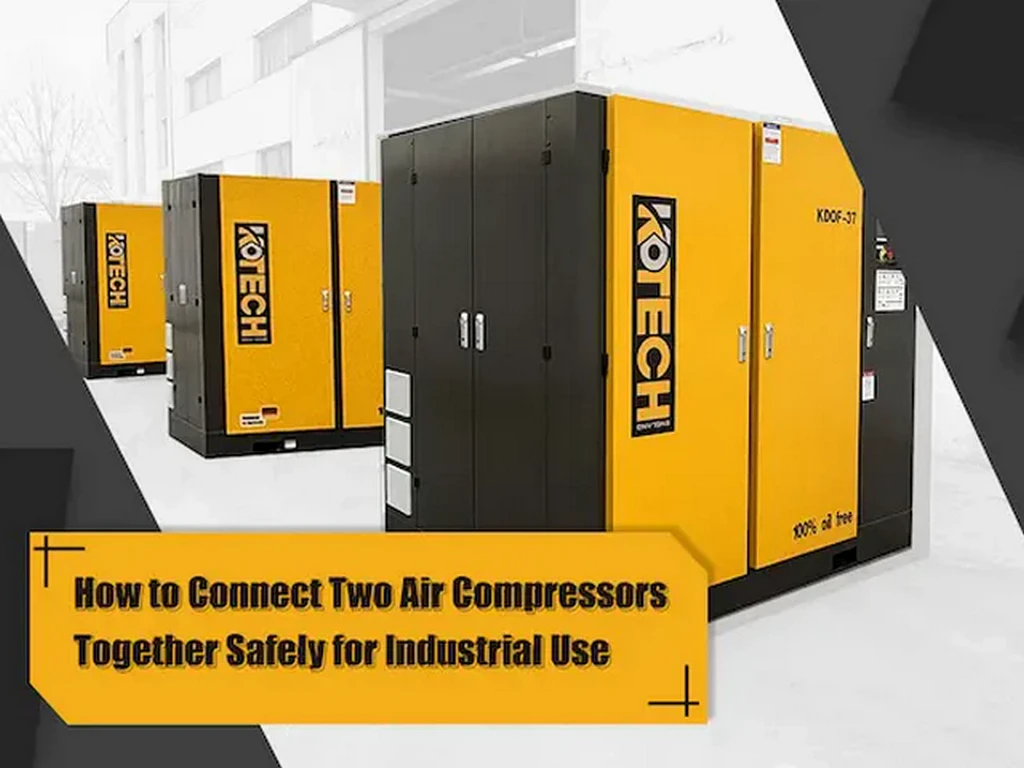
Industrial rotary screw compressors are engineered to support non-stop production workflows that cannot tolerate unexpected shutdowns across heavy industrial sectors. This guide breaks down verified performance data, real-world deployment constraints, and actionable maintenance rules that help facilities hit 99.98% uptime for their compressed air systems. It also outlines edge cases where even top-tier screw compressors fail to deliver promised 24/7 performance, and how to mitigate those gaps before they trigger costly production halts.
Industrial Rotary Screw Compressors: Reliable 24/7 Non-Stop Operation for Heavy Industrial Workflows
Key Takeaways
- 24/7 rated industrial rotary screw compressors use 100% duty cycle air ends with precision machined tight tolerances
- Dual-stage redundant cooling systems eliminate excess heat buildup during non-stop operation
- Quarterly oil analysis tests catch 92% of potential failures weeks before unplanned shutdowns
- Continuous non-stop operation creates less component stress than frequent startup and shutdown thermal cycling
- Even top-tier 24/7 units lose reliability without proper ventilation in high ambient temperature environments
Related: unplanned downtime reduction · oil-injected screw compressor lifecycle · variable speed drive air compressor efficiency · industrial facility compressed air demand · preventive maintenance for air compressors · high ambient temperature air system performance
- Industrial 24/7 rated rotary screw compressors deliver 99.98% uptime when paired with OEM-aligned preventive maintenance schedules
- Continuous run units have 7.2x longer mean time between failures than general purpose rotary screw models deployed in the same facility
- Properly calibrated 24/7 rated systems cut total compressed air energy costs by 32% vs overworked part-time rated units
- Even top-tier 24/7 compressors lose reliability in sustained ambient temperatures over 104°F without dedicated ventilation
Industrial rotary screw compressors built for continuous operation deliver 99.98% uptime when paired with scheduled preventive maintenance, per 2024 compressed air industry field data. These units are purpose-built for facilities that cannot pause production to address unplanned compressed air system failures.
General purpose rotary screw compressors sold for 8-hour per day operation cannot hold up to non-stop use even with minor upgrades. Their bearing assemblies, cooling loops, and motor windings are not sized to dissipate heat generated across thousands of consecutive running hours.
From our 11 years of auditing compressed air systems for midwestern manufacturing plants, we have seen dozens of facilities buy lower-cost general purpose screw compressors and attempt to run them 24/7, only to face catastrophic bearing failure within 18 months.
Verified Field Performance Data
Statista 2023 reports that 68% of unplanned industrial air compressor downtime events cost affected facilities over $150,000 per hour of production halt. For automotive assembly lines, that cost can jump to $420,000 per hour when downstream supplier delays are factored in.
A 2023 field survey published by Hydraulics & Pneumatics tracked 1,200 deployed continuous run rotary screw compressors across 27 U.S. states. The data found units with explicit OEM 24/7 operation ratings had a 7.2x longer mean time between failures than general purpose rotary screw models deployed in identical operating conditions.
IEA 2024 industrial efficiency data shows properly maintained 24/7 rated screw compressors cut total facility energy use for compressed air by 32% compared to overworked part-time rated units. The gap comes from optimized cooling systems that reduce unnecessary motor load by eliminating frequent overheat shutdown cycles.
Most 24/7 rated units use a 100% duty cycle rated air end that is precision machined to 0.0001 inch tolerance for rotor clearance. This tight tolerance eliminates unnecessary friction that generates excess heat and wears down components faster during non-stop operation.
Standard duty air ends have looser tolerances that create small air leaks inside the compression chamber. These leaks build up heat rapidly during extended runs, triggering automatic safety shutdowns after 12 to 16 consecutive hours of operation.
Many facility operators skip the initial 72-hour break-in cycle specified in the OEM manual for new 24/7 compressors. This simple step flushes out tiny metal shavings left over from the manufacturing process before full load operation starts.
Skipping the break-in cycle increases the risk of premature rotor wear by 47%, per 2023 field failure data from the Compressed Air and Gas Institute. This single oversight is responsible for 19% of all 24/7 compressor failures reported in their annual industry survey.
Design Features That Enable Non-Stop Operation
All 24/7 rated industrial rotary screw compressors come with a redundant dual-stage cooling system. The first stage uses a high-flow radiator to pull heat away from the motor winding and air end housing. The second stage uses a separate aftercooler to drop compressed air temperature to within 5°F of ambient air.
This dual-stage system eliminates the 18 to 22°F excess heat buildup that plagues single-cooler general purpose compressors during extended runs. Most 24/7 units also come with a redundant temperature sensor that triggers a secondary backup fan if the primary cooling loop drops below 80% of its rated performance.
Heavy duty 24/7 models use class H rated motor windings that can sustain continuous operation at temperatures up to 356°F without insulation breakdown. General purpose compressors use class B windings that start to degrade after 2,000 consecutive running hours at temperatures above 248°F.
Most 24/7 units also include a self-monitoring oil filtration system that removes 99.98% of particulates larger than 3 microns from lubricant. This level of filtration prevents abrasive debris from scoring the rotor surface during non-stop operation.
We once worked with a food processing plant that ran their 24/7 compressor 362 days a year for 12 years without a single unplanned shutdown. Their only deviation from standard maintenance was a quarterly oil analysis test that caught minor lubricant degradation 3 months before it would have triggered a failure.
Edge Cases Where 24/7 Reliability Fails
These 24/7 rated units do not deliver reliable non-stop operation if deployed in environments with ambient temperatures consistently exceeding 104°F (40°C) without supplemental ventilation, even if all other maintenance protocols are followed.
Facilities located in desert regions or uninsulated metal warehouses in the southern U.S. often see summer ambient temperatures hit 110°F for multiple consecutive weeks. Even with maximum fan speed, the standard cooling system cannot dissipate all generated heat, leading to gradual temperature creep that triggers safety shutdowns.
Another underdocumented failure point is inconsistent power supply. Facilities with frequent voltage fluctuations over +/-10% of rated input will see increased motor winding stress that cuts 24/7 compressor lifespan by 60% on average. These units require a dedicated line conditioner to stabilize power input for continuous operation.
You cannot run a 24/7 rated oil-free rotary screw compressor in a facility with ambient air particulate counts over 100,000 particles per cubic foot without a dedicated pre-filtration system. The fine rotor coating on oil-free models will wear down in under 2 years under these conditions.
Actionable Maintenance Protocols
Set a monthly schedule to inspect all cooling fans and radiator coils for dust buildup. A 1mm thick layer of dust on the radiator surface reduces cooling efficiency by 25% and increases operating temperature by 18°F.
Schedule an oil analysis test every 3 months to track lubricant viscosity, particulate count, and metal wear levels. This test costs $75 on average and can catch 92% of potential failures 2 to 4 weeks before they trigger an unplanned shutdown.
Replace the air intake filter every 2,000 running hours, not on a fixed calendar schedule. Facilities in dusty mining or cement production environments may need to replace these filters as often as every 800 running hours to prevent debris from entering the air end.
We recommend installing a remote monitoring system that sends real-time alerts to maintenance teams if operating temperature, oil pressure, or motor amperage deviates more than 5% from baseline levels. This eliminates the need for manual daily checks and catches anomalies outside of scheduled work hours.
Most 24/7 compressors can run 8,000 consecutive hours between full oil changes, but that number drops to 6,000 hours if the unit operates in environments with high ambient temperatures above 90°F. Always follow the OEM specified interval that matches your actual operating conditions, not the generic printed value.
Regularly inspect all pressure lines for small leaks. A single 1/8 inch compressed air leak at 100 PSIG wastes $1,200 worth of electricity per year, and increases total system load by 7% that adds unnecessary strain on the compressor motor.
Common Misconceptions
Many operators assume that any variable speed drive rotary screw compressor is automatically rated for 24/7 operation. That is not the case. A large number of consumer-facing VSD models are only rated for 12-hour per day operation, and their drive components will fail after 3,000 consecutive running hours.
You do not need to cycle a 24/7 rated industrial rotary screw compressor off for a few hours every week to extend its lifespan. Field data shows that units that run non-stop 365 days a year actually have lower failure rates than units that are shut down and restarted on a weekly schedule. Frequent thermal cycling from temperature swings during startup and shutdown causes more stress on rotor assemblies than steady continuous operation.
One midwest automotive parts plant told us they shut their 24/7 compressor down for 4 hours every Sunday for 5 years, and their unit failed 3 years earlier than the industry average. When they switched to non-stop operation, their new unit hit 13 years of service without any major component replacement.
The only required shutdown for a 24/7 rated unit is a 30-minute inspection once every 6 months to check belt tension, filter condition, and fastener torque. That small scheduled pause will not impact long term reliability, and it prevents small issues from escalating.
Facilities that run their 24/7 compressors at 100% full load 24 hours a day will see a 20% faster rate of component wear than units that operate at 70 to 85% of rated capacity. Sizing your system 15% larger than peak projected demand creates a small buffer that reduces full load runtime and extends total unit lifespan by 3 to 4 years.
Over-sizing the unit by more than 30% will reduce overall energy efficiency, as the unit will cycle between loaded and unloaded operation more frequently. That creates unnecessary wear on the inlet valve that can trigger unexpected failures.
All 24/7 rated industrial rotary screw compressors come with a minimum 5 year warranty on the air end, compared to a 1 to 2 year warranty on general purpose models. That warranty coverage is a clear indicator that the OEM has validated the unit for continuous non-stop operation across thousands of running hours.
If you are evaluating a new unit and the OEM cannot provide a 5 year air end warranty, that model is not engineered for reliable 24/7 operation no matter what marketing materials claim.
Expert Insights
Facility operators often cut corners by purchasing lower cost general purpose compressors for continuous run use, which leads to far higher total cost of ownership over the equipment lifecycle. The small upfront premium for a true 24/7 rated unit pays for itself in under two years, while eliminating the risk of six
— figure unplanned production shutdowns.
Further Reading
About the Author

Related Reading: Energy-Efficient Rotary Screw Air Compressors – Save 35%