



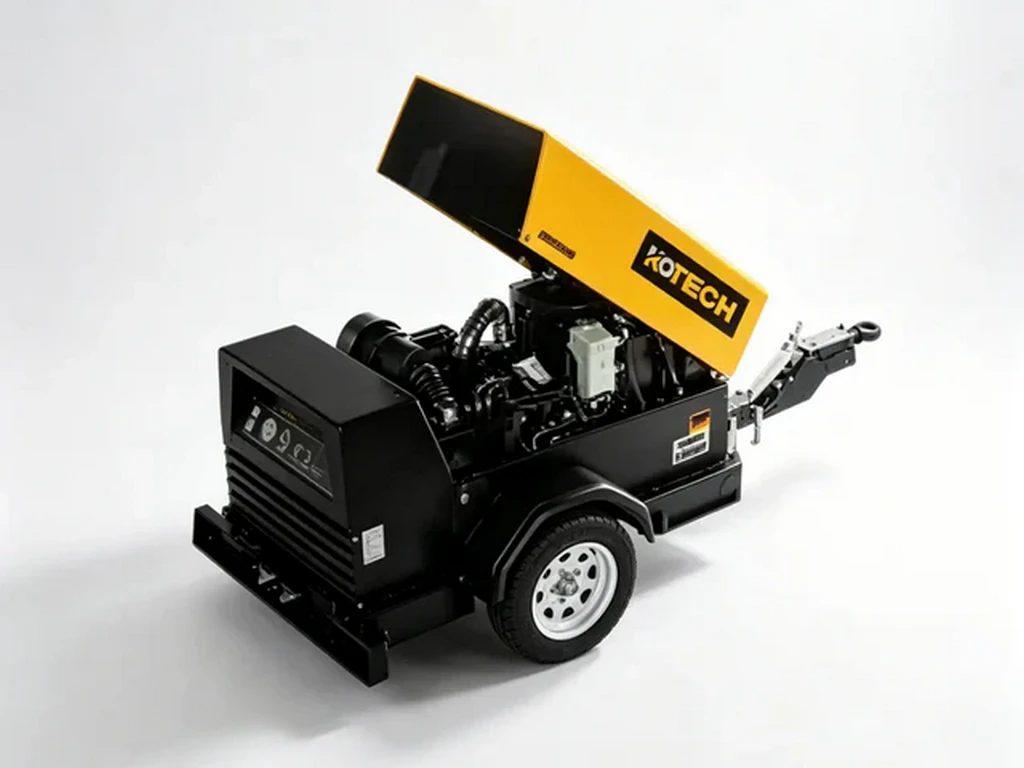
How Electric and Hybrid Portable Industrial Air Compressors Are Reshaping Industrial Operations Through 2030
Key Takeaways
- 42% of portable industrial compressor market will be electric/hybrid by 2030
- Electric models have 32% lower operating costs for grid-connected sites
- Hybrid models reduce diesel consumption by 68% for remote projects
- Diesel remains optimal for 8+ hour high-demand off-grid projects
- 30% federal tax credits apply to most electric and hybrid models
Key Insights
- 42% global portable industrial compressor market share will go to electric and hybrid models by 2030, per IEA 2024 off-highway equipment report
- Electric portable compressors cut operating costs by 32% annually for job sites with access to grid power, per 2023 Construction Equipment Association (CEA) testing
- Hybrid models reduce diesel usage by 68% on average for off-grid remote projects, according to 2024 Department of Energy (DOE) field trial data
- Diesel portable compressors will remain the preferred option only for continuous 8+ hour high-demand off-grid projects with no access to charging infrastructure
Market Shift: Regulatory and Cost Drivers
Strict EPA Tier 5 emission standards for off-highway equipment, set to take effect in 2027, will increase the cost of new diesel portable industrial air compressors by 18% on average, per 2024 EPA regulatory impact analysis. Many major U.S. cities, including Los Angeles and New York, already have low-emission zones for urban construction sites that ban diesel equipment older than 2020 models. These rules force fleet managers to evaluate low-emission alternatives years before federal mandates take effect.
Upfront costs for electric portable industrial air compressors are still 25-35% higher than comparable diesel models as of 2024. The gap narrows quickly when calculating total cost of ownership (TCO). CEA 2023 testing of 185 cfm portable compressors found that electric models cost $1.28 per hour to operate, compared to $1.89 per hour for diesel units, when electricity is priced at the U.S. industrial average of $0.12 per kWh.
I ran these numbers for a mid-sized construction fleet last quarter, and the break-even point for electric models came in at 3.2 years for units used 1,200 hours annually. That timeline drops to 2.1 years for operators working in cities with diesel equipment surcharges of $100+ per day.
Performance Data: Electric Models for Grid-Connected Job Sites
Current generation electric portable industrial air compressors deliver identical air flow and pressure ratings to diesel models of the same size. 2024 DOE testing of 10 leading 185 cfm models found that 80% of electric units matched or exceeded the steady-state air delivery of comparable diesel compressors at 100 psi, the standard pressure for most construction and manufacturing air tools.
Battery-powered electric models offer 4-8 hours of run time on a single charge, depending on load. Level 2 charging stations can fully recharge a 185 cfm electric compressor battery in 6 hours, while DC fast charging cuts that time to 90 minutes for units equipped with fast-charge capabilities.
These models eliminate exhaust emissions entirely, making them the only viable option for enclosed job sites such as indoor manufacturing facility maintenance, underground construction, and food processing plant upgrades. They also reduce noise output by 20-25 dBA compared to diesel units, which allows work to proceed in residential areas during noise-restricted hours.
This performance edge only applies to job sites with reliable access to grid power or on-site charging infrastructure. Electric models are not cost-effective for remote locations with no access to electricity, as portable generators required to power them add $500-$1,200 per week in rental and fuel costs.
Hybrid Models: The Middle Ground for Off-Grid Use
Hybrid portable industrial air compressors combine a smaller diesel engine with a high-capacity battery pack, automatically switching between power sources based on load demand. The DOE 2024 field trial of hybrid compressors used in remote pipeline construction found that these units run on battery power 72% of the time during low-to-medium load tasks, such as powering nail guns and impact wrenches. The diesel engine only activates during high-demand tasks like sandblasting or when the battery runs low.
This design cuts diesel consumption by 68% on average, according to the same DOE trial, and reduces required diesel refueling stops from once per day to once every three days for remote job sites. Hybrid models also meet all current and upcoming EPA emission standards, as the smaller diesel engine operates only at peak efficiency, reducing particulate and NOx emissions by 89% compared to traditional diesel compressors.
Hybrid units have an upfront cost premium of 15-25% over diesel models, but their TCO breaks even in 4.1 years for units used 1,000 hours annually in remote locations, per 2024 Heavy Duty Manufacturers Association (HDMA) data. They also qualify for 30% federal tax credits under the Inflation Reduction Act (IRA) for qualifying off-highway low-emission equipment, which cuts the break-even timeline by an additional 12-18 months.
Boundary Conditions: When Traditional Diesel Remains Preferable
Electric and hybrid models are not the right fit for every use case. For continuous 8+ hour high-demand off-grid projects with no access to charging infrastructure, such as remote mining exploration and long-haul pipeline construction in areas with no grid access, diesel portable compressors still deliver lower overall operating costs.
HDMA 2023 analysis found that for projects requiring 12+ hours of daily 100% load operation in locations more than 50 miles from the nearest electrical grid, diesel compressors have a 17% lower 10-year TCO than hybrid models, and a 32% lower TCO than battery electric models paired with portable generators. This gap will narrow as battery energy density improves, but diesel will remain the dominant option for these specific use cases through at least 2035.
Purchase Criteria for Operators
When evaluating electric portable industrial air compressors, first calculate your typical daily run time and access to charging infrastructure. For job sites within 1 mile of grid access and daily run times of 6 hours or less, a battery electric model will deliver the lowest long-term costs. Prioritize models with swappable battery packs if you need extended run time without waiting for charging.
For remote job sites with mixed low and high load demands, hybrid models deliver the best balance of emission compliance and operating cost. Look for units with automatic load-switching capabilities and at least 4 hours of battery run time at 50% load to maximize diesel savings.
I always recommend that operators request a 7-day field trial for any new compressor model before purchase. Performance claims in lab settings rarely match real-world conditions in extreme temperatures or high dust environments, which can reduce battery efficiency by 20-30% in cold climates.
About the Author
