



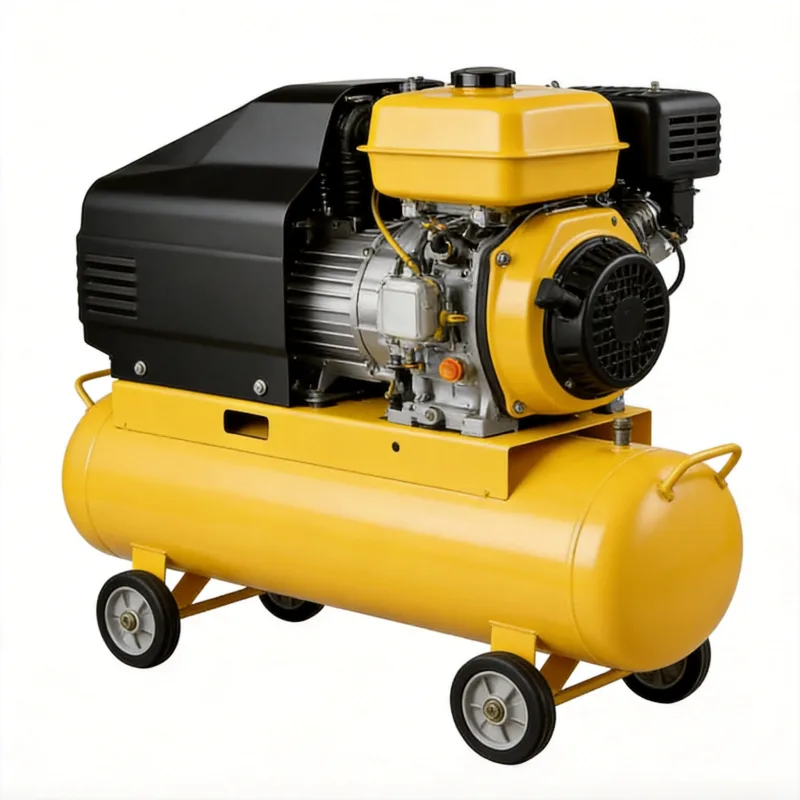
The cost for offshore corrosion-resistant large capacity diesel air compressors typically ranges from $150,000 to over $1,000,000, influenced by capacity, certification, and customization.
Understanding the Base Investment: Core Cost Drivers for Offshore Compressors
The acquisition of a large capacity diesel air compressor for offshore operations represents a substantial capital expenditure (CAPEX). This investment is fundamentally different from purchasing an onshore unit, primarily due to the unique demands of the marine environment. The core cost drivers begin with the compressor’s capacity, measured in CFM (cubic feet per minute) or m³/min, and its power output in horsepower (HP) or kilowatts (kW). A typical large capacity unit, often ranging from 750 CFM to 1600 CFM, powered by a 200 HP to 500 HP diesel engine, forms the baseline.
However, the “offshore” designation immediately introduces a significant cost multiplier. This premium stems from the necessity for extreme corrosion resistance. Standard industrial compressors are built with materials and coatings adequate for dry, controlled environments. Offshore units, conversely, face relentless exposure to saltwater spray, high humidity, and corrosive atmospheric conditions. Manufacturers address this through specialized material selection, such as marine-grade stainless steel (e.g., 316L) for critical components, or robust, multi-layer C5-M paint systems. These materials and application processes are inherently more expensive than standard industrial finishes. For instance, a comprehensive C5-M marine-grade coating system can add 8-12% to the unit’s base manufacturing cost, purely due to specialized materials and labor-intensive application.
Capacity and Power: The Foundation of Offshore Compressor Pricing
The fundamental cost is directly proportional to the compressor’s capacity and the power of its diesel engine. A 750 CFM unit will naturally be less expensive than a 1500 CFM unit. For example, a base-model, large capacity diesel air compressor (e.g., 1000 CFM) without specific offshore enhancements might start at $70,000 – $120,000 for an onshore application. Adding the necessary power and capacity for typical offshore drilling or production support, such as a 1500 CFM, 350 HP unit, immediately elevates the base price significantly. The diesel engine itself, a robust industrial power plant, is a major component of this cost.
The Corrosion Resistance Premium: Materials and Coatings
Corrosion resistance is not merely an add-on; it’s an integral design philosophy for offshore compressors. This involves several layers of protection, each contributing to the overall cost. Beyond C5-M coatings, manufacturers often specify components made from duplex or super duplex stainless steel for parts exposed to direct splash or constant humidity. These advanced alloys, while offering superior resistance to pitting and crevice corrosion, are significantly more expensive than standard carbon steel or even 304 stainless steel. The fabrication processes for these materials also require specialized welding and finishing, further increasing manufacturing overheads.
Enclosures and Certifications: Non-Negotiable Offshore Requirements
The physical enclosure of an offshore compressor is another critical cost driver. It must be robust, weather-tight, and often designed to withstand harsh impacts or extreme winds. Furthermore, offshore operations are governed by stringent international and national regulations. Certifications like DNV 2.7-1 (for offshore lifting and handling), ATEX or IECEx (for hazardous area operation, ensuring explosion protection), and ABS (American Bureau of Shipping) or Lloyd’s Register approval are mandatory. Achieving these certifications involves rigorous testing, documentation, and specific design modifications, adding a significant premium. For instance, ATEX Zone 2 compliance can add 15-25% to the base unit cost, encompassing explosion-proof electrical components, spark arrestors, and specialized exhaust systems. A standard 1500 CFM, 350 HP diesel air compressor suitable for offshore operations, equipped with marine-grade corrosion protection and DNV 2.7-1 certification, typically commands an initial capital expenditure ranging from $350,000 to $750,000, depending heavily on specific ancillary systems and OEM.
Beyond the Sticker Price: Unpacking Lifecycle Costs and ROI in Offshore Environments
While the initial CAPEX is substantial, focusing solely on the purchase price of an offshore compressor is a common pitfall. The true financial impact is revealed through a comprehensive lifecycle cost (LCC) analysis, which includes operational expenditure (OpEx) and the cost of potential downtime. Offshore OpEx is notoriously higher than onshore, driven by unique logistical challenges and environmental factors.
Operational Expenditure: Fuel, Maintenance, and Logistics
Fuel consumption is a major ongoing cost. A large capacity diesel compressor (e.g., 1500 CFM) can consume anywhere from 20 to 30 gallons of diesel per hour at full load. Given continuous operation over extended periods, fuel costs quickly accumulate, especially with the fluctuating global price of diesel. Remote offshore locations also mean that maintenance and repair are significantly more expensive. Transporting personnel, spare parts, and specialized tools to an offshore platform incurs substantial logistical costs, often tripling or quadrupling the labor and material costs compared to an onshore facility. Routine maintenance intervals, while critical for reliability, become costly endeavors.
The True Cost of Downtime: An Offshore Reality
Perhaps the most overlooked, yet most impactful, aspect of LCC is the cost of downtime. In offshore drilling or production, an unexpected compressor failure can halt critical operations, leading to staggering financial losses. For a drilling rig, downtime can cost hundreds of thousands, even millions, of dollars per day. This makes reliability and rapid repair capabilities paramount. Investing in a higher-quality, more robust, and easily maintainable compressor, despite a higher initial price, can yield significant ROI by minimizing the risk of operational stoppages. The cost of a spare parts inventory, strategically located for quick access, also becomes a vital part of OpEx, balancing immediate availability against holding costs.
Energy Efficiency and Environmental Compliance
Modern offshore compressors are increasingly designed with fuel efficiency in mind, often incorporating advanced engine management systems and variable speed drives. While these features might increase the initial CAPEX, they can lead to substantial fuel savings over the unit’s lifespan, contributing positively to the LCC. Furthermore, increasingly stringent environmental regulations regarding emissions (e.g., IMO Tier III/IV) necessitate advanced exhaust after-treatment systems, which add to both the purchase price and ongoing maintenance costs. Non-compliance, however, carries the risk of severe penalties and operational shutdowns.
Strategic Procurement: Navigating Customization, Certifications, and Long-Term Value
Strategic procurement for offshore compressors transcends simple price comparisons. It involves a holistic evaluation of a supplier’s engineering capabilities, adherence to standards, and long-term support infrastructure. Customization plays a significant role in meeting specific platform integration requirements or unique operational challenges, influencing both cost and lead time.
The Impact of Customization on Price and Lead Time
Offshore platforms are often space-constrained and require compressors tailored to specific footprints, lifting arrangements, or utility connections. Custom engineering and fabrication to meet these bespoke requirements can substantially increase the unit’s price, potentially adding 20-40% above a standard certified offshore model. Furthermore, customization extends lead times, sometimes from 6-8 months for standard offshore units to 12-18 months or more for highly specialized configurations. Early engagement with OEMs (Original Equipment Manufacturers) is crucial to manage expectations and timelines.
Choosing the Right OEM and Support Network
The choice of OEM is a critical factor in both initial cost and long-term value. Established manufacturers with a proven track record in offshore applications often command higher prices due to their reputation, extensive R&D, and global service networks. However, their robust engineering, quality control, and readily available spare parts can significantly reduce LCC by ensuring reliability and minimizing downtime. Evaluating a manufacturer’s global service presence, especially in regions relevant to your offshore operations, is as important as the compressor’s specifications. A strong support network ensures quicker response times for maintenance and repairs, directly impacting operational continuity.
Lease vs. Buy: A Financial Decision
For some offshore operators, particularly those involved in short-term projects or seeking to conserve CAPEX, leasing an offshore compressor can be an attractive alternative to outright purchase. Leasing can convert a large capital outlay into manageable operational expenses, improving cash flow. However, lease agreements typically come with higher overall costs over the long run compared to purchasing, and may have restrictive terms regarding modifications or usage. A thorough financial analysis, considering project duration, depreciation, tax implications, and the flexibility offered by each option, is essential. Lease rates for a large offshore unit can vary widely, but typically involve monthly payments equivalent to 1.5-3% of the unit’s purchase price, depending on the lease term and associated services.
Investment Protection: Warranties and Service Agreements
Given the high cost and critical nature of offshore compressors, robust warranties and comprehensive service agreements are non-negotiable. Extended warranties, while adding to the upfront cost, provide peace of mind and protect against unexpected repair expenses. Service agreements, often including preventative maintenance schedules, remote monitoring, and guaranteed response times, are vital for ensuring optimal performance and extending the unit’s operational life. These agreements should be viewed as an investment in operational continuity and risk mitigation, rather than an optional expense. They contribute to a predictable OpEx and help stabilize the overall LCC.
Case Studies and Market Realities: Data-Driven Pricing Insights
Analyzing market data and real-world scenarios provides practical insights into offshore compressor pricing. While exact figures are proprietary, industry averages and trends illuminate the cost landscape. For example, a mid-range 1200 CFM, 300 HP diesel compressor with DNV 2.7-1 certification and C5-M corrosion protection typically falls into the $400,000 – $600,000 range, excluding specialized ATEX requirements or extensive customization. Adding ATEX Zone 2 compliance can push this specific unit closer to $550,000 – $750,000.
The variability in pricing is often attributed to the level of integration and ancillary systems included. A basic skid-mounted unit will be less expensive than a fully containerized package with advanced control systems, integrated fuel tanks, and automated fire suppression. Furthermore, global supply chain disruptions, material cost volatility (e.g., steel, diesel engines), and currency exchange rates can introduce significant fluctuations in pricing and lead times. A 2023 market analysis indicated that raw material cost increases alone contributed to a 7-10% rise in compressor unit prices compared to pre-pandemic levels.
Mitigating Risk and Maximizing Value: Smart Budgeting for Offshore Compressor Fleets
Effective budgeting for offshore compressor fleets requires a forward-looking approach that balances initial CAPEX with long-term OpEx and strategic risk mitigation. A key strategy involves standardizing components and systems where possible across a fleet. This can reduce spare parts inventory costs, simplify maintenance training, and potentially lead to volume discounts from OEMs.
Another critical aspect is conducting a thorough Total Cost of Ownership (TCO) analysis from the outset. This involves projecting all costs over the anticipated lifespan of the compressor, including purchase price, installation, commissioning, fuel, routine maintenance, major overhauls, spare parts, logistical support, regulatory inspections, and eventual decommissioning. A robust TCO model allows for a more accurate comparison between different compressor options and helps justify investing in higher-quality, more durable equipment that may have a higher initial price but lower LCC. By focusing on TCO, companies can make informed decisions that optimize their financial outlay and operational efficiency over the long term, ensuring reliable compressed air supply in the challenging offshore environment.
About the Author

Related Reading: Top Oil-Free Air Compressors Unveiled