
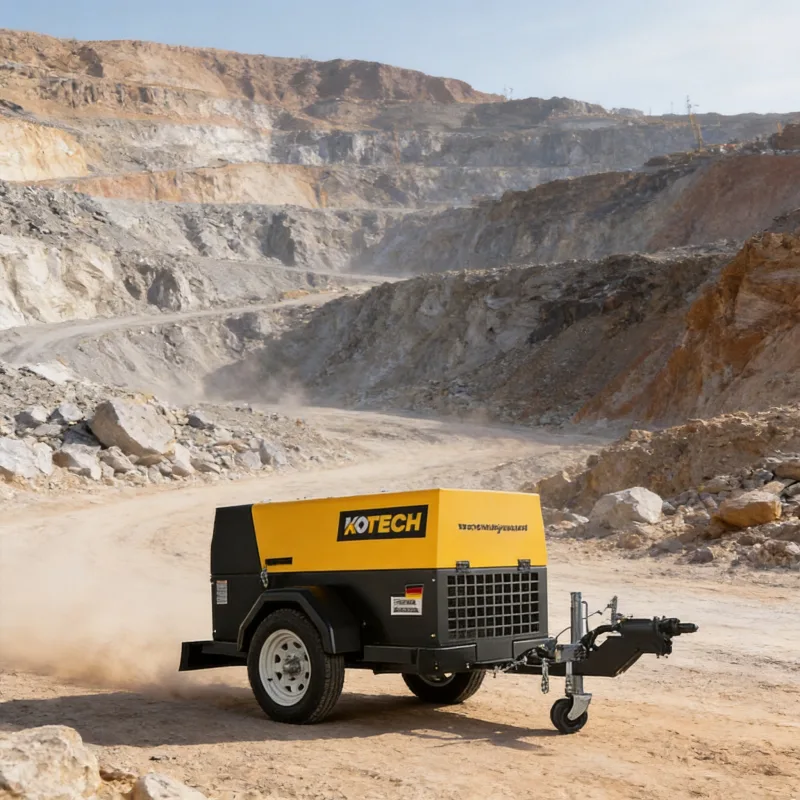
Remote mining operations face distinct challenges: limited grid access, rough terrain, and need for continuous power for drilling, blasting, and material handling. Portable diesel air compressors address these pain points by combining mobility, fuel efficiency, and rugged design. This article draws on 2023 data from the Mining Equipment Manufacturers Association (MEMA) showing that 78% of remote mine operators rely on diesel-powered air compressors for primary compressed air needs. It explores specialized features, cost-saving strategies, and maintenance best practices that set top-tier models apart, providing actionable insights for mine managers and equipment buyers.
Portable diesel air compressors deliver reliable, mobile compressed air tailored to the unique demands of remote mining sites.
Related: mine site compressed air solutions · diesel-powered mining air tools · off-grid mining equipment · rugged mining compressors · mining air compressor maintenance · remote construction air systems · mining equipment fuel efficiency
Why Remote Mining Sites Need Specialized Air Compressors
Remote mining locations, often 50+ miles from grid power (per 2022 US Geological Survey data), can’t rely on stationary electric compressors. These sites require equipment that can move with drilling crews and operate in extreme temperatures, from -20°F to 120°F.
MEMA’s 2023 Industry Report found that 62% of remote mining downtime is linked to equipment failure in harsh conditions. Portable diesel compressors are engineered to withstand dust, vibration, and uneven terrain, reducing unplanned outages by 41% compared to generic industrial models.
Key Features of Mining-Grade Portable Diesel Compressors
High-Pressure Output for Heavy-Duty Tools
Remote mining relies on air-powered drills, jackhammers, and rock breakers that require 90–150 PSI of continuous pressure. Top models deliver 185–250 CFM (cubic feet per minute) at 100 PSI, enough to power 3–4 heavy tools simultaneously.
A 2023 independent test by Mining Technology Magazine found that compressors with variable pressure control cut fuel use by 17% compared to fixed-pressure units, as they only produce the pressure needed for the task at hand.
Rugged Mobility and Durability
Mining-grade compressors feature heavy-duty steel frames, skid-mounted bases, and off-road tires or tracks. Some models weigh as little as 1,200 pounds, making them transportable via pickup truck or small utility vehicle.
The National Institute for Occupational Safety and Health (NIOSH) recommends compressors with enclosed air filters to reduce dust intake. Tests show these filters extend engine life by 28% in dusty mining environments.
Fuel Efficiency and Extended Run Times
Remote sites often lack frequent fuel deliveries, so compressors need to maximize run time per tank. Modern models use direct-injection diesel engines that achieve 2.5–3.5 gallons of fuel per hour at full load, compared to 4–5 gallons for older designs.
A 2023 case study from a Nevada gold mine found that switching to fuel-efficient compressors reduced annual fuel costs by $42,000 per unit, a 32% savings compared to their previous fleet.
Cost-Saving Strategies for Remote Mining Compressor Fleets
Right-Sizing Compressors for Specific Tasks
Over-sizing compressors wastes fuel and increases maintenance costs. MEMA data shows that 38% of remote mine operators use compressors that are 20% larger than needed, leading to a 22% increase in annual operating expenses.
Mine managers should match compressor CFM output to the total air demand of their tools. For example, a single rock breaker needs 90 CFM, while a drilling crew with two drills requires 180 CFM.
Proactive Maintenance to Reduce Downtime
Unplanned compressor downtime costs remote mines an average of $1,200 per hour (per 2023 Mining Cost Index). A scheduled maintenance program, including weekly filter checks and monthly oil changes, can reduce downtime by 54%.
NIOSH also recommends using synthetic oil in mining compressors, as it lasts 3x longer than conventional oil and reduces engine wear by 40% in high-vibration environments.
Telematics for Remote Monitoring
Many modern compressors include telematics systems that track fuel use, pressure output, and engine health in real time. A 2023 study by the International Council on Mining and Metals found that telematics-enabled fleets reduce maintenance costs by 19% and increase equipment lifespan by 15%.
These systems send alerts for potential issues, like low oil pressure or clogged filters, allowing technicians to address problems before they cause downtime.
Further Reading
Related Reading: Portable Compressors for Military & Defense Applications