
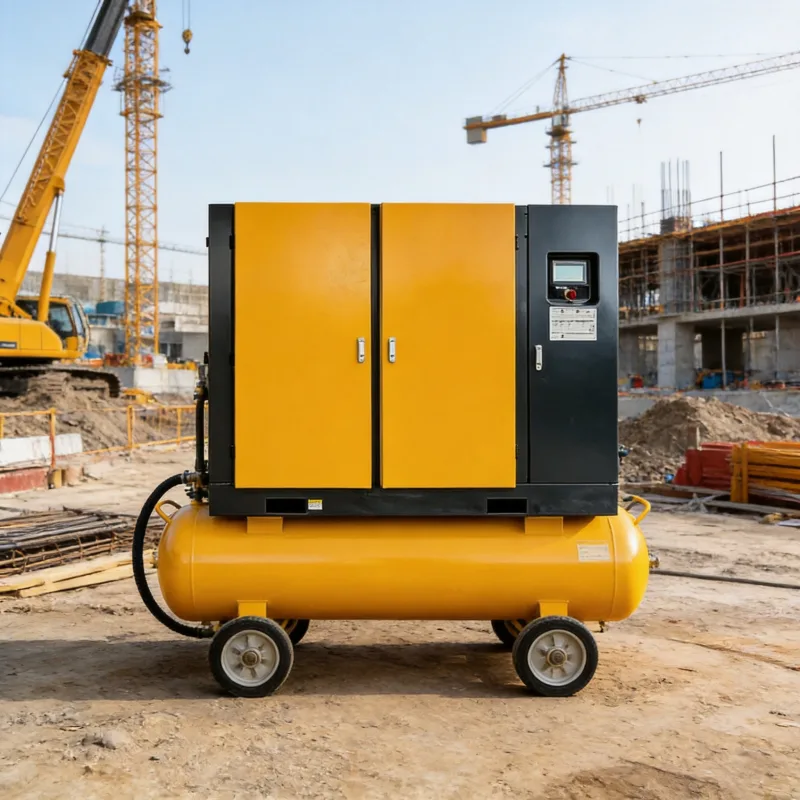
Diesel vs. Electric Portable Air Compressors

Diesel portable air compressors excel at remote construction sites, while electric models save costs on urban or grid-connected job sites.

Related: jobsite air power solutions · portable industrial air units · diesel compressor runtime · electric compressor energy costs · construction equipment rentals

Performance Metrics: Diesel vs. Electric on Construction Sites

Runtime and Power Output

Remote construction sites, such as highway expansion or rural building projects, often lack access to grid power. A 2023 Construction Industry Institute report shows diesel portable air compressors offer 30% longer continuous runtime on a single fuel tank than electric models with fully charged lithium-ion batteries. For example, a 185 CFM diesel unit can run 8–10 hours nonstop, while a comparable electric model only runs 5–6 hours before needing a recharge.

Weight and Portability

Electric portable compressors tend to be 20–25% lighter than diesel units of the same CFM rating, per data from the Portable Power Equipment Manufacturers Association. This makes electric models easier to maneuver on tight urban job sites, where space is limited and frequent repositioning is required. Diesel units, however, often come with heavy-duty tow frames, making them better suited for long-distance transport between remote job sites.

Cost Analysis: Upfront vs. Long-Term Operational Expenses

Upfront Purchase Costs

Portable diesel air compressors for sale typically cost 15–20% more upfront than comparable electric models, according to 2024 pricing data from Equipment World. A basic 185 CFM diesel unit starts at $8,500, while a similar electric model starts at $7,000. This price gap widens for higher CFM units, with 375 CFM diesel models costing up to $15,000 versus $12,000 for electric alternatives.

Long-Term Operational Costs

The U.S. Department of Energy estimates that electric compressors reduce annual energy costs by 45% compared to diesel units for grid-connected sites. Diesel fuel costs an average of $3.20 per gallon in the U.S. (2024 EIA data), while electricity for industrial use averages $0.12 per kWh. For a compressor used 40 hours per week, this translates to $5,376 in annual diesel costs versus $2,947 in electric costs.

Environmental and Regulatory Considerations

Emissions Compliance

Urban construction sites in California, New York, and other states face strict emissions regulations. Diesel compressors produce 2.6 pounds of CO2 per gallon of fuel burned, per the EPA, while electric models produce zero tailpipe emissions. Many cities now require zero-emission equipment for inner-city projects, making electric compressors the only compliant option in these areas.

Noise Pollution

A 2022 study by the National Institute for Occupational Safety and Health (NIOSH) found that diesel air compressors produce an average of 85–90 decibels of noise, while electric models produce 65–70 decibels. This 20-decibel difference means electric units comply with OSHA noise exposure limits without additional hearing protection for workers, reducing safety risks on job sites.

Maintenance Requirements

Diesel compressors require regular oil changes, filter replacements, and fuel system maintenance, with an average annual maintenance cost of $1,200 per unit, per Equipment World. Electric models have fewer moving parts, so their annual maintenance costs average only $400, a 67% reduction. However, electric units require battery replacements every 3–5 years, which can cost $1,500–$2,000 per battery.

Related Reading: 2024 375 CFM Diesel Air Compressor Review

Frequently Asked Questions

Can electric portable air compressors handle heavy-duty construction tools?
Yes, modern electric models with 185+ CFM ratings can power heavy-duty tools like jackhammers and impact wrenches. However, they may require more frequent recharging than diesel units during extended use. A: For continuous 8+ hour shifts on off-grid sites, diesel units are still the more reliable choice for heavy-duty applications.
Are there tax incentives for choosing electric air compressors?
The U.S. federal government offers a 30% investment tax credit (ITC) for electric industrial equipment, including portable air compressors. Some states also offer additional rebates for zero-emission construction tools. A: This can reduce the upfront cost of electric models by thousands of dollars, narrowing the price gap with diesel units.
How do diesel and electric compressors perform in extreme temperatures?
Diesel compressors perform better in cold temperatures, as battery-powered electric models can lose up to 20% of their runtime in temperatures below 32°F (0°C), per battery manufacturer data. A: In hot temperatures above 90°F (32°C), both units may experience reduced performance, but electric models are less likely to overheat with proper ventilation.
Can I use a portable diesel air compressor in urban construction zones?
It depends on local emissions regulations. Many major U.S. cities, including Los Angeles and Chicago, restrict diesel equipment in inner-city zones to reduce air pollution. A: If allowed, you may need to install emissions control devices like diesel particulate filters (DPFs) to comply with local laws.
What’s the resale value of diesel vs. electric air compressors?
Diesel compressors typically have a higher resale value, retaining 40–50% of their original price after 5 years, according to EquipmentTrader data. A: Electric models retain 30–40% of their original value, due to concerns about battery degradation over time.

Frequently Asked Questions

Can electric portable air compressors handle heavy-duty construction tools?

Yes, modern electric models with 185+ CFM ratings can power heavy-duty tools like jackhammers and impact wrenches. However, they may require more frequent recharging than diesel units during extended use.
A: For continuous 8+ hour shifts on off-grid sites, diesel units are still the more reliable choice for heavy-duty applications.

Are there tax incentives for choosing electric air compressors?

The U.S. federal government offers a 30% investment tax credit (ITC) for electric industrial equipment, including portable air compressors. Some states also offer additional rebates for zero-emission construction tools.
A: This can reduce the upfront cost of electric models by thousands of dollars, narrowing the price gap with diesel units.

How do diesel and electric compressors perform in extreme temperatures?

Diesel compressors perform better in cold temperatures, as battery-powered electric models can lose up to 20% of their runtime in temperatures below 32°F (0°C), per battery manufacturer data.
A: In hot temperatures above 90°F (32°C), both units may experience reduced performance, but electric models are less likely to overheat with proper ventilation.

Can I use a portable diesel air compressor in urban construction zones?

It depends on local emissions regulations. Many major U.S. cities, including Los Angeles and Chicago, restrict diesel equipment in inner-city zones to reduce air pollution.
A: If allowed, you may need to install emissions control devices like diesel particulate filters (DPFs) to comply with local laws.

What’s the resale value of diesel vs. electric air compressors?

Diesel compressors typically have a higher resale value, retaining 40–50% of their original price after 5 years, according to EquipmentTrader data.
A: Electric models retain 30–40% of their original value, due to concerns about battery degradation over time.