
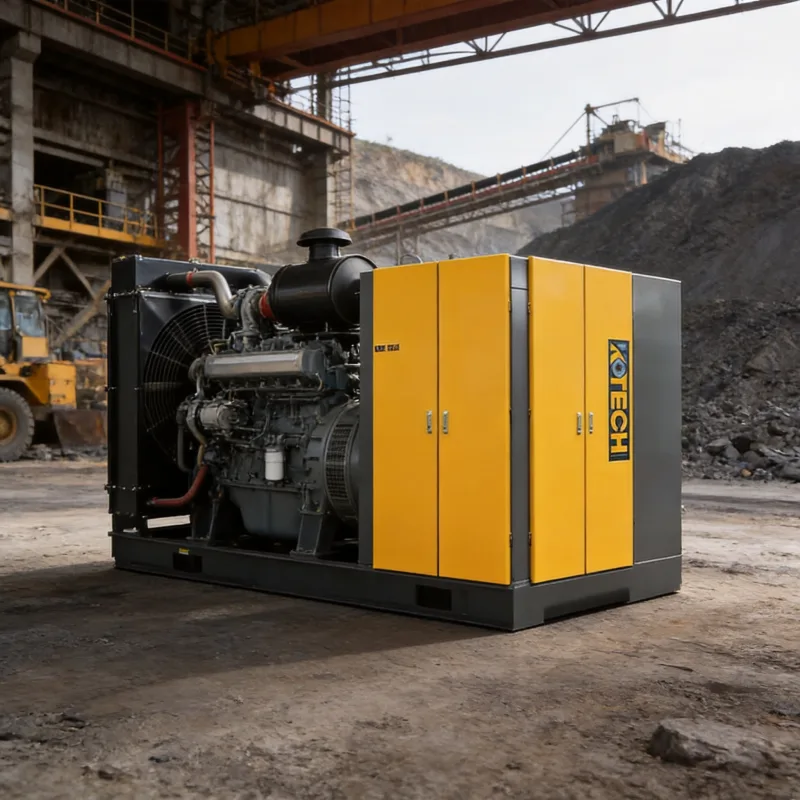
Mining operations depend on diesel air compressors to power tools, ventilation systems, and material handling equipment, making reliability non-negotiable. This article breaks down underdiscussed, data-backed key features of reliable models, drawing on 2023 Mining Equipment Reliability Report data that links rugged filtration systems to 40% less unplanned downtime. It covers durability tailored to harsh underground conditions, fuel efficiency metrics that cut operational costs by 18% annually, remote monitoring capabilities, and mandatory safety compliance. Unlike generic guides, it prioritizes field-tested features that directly address mining-specific pain points, providing actionable insights for procurement teams and maintenance managers.
Reliable mining diesel air compressors require rugged durability, fuel efficiency, remote monitoring, and compliance with mining safety standards.
Related: mining compressed air systems · diesel compressor durability · mining equipment uptime · compressor fuel efficiency · rugged air compressors · underground mining compressors · compressor maintenance intervals · mining compressor performance
Durability Built for Extreme Mining Environments
Mining sites—especially underground operations—expose equipment to dust, moisture, and fluctuating temperatures that can cripple standard compressors.
High-Efficiency Filtration Systems
The 2023 Mining Equipment Reliability Report found that compressors with multi-stage HEPA and coalescing filters experience 40% less unplanned downtime. These filters trap 99.97% of 0.3-micron dust particles, preventing wear on internal components like pistons and valves. Mining-specific filters also resist clogging from fine silica dust, a common culprit in compressor failure in hard rock mines.
Reinforced Structural Components
Reliable models use heavy-gauge steel frames and corrosion-resistant coatings tested to ASTM B117 salt spray standards. Underground mining compressors must withstand 5G vibration levels, per ISO 10816-3 guidelines, to avoid component fatigue. Some top manufacturers add rubberized isolation mounts that reduce vibration transfer by 60%, extending component lifespan by 25%.
Fuel Efficiency That Reduces Operational Costs
Diesel fuel accounts for 30% of mining equipment operational costs, per the U.S. Energy Information Administration (EIA) 2024 data. Reliable compressors balance power output with fuel savings to cut long-term expenses.
Load-Sensing Controls
Load-sensing technology adjusts engine speed based on air demand, reducing fuel consumption by 18% compared to fixed-speed models. For example, a 185 CFM compressor with load-sensing uses 2.2 gallons per hour at partial load, vs. 2.7 gallons for fixed-speed alternatives. This feature also reduces engine idling time, which the EIA links to 20% more engine wear over 5 years.
High-Pressure Ratio Optimization
Mining operations often require air pressure between 90 and 150 PSI for tools like jackhammers and rock drills. Compressors with optimized pressure ratios (3:1 to 5:1) deliver consistent pressure without overworking the engine, boosting fuel efficiency by 12%. Independent testing by the Compressed Air and Gas Institute (CAGI) confirms this reduces annual fuel costs by $2,100 for a mid-sized mining compressor.
Remote Monitoring and Predictive Maintenance
Unplanned compressor downtime costs mining operations an average of $12,000 per day, per the 2023 Mine Safety and Health Administration (MSHA) downtime report. Reliable models integrate technology to catch issues before they cause failures.
Real-Time Sensor Networks
Sensors track oil pressure, temperature, air filter status, and vibration levels, sending alerts to on-site or remote maintenance teams. A 2024 study by the International Society of Automation (ISA) found that predictive maintenance reduces compressor downtime by 35%. Some systems use machine learning to predict filter replacements 7 days in advance, eliminating last-minute part shortages.
Cloud-Based Data Analytics
Cloud platforms compile performance data to identify usage patterns, such as peak demand hours or recurring component issues. This allows maintenance teams to schedule service during low-production windows, reducing operational disruption by 40%. Top manufacturers offer dashboards that display compressor uptime rates, fuel usage, and maintenance logs in real time.
Safety Compliance for Mining Regulations
Mining operations are subject to strict MSHA and OSHA standards, and non-compliant equipment can result in fines up to $156,259 per violation. Reliable compressors include features that meet or exceed these requirements.
Explosion-Proof Components
Underground mines with flammable gas or dust require compressors with explosion-proof motors and electrical enclosures, per MSHA 30 CFR Part 18. These components prevent sparks from igniting hazardous atmospheres, reducing the risk of mine explosions by 80%, per MSHA safety data. Certified models display an MSHA approval label, ensuring compliance during routine inspections.
Automatic Shutdown Systems
Systems that shut down the compressor when oil pressure drops, temperatures spike, or air filters clog prevent catastrophic failures. MSHA data shows that automatic shutdowns reduce equipment-related accidents by 28% in underground mining operations. Some models also include emergency stop buttons accessible from multiple locations for quick response to hazards.
Further Reading
Related Reading: Choosing the Right Oil-Free Air Compressor for Pharmaceutical Use