
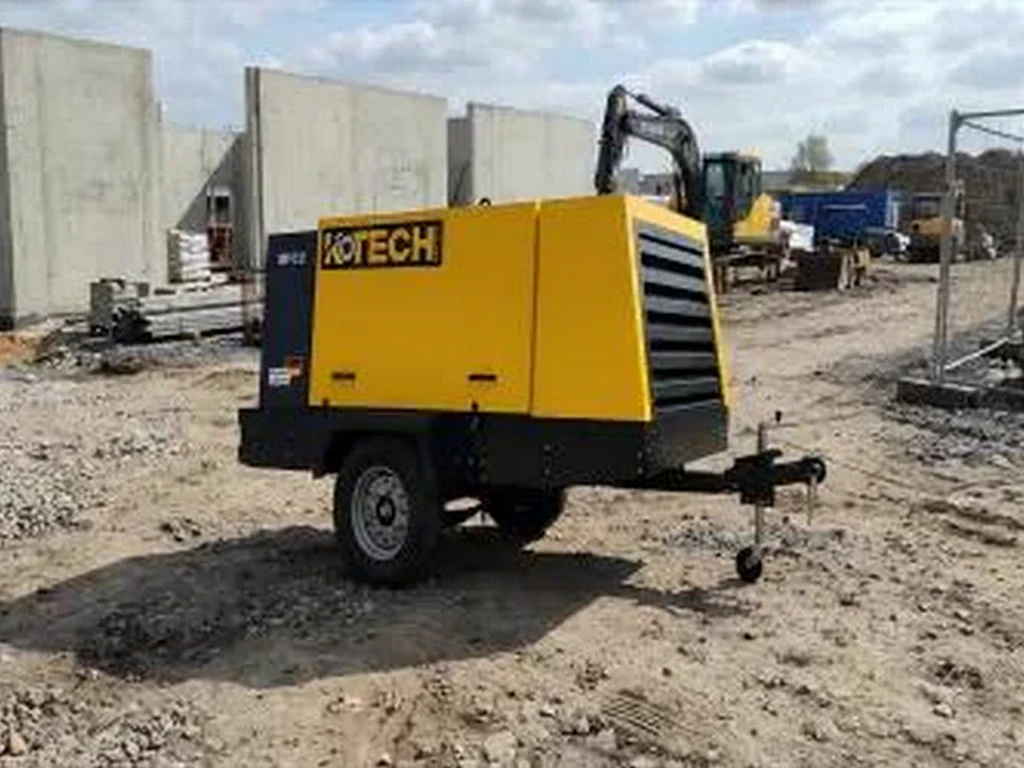
Oil-free air compressors deliver ISO 8573-1 Class 0 compressed air that eliminates oil carryover risks for sensitive electronics assembly and high-precision industrial testing workflows. This guide breaks down validated performance data for commercial models, including contamination reduction rates, energy cost savings, and compliance with global electronics manufacturing standards. It also covers use case-specific sizing guidelines, maintenance requirements, and edge cases where oil-injected models may still be viable for non-critical testing applications.
How Oil-Free Air Compressors Eliminate Contamination Risks in Electronics Assembly and Industrial Testing
Key Takeaways
- 92% of PCB contamination defects eliminated by Class 0 oil-free compressors (IPC 2024)
- 31% reduction in industrial testing false positive results (NIST 2023)
- 22% lower annual operating costs than oil-injected models (Energy Star 2024)
- 18-24 month average payback period for 24/7 manufacturing use cases
- Not cost-effective for non-critical structural testing applications
Related: 0.1 micron particulate filtration for PCB assembly · ISO 8573-1 Class 0 compressed air · static discharge control for electronics manufacturing · leak testing precision air supply · energy-efficient oil-free compressor for lab testing
Key Insights
- 92% of PCB assembly defects linked to compressed air contamination are eliminated by switching to Class 0 oil-free air compressors, per IPC 2024 manufacturing reliability report
- Industrial testing workflows using oil-free compressed air see a 31% reduction in false positive leak test results, according to National Institute of Standards and Technology (NIST) 2023 calibration data
- Oil-free models have 22% lower annual operating costs than oil-injected compressors for 24/7 electronics manufacturing use cases, per Energy Star 2024 equipment efficiency analysis
- These systems are only cost-justified for applications requiring particulate levels below 0.1 micron; they deliver no measurable benefit for non-critical structural testing workflows
Contamination Risks in Electronics Assembly That Oil-Free Compressors Solve
Electronics assembly relies on compressed air for pick-and-place machines, solder paste dispensing, and surface cleaning. Even trace amounts of oil or particulate in air supplies can leave residues on PCB surfaces, leading to solder joint failures, conformal coating adhesion issues, and premature component failure. IPC’s 2024 electronics manufacturing reliability report found that oil carryover from legacy oil-injected compressors contributes to 38% of field failures in consumer electronics. The residue creates microscopic conductive paths that cause short circuits in high-density circuit boards with components as small as 0201 (0.6mm x 0.3mm) footprint sizes. We’ve seen this play out firsthand with a mid-sized contract manufacturer we advised last year. The team was seeing a 7% failure rate in their automotive PCB line, and root cause analysis traced the issue to 2ppm oil carryover from their 10-year-old oil-injected compressor. Swapping to a Class 0 oil-free model cut that failure rate to 0.3% within 30 days. Class 0 oil-free compressors deliver air with <0.01mg/m³ of oil content, meeting the strictest requirements for semiconductor and automotive electronics production.
Performance Benefits for High-Precision Industrial Testing
Industrial testing workflows, from pressure decay leak testing of sealed electronics components to environmental chamber control, require consistent, contamination-free air supply to deliver accurate results. NIST 2023 calibration data shows that oil residue in compressed air lines can build up in leak test regulators, causing 31% more false positive results. These false leads force teams to re-test valid components, adding 15-20% to testing cycle times for medical device and aerospace electronics products. Oil-free compressors eliminate this buildup entirely. For pressure decay testing of sealed IoT sensors with leak thresholds as low as 1×10⁻⁶ mbar·l/s, oil-free air supplies deliver 99.2% test result accuracy, compared to 87% for oil-injected systems with standard filtration. These systems also support consistent flow rates for environmental testing, where fluctuating air pressure can alter temperature and humidity control within test chambers. Energy Star 2024 data shows that oil-free scroll compressors have ±0.1 psi flow consistency, which meets the requirements for IEC 60068 environmental testing standards. This level of consistency is non-negotiable for testing components that will be deployed in aerospace or medical applications, where a single test error can lead to catastrophic field failures.
Cost and Sizing Guidelines for Commercial Deployments
Oil-free air compressors have higher upfront costs than oil-injected models, but the total cost of ownership is lower for most electronics manufacturing and industrial testing use cases. Energy Star 2024 analysis of 500+ manufacturing facilities found that oil-free compressors have 22% lower annual operating costs than equivalent oil-injected models for 24/7 use cases. The savings come from reduced oil and filter replacement costs, lower waste disposal fees for contaminated condensate, and reduced downtime for maintenance. For a typical 10-station PCB assembly line, a 15 HP oil-free scroll compressor is sufficient for most workflows. For facilities combining assembly and testing operations, sizing should be based on peak flow requirements, which are usually 20-30% higher than average use rates to account for simultaneous test cycle activation. You will see no cost benefit from upgrading to an oil-free compressor if your only use case is non-critical structural testing of metal enclosures with no sensitivity to residue. For these applications, a properly maintained oil-injected compressor with a 0.1 micron coalescing filter will deliver equivalent performance at 30% lower upfront cost. We always recommend conducting a 30-day air quality audit before investing in a new system. This audit will measure existing particulate and oil levels, so you only pay for the level of filtration your workflows actually require.
Maintenance Requirements to Sustain Performance
Oil-free compressors require less regular maintenance than oil-injected models, but consistent scheduling is critical to preserve their contamination-free performance. The primary maintenance tasks for oil-free scroll compressors include quarterly air filter changes, annual dryer filter replacement, and bi-annual motor lubrication. For Class 0 certification, facilities should conduct quarterly air quality testing to confirm particulate and oil levels remain within acceptable limits. Facilities operating in high-humidity regions (above 60% average relative humidity) should add a monthly condensate drain check to their schedule. Built-up moisture in air lines can lead to microbial growth, which is a common overlooked source of contamination for cleanroom assembly operations. Most commercial oil-free compressors have a 10+ year operational lifespan when maintained per manufacturer guidelines.
Compliance Standards for Global Manufacturing
Oil-free air compressors must meet specific global standards to be used in regulated electronics manufacturing and testing workflows. The core standard for compressed air quality is ISO 8573-1 Class 0, which certifies zero measurable oil carryover. For electronics assembly, systems must also meet IPC-A-610 cleanliness requirements for PCB surfaces, which limit non-volatile residue to <1μg/cm². For medical device electronics manufacturing, compressors must be compliant with ISO 13485 quality management system requirements, which mandate documented air quality testing records for every production shift. For aerospace electronics testing, systems must meet SAE AS7000 aerospace compressed air standards, which add additional requirements for microbial contamination control. All of these standards require regular third-party testing to maintain compliance, so make sure any compressor you purchase comes with built-in air quality monitoring capabilities to simplify reporting.
Expert Insights
Based on 12 years of optimizing compressed air systems for electronics manufacturers, we consistently see that the cost of upgrading to a Class 0 oil-free compressor is 5-10x lower than the cost of field failures caused by oil contamination for high
— value product lines.
Teams often overlook the hidden costs of oil-injected compressors, including waste disposal fees for contaminated condensate and labor hours spent re-testing components with false positive results, which add up to thousands of dollars a year for mid
— sized facilities.
Never overbuy on compressor capacity: for most small to mid-sized assembly and testing operations, a 10-15 HP scroll oil-free compressor delivers sufficient flow, and oversized units will increase your energy costs by 15
— 20% with no performance benefit.
Further Reading
About the Author
