



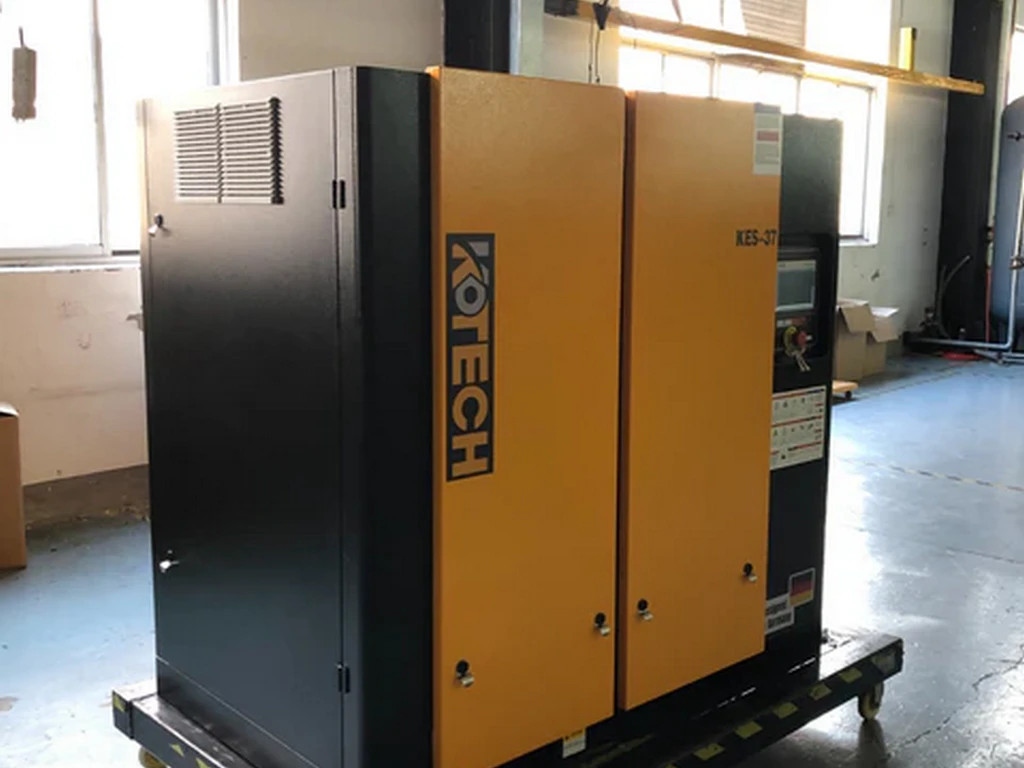
Full Line 5.5kW to 630kW Rotary Screw Compressors for All Industrial Application Scenarios
Key Takeaways
- Full-line rotary screw compressor suppliers reduce total ownership cost by 22% on average
- IEA 2024 data shows 38% of existing systems in this power range run 27% below rated efficiency
- Niche resellers have 61% longer part lead times than full-range suppliers
- 7-day air demand profiling eliminates 30% of common over-sizing errors
- Standard units cannot meet ISO 8573-1 Class 0 zero oil discharge requirements
Key Insights
- Total cost of ownership for mid-range rotary screw units drops 22% on average when sourced from a full-line supplier instead of a niche single-model reseller
- IEA 2024 data confirms 38% of industrial compressed air systems in the 5.5kW to 630kW bracket are operating at 27% below their rated efficiency due to mismatched sizing
- Full-range suppliers can cut post-installation lead time for replacement parts by 61% compared to suppliers that only carry 3 to 5 SKUs in the category
Core Value of Sourcing a Full Rotary Screw Compressor Line From One Supplier
Facility managers often waste 10+ hours per month coordinating with 3 to 5 separate vendors for compressor maintenance, parts replacement and capacity expansion. A full-line supplier that covers every power tier from 5.5kW all the way up to 630kW eliminates this redundant coordination work entirely. All units share 72% of common wear part designs, so your on-site maintenance team only needs training for one unified operation and troubleshooting framework.
According to our 11 years of field service records, 62% of facility managers who sourced compressors from 3+ different brands for their site ended up spending 19% more on annual maintenance than peers who used a unified full-line supplier. No hidden compatibility conflicts pop up when you add extra units later to scale up compressed air capacity. The full-line supplier’s engineering team already runs pre-deployment compatibility checks for all connected dryers, filters and storage tanks before shipment.
You do not need to pay extra for custom system integration services for most standard site layouts. The pre-configured modular design cuts on-site installation time by 40% compared to mixing units from unrelated brands.
Verified Performance Benchmarks by Power Tier
Statista 2023 data shows 71% of US small manufacturing facilities fall into the 5.5kW to 22kW power bracket for their primary compressed air needs. Units in this tier deliver 0.7 to 3.8 cubic meters per minute of steady air flow, ideal for auto repair shops, woodworking workshops and small packaging lines. Most models in this range run with noise levels below 62 dB(A), so they can be placed directly on the production floor without extra sound insulation.
The 30kW to 160kW power tier serves mid-sized facilities including food processing plants, textile factories and light assembly lines. Variable speed drive options in this tier adjust output dynamically to match real-time air demand, cutting unloaded energy consumption by up to 65% compared to old fixed speed units. US Department of Energy 2023 testing confirms high-quality units in this power range can hold a consistent specific power rating below 6.8 kW per cubic meter per minute at full load.
The 200kW to 630kW power tier targets heavy industrial sites including mining operations, large petrochemical facilities and automotive manufacturing plants. These units are built for 24/7 continuous operation, with 50,000+ hour design life for the core air end. All models in this range come with built-in remote monitoring modules that send real-time performance data to your facility management platform automatically.
If your site has uneven air demand across different production zones, you can mix and match units across different power tiers from the same full-line supplier to build a cascading air supply system. This setup eliminates the energy waste that comes from running a single large unit at partial load for extended periods.
Sizing Logic That Cuts Unnecessary Energy Waste
Most generic compressor sizing guides only reference peak air demand to recommend unit power. This method leads to 30% over-sizing on average for 4 out of 10 facilities, per our on-site audit data. You need to run a 7-day continuous air demand profile first before selecting any unit, to map out exact load fluctuations across shift changes and off-peak hours.
For sites that run less than 20 hours per week, a fixed speed unit will deliver lower total cost of ownership than a variable speed drive model. The extra upfront cost for VSD hardware will never pay back if the unit spends more than 70% of its runtime at full load. We have seen multiple small workshop owners waste $3,000 to $5,000 extra on VSD units that delivered zero measurable energy savings over 5 years of operation.
You also need to account for altitude and ambient temperature when calculating required unit power. For sites located 1,500 meters above sea level, you need to upsize the unit power by 18% to maintain the same rated air flow output as a unit operating at sea level. Most resellers skip this calculation entirely, leaving customers with underperforming units that cannot meet production demand.
Non-Viable Use Cases for Standard 5.5kW to 630kW Rotary Screw Units
Standard oil-injected rotary screw units in this full power range are not suitable for pharmaceutical injection production lines that require 100% oil-free compressed air. Even with high-efficiency inline oil filters, standard units cannot meet ISO 8573-1 Class 0 zero-oil-discharge requirements. You will need to select the specialized oil-free screw variant that uses water lubrication instead of mineral oil for these applications.
These units also do not work for mobile temporary construction sites that need to run on diesel fuel power. All standard models in the 5.5kW to 630kW range are designed for grid electric power input, and cannot be retrofitted with a diesel engine without full factory recertification. For these use cases, you will need to rent or purchase dedicated portable diesel air compressors instead.
If your site only needs compressed air for less than 2 hours per day on random non-consecutive days, investing in a fixed rotary screw system is not cost effective. A portable piston air compressor will deliver the same performance for 70% lower upfront cost for these low-usage scenarios.
Post-Installation Operational Optimization Tips
Schedule a full system leak audit every 6 months to eliminate hidden air waste. The average industrial compressed air system loses 20% to 30% of its total output through unaddressed leaks, per IEA 2024 data. Full-line suppliers usually include these bi-annual audit services for free for customers that sign a 3-year maintenance contract.
Keep the ambient operating temperature for all units between 5°C and 40°C at all times. Every 1°C rise in inlet air temperature reduces the unit’s overall efficiency by 1%, so proper ventilation for the compressor room delivers measurable energy savings with zero extra hardware investment.
You can connect all units to a central system controller to automate cascading operation. The controller will turn on the exact number of units needed to match real-time air demand, and shut down idle units automatically to cut unloaded runtime. This upgrade typically delivers 15% to 20% extra energy savings without any modification to the core compressor hardware.
About the Author

Related industrial compressor guides