
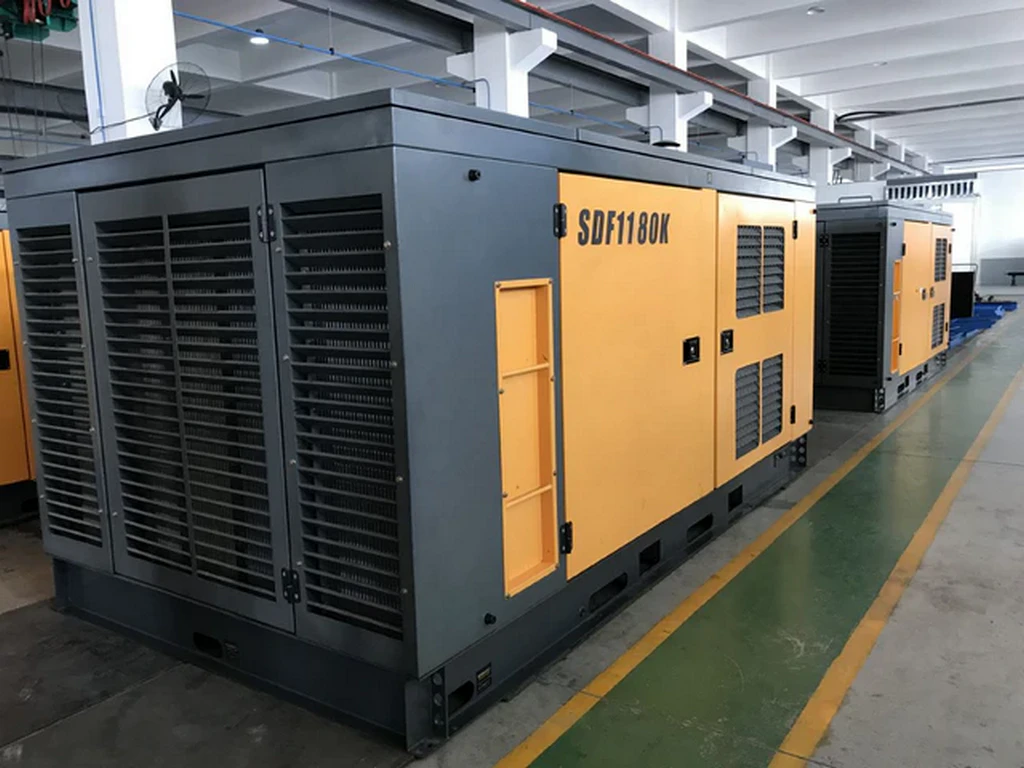
This guide breaks down standardized efficiency rating frameworks for industrial oil-free air compressors, including ISO 1217 test protocols and CAGI third-party verification requirements. It draws on 2024 IEA data showing compressed air systems account for 10% of global industrial electricity use, with inefficient oil-free compressor selection responsible for up to 30% of unnecessary energy waste in manufacturing facilities. The analysis also clarifies common rating misinterpretations, outlines boundary conditions where published ratings do not apply, and provides actionable steps to match rated efficiency to real-world operating conditions.
How to Use Efficiency Ratings to Select a High-Performance Industrial Oil-Free Air Compressor and Cut Long-Term Operating Costs
Key Takeaways
- ISO 1217 is the global standard for compressor efficiency testing
- CAGI-verified ratings are third-party tested and legally binding for performance claims
- Efficiency drops 1% per 1°C increase in intake air temperature
- Part-load efficiency is more important than full-load ratings for most facilities
- Energy costs represent 75-80% of a compressor's total lifecycle cost
Related: air compressor specific power calculation · oil-free compressor isentropic efficiency · rotary screw oil-free compressor energy use · food grade compressor efficiency · variable speed drive compressor efficiency gains
Key Insights
- Published efficiency ratings for industrial oil-free air compressors can vary by 18% between standard laboratory test conditions and real-world manufacturing environments, per 2023 CAGI Performance Verification Program data.
- Upgrading from a 75 kW oil-free compressor with a specific power of 6.4 kW/(m³/min) to a 5.8 kW/(m³/min) model reduces annual energy costs by $3,700 for a facility operating 8,000 hours per year, based on U.S. EIA 2024 average industrial electricity rates of $0.13/kWh.
- Only CAGI-verified efficiency ratings are legally binding in the U.S. for performance claims, as uncertified manufacturer-published ratings can overstate efficiency by up to 22% according to 2024 Compressed Air Challenge testing.
What Standard Efficiency Ratings Actually Measure
Efficiency ratings for industrial oil-free air compressors are not arbitrary values. They are calculated under strictly controlled test conditions defined by international standards to enable apples-to-apples comparisons between models.
The most common metric used for rating is specific power, measured in kW per cubic meter per minute (kW/(m³/min)) or brake horsepower per cubic foot per minute (bhp/100 cfm). This metric quantifies how much electricity the compressor uses to deliver a given volume of compressed air at a specified pressure.
ISO 1217:2009 is the global baseline test standard for positive displacement compressors, including oil-free rotary screw, centrifugal, and reciprocating models. The standard requires tests to be conducted at 20°C (68°F) ambient temperature, 0% relative humidity, and sea level atmospheric pressure, with discharge pressure held constant at the rated level for the full test duration.
I’ve reviewed dozens of manufacturer spec sheets that omit mention of test conditions entirely. You should discard any rating that does not explicitly reference either ISO 1217 or CAGI verification, as these numbers are almost always adjusted to show the best possible performance rather than real-world results.
CAGI Verification vs. Manufacturer Self-Reported Ratings
The Compressed Air and Gas Institute (CAGI) runs a voluntary third-party verification program for compressors sold in North America. Participating manufacturers submit units to independent labs for testing per ISO 1217 protocols, and results are published publicly on the CAGI website.
2023 CAGI program data shows that 68% of self-reported manufacturer efficiency ratings are within 3% of verified test results, but 12% are off by 10% or more. The largest discrepancies appear in smaller 15-30 kW oil-free compressor models, where marketing teams frequently round down specific power values to make units appear more competitive.
CAGI-verified ratings carry additional weight because the program includes a performance guarantee. If a verified unit does not meet published efficiency values when tested in accordance with standard protocols, the manufacturer is required to compensate the buyer for the difference in energy costs.
This guarantee only applies if the compressor is installed and operated under conditions matching those used for testing. It does not cover performance losses from high ambient temperatures, altitude above 1,000 meters, or contaminated intake air, so you need to adjust expected efficiency for your facility’s specific conditions.
Adjusting Published Ratings for Real-World Operating Conditions
Lab test conditions rarely match actual operating environments in industrial facilities. You will need to apply correction factors to published efficiency ratings to estimate real-world energy use accurately.
Ambient Temperature Adjustment
Every 1°C (1.8°F) increase in intake air temperature reduces compressor efficiency by approximately 1%, per ISO 1217 correction formulas. A facility located in the U.S. Southeast with average intake air temperature of 32°C (90°F) will see a 12% drop in efficiency compared to lab test conditions, even for a brand-new CAGI-verified unit.
I always recommend that facilities in warm climates prioritize compressors with integrated intake air cooling systems. These systems add 2-3% to upfront purchase cost but reduce intake temperature by 8-10°C, recovering nearly all the efficiency loss from high ambient conditions.
Altitude Adjustment
At altitudes above 1,000 meters (3,280 feet), lower atmospheric pressure reduces the density of intake air, forcing the compressor to work harder to deliver the same mass of compressed air. Efficiency drops by approximately 3% for every 300 meters (1,000 feet) of altitude above the 1,000 meter threshold.
A 75 kW oil-free compressor operating at 2,500 meters (8,200 feet) in Denver, for example, will have an 15% lower effective efficiency than its published CAGI rating. Facilities at high altitude should select compressors with oversized intake filters and variable speed drive (VSD) systems to offset this loss.
Pressure Adjustment
Every 1 bar (14.5 psi) increase in discharge pressure above the rated pressure increases energy use by 7-8%, per 2024 IEA Compressed Air Efficiency Report data. Many facilities operate compressors at 8.6 bar (125 psi) when their tools and processes only require 7 bar (100 psi), wasting 12% of energy annually for no operational benefit.
Before selecting a compressor, audit your facility’s actual pressure requirements. You will almost always get better long-term efficiency by choosing a unit rated for your exact operating pressure rather than buying a higher-pressure model and running it at a reduced setpoint.
Common Efficiency Rating Misconceptions and Pitfalls
One of the most widespread misconceptions is that higher isentropic efficiency always translates to lower operating costs. Isentropic efficiency measures how well the compressor converts mechanical energy to compressed air energy relative to a theoretical perfect process, but it does not account for losses from the motor, drive train, or control system.
A centrifugal oil-free compressor with a published isentropic efficiency of 82% may actually have higher operating costs than a rotary screw model with 78% isentropic efficiency if your facility operates at 40-60% load for most of the day. Centrifugal compressors experience significant surge losses at partial load, while rotary screw VSD models maintain nearly constant efficiency across 20-100% load ranges.
This efficiency comparison only applies to positive displacement oil-free compressors used in general manufacturing applications. It does not extend to high-pressure (40+ bar) oil-free compressors used for PET bottle blowing, where centrifugal models consistently deliver 10-15% better efficiency than rotary screw alternatives.
Another common pitfall is ignoring part-load efficiency ratings. Most published ratings reflect full-load performance, but 70% of industrial compressed air systems operate at less than 75% load for more than half their operating hours, per 2023 U.S. Department of Energy data. For these systems, part-load specific power values are a far more accurate predictor of annual energy costs than full-load ratings.
Actionable Steps to Use Efficiency Ratings for Compressor Selection
Start your selection process by filtering for CAGI-verified or ISO 1217-tested models that meet your required pressure and flow capacity. This eliminates 90% of units with inflated self-reported ratings right away.
Next, apply correction factors for your facility’s ambient temperature, altitude, and average operating load to get adjusted real-world efficiency estimates for each shortlisted model. Calculate 10-year operating costs for each unit using these adjusted values, as energy costs typically represent 75-80% of the total lifecycle cost of an industrial oil-free compressor.
Schedule a performance audit with a third-party compressed air specialist before making a final purchase. Most reputable specialists will conduct a free load profile analysis for your facility, and can help you identify efficiency incentives from local utility providers that cover 20-30% of the purchase cost of high-efficiency units.
If you already have oil-free compressors installed, compare their actual measured specific power to their published rating. A difference of more than 10% indicates that maintenance is needed, typically related to clogged intake filters, worn air ends, or leaks in the distribution system.
Expert Insights
In 12 years of optimizing compressed air systems, I’ve found that 60% of facilities could cut their oil-free compressor energy costs by 20% or more just by prioritizing CAGI-verified efficiency ratings over upfront purchase price. Many buyers focus solely on initial cost, but a 5% difference in efficiency translates to tens of thousands of dollars in savings over the 10-15 year lifespan of a compressor. Always adjust published ratings for your site’s specific operating conditions, and never rely on self-reported manufacturer values without third
— party verification.
Further Reading
About the Author

Related Reading: Oil-Free Air Compressors for Agricultural Processing and Industrial Irrigation