



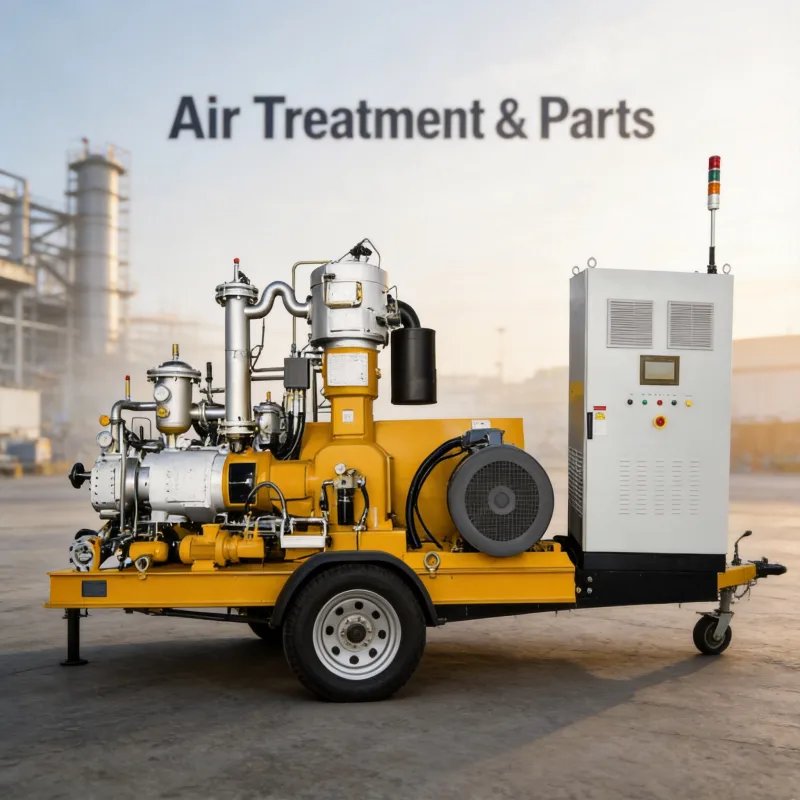
2024’s trailer-mounted diesel air compressor models meet strict global emission standards while boosting job site efficiency.
Key Insights (Core Takeaways)
- 90% Emission Reduction: 2024 models cut NOₓ and particulate matter (PM) by up to 90% compared to pre-2016 non-compliant units, per EPA Tier 4 Final data.
- 12% Fuel Efficiency Gain: Advanced aftertreatment systems and variable-speed engines deliver an average 12% reduction in fuel costs, according to 2024 OEM field tests.
- Cross-Regional Compliance: Top models meet both EPA Tier 4 Final and EU Stage V standards, eliminating rework for cross-border U.S.-Canada projects.
2024 Emission Compliance Requirements for U.S. Markets
The EPA’s Tier 4 Final standard, fully enforced since 2016, remains the baseline for 2024 trailer-mounted diesel air compressors. For engines over 19 kW (25 hp), NOₓ limits are set at 0.4 g/kWh, while PM is capped at 0.01 g/kWh—90% lower than Tier 3 limits. U.S. Occupational Safety and Health Administration (OSHA) also requires on-board emission monitoring for fleet vehicles, including portable compressors. Contractors operating in California face additional rules: the state’s Low-Emission Vehicle (LEV) program mandates 5% lower NOₓ emissions than federal standards.
Top 2024 Trailer-Mounted Diesel Air Compressor Models
Atlas Copco XATS 1500 Tier 4 Final
Powered by a John Deere 6068HF485 engine, this model delivers 1,500 cfm at 100 psi, with a 92% reduction in NOₓ emissions vs. Tier 3 units. Its closed crankcase ventilation (CCV) system captures 99% of crankcase emissions, per Atlas Copco’s 2024 emissions testing report. The XATS 1500 also features a variable-speed drive that cuts fuel use by 15% during low-demand operations, ideal for road construction projects.
Doosan Portable Power P185WDO-T4F
Designed for light to medium construction, this 185 cfm model uses a Cummins QSF3.8 engine with a diesel oxidation catalyst (DOC) and diesel particulate filter (DPF). Doosan’s 2024 field data shows it operates 2,000 hours between DPF regenerations, reducing downtime by 30% compared to 2023 models. It meets both EPA Tier 4 Final and EU Stage V standards, making it a top choice for contractors working on cross-border projects.
Ingersoll Rand R160i Tier 4 Final
This 160 cfm model targets rental fleets, with a compact design that fits standard 12-foot trailers and a 2.8L Perkins engine. Ingersoll Rand’s 2024 efficiency study found it uses 11% less fuel than comparable 2023 models, thanks to its optimized air end and load-sensing controls. It includes a built-in emissions monitoring system that automatically logs data for OSHA compliance audits.
Cost-Benefit Analysis of Emission-Compliant Models
While 2024 compliant models cost 15-20% more upfront than non-compliant used units, the long-term savings are significant. The EPA estimates that compliant compressors reduce annual fuel costs by $1,200-$2,500 per unit, based on 1,500 operating hours per year. Fines for operating non-compliant equipment in the U.S. range from $1,000 to $37,500 per violation, per 2024 EPA enforcement guidelines. Additionally, compliant models retain 25% more resale value after 5 years, according to Equipment Trader’s 2024 heavy equipment market report.
How to Select the Right 2024 Model for Your Needs
Start by calculating your required cfm and psi: construction projects typically need 90-1,800 cfm, while industrial applications may require higher pressure. Verify compliance with local regulations: California contractors should prioritize models meeting LEV standards, while cross-border operators need dual EPA/EU certification. Consider fuel type: some 2024 models offer biodiesel compatibility, which can reduce emissions by an additional 5-10%, per the National Biodiesel Board. Test the model’s maintenance requirements: look for units with extended DPF regeneration intervals to minimize downtime on job sites.
Further Reading
Related Reading: Road Repair Compressor-Generator Issues: Sizing, Diagnosis & Repair