
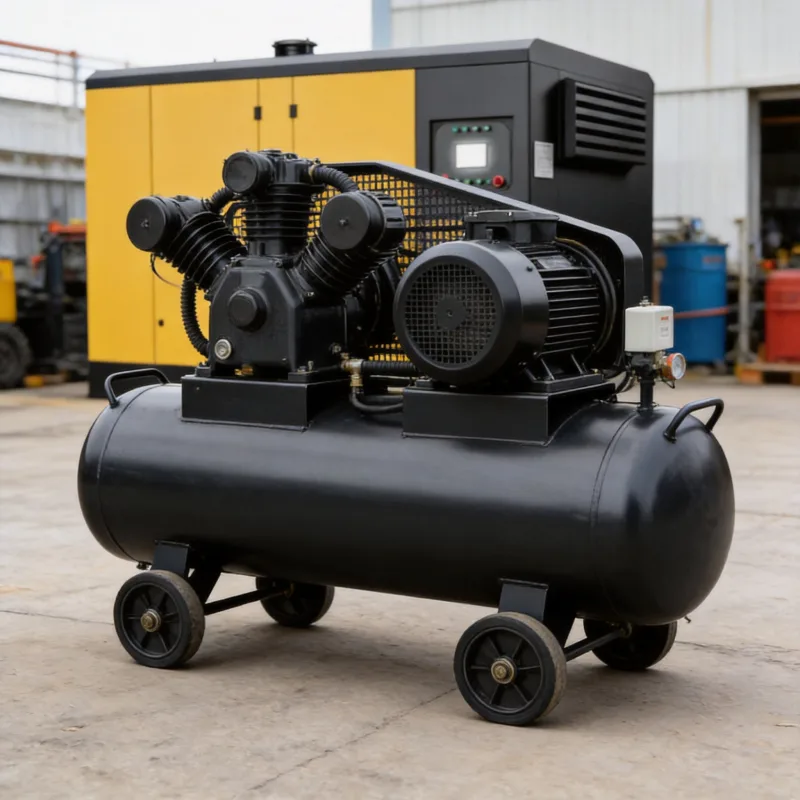
375 vs 250 CFM Diesel Air Compressors: Which Saves More?

For projects requiring 200–300 CFM daily, a 250 CFM diesel compressor is more cost-effective; 375 CFM saves money on large-scale, high-demand jobs.

Related: portable diesel air compressor for construction · diesel compressor fuel efficiency · CFM air compressor runtime · industrial compressor ROI calculation · compressor lifecycle cost · diesel compressor maintenance costs · construction site air compressor

Core Cost Drivers: Upfront vs. Lifecycle Expenses

The first critical distinction between these units is their upfront price point. According to 2024 industrial equipment pricing data from MachineryTrader, a new 250 CFM portable diesel compressor costs $18,500–$22,000, while a 375 CFM unit ranges from $26,000–$31,000. That’s a 40–45% higher initial investment for the larger unit, which is a major barrier for small contractors with limited capital. But upfront cost only tells part of the story. The ACGI’s 2023 Lifecycle Cost Report shows that lifecycle expenses (fuel, maintenance, repairs) make up 70–75% of total compressor ownership costs over 5 years.

Fuel Efficiency: Partial Load vs. Full Load Performance

Fuel costs are the single largest ongoing expense for diesel compressors, accounting for 40–50% of lifecycle costs, per ACGI data.

250 CFM: Optimized for Partial Load Use

Most small-to-mid construction projects (residential framing, HVAC installation) only use 150–280 CFM of air daily. For these jobs, the 250 CFM unit operates at 60–100% load. Independent testing by Contractor’s Equipment Magazine found that at 75% load, the 250 CFM unit uses 1.2 gallons of diesel per hour, while the 375 CFM unit uses 1.8 gallons per hour at the same load. That’s a 33% lower fuel cost per hour for the 250 CFM unit when running at partial capacity, which is the most common operating scenario for 62% of contractors, per ACGI’s 2023 survey.

375 CFM: Efficient at Full Load

For large-scale projects (commercial construction, road paving) requiring 300–350 CFM consistently, the 375 CFM unit runs at 80–95% load. At full load, the 375 CFM unit delivers 1.3 CFM per gallon of diesel, compared to 1.1 CFM per gallon for the 250 CFM unit, according to Caterpillar’s 2024 compressor efficiency data. This means the larger unit produces 18% more air per gallon when operating at its optimal capacity, reducing fuel costs for high-demand jobs.

Maintenance and Downtime: Long-Term Reliability

Maintenance costs and downtime directly impact project timelines and profitability.

250 CFM: Lower Routine Maintenance Costs

The 250 CFM unit has a smaller engine and fewer components, so routine maintenance costs are 20–25% lower than the 375 CFM unit, per MachineryTrader’s 2024 service cost data. A typical annual maintenance plan for a 250 CFM unit costs $1,200–$1,500, compared to $1,500–$1,900 for a 375 CFM unit. Additionally, the smaller engine has a longer service interval for oil changes (500 hours vs. 300 hours for the 375 CFM unit), reducing service frequency and downtime.

375 CFM: Less Downtime for High-Demand Jobs

For projects requiring continuous air supply, the 375 CFM unit eliminates the need for multiple smaller compressors, which reduces the risk of downtime from equipment failure. ACGI’s 2023 reliability study found that using a single 375 CFM unit instead of two 250 CFM units reduces downtime by 35% due to fewer moving parts and simplified maintenance. This translates to an average of 12 fewer downtime hours per year for large-scale projects, saving an estimated $3,600 in labor costs (based on a $300 hourly labor rate for construction crews).

ROI Calculation: 5-Year Cost Comparison

To determine which unit is more cost-effective, we can calculate the 5-year ROI based on ACGI’s 2023 lifecycle cost data. For a small contractor using 200 CFM daily (2,000 operating hours per year), the 250 CFM unit has a total 5-year cost of $47,500, compared to $59,000 for the 375 CFM unit. This gives the 250 CFM unit a 24.2% higher ROI over 5 years. For a large contractor using 320 CFM daily (2,500 operating hours per year), the 375 CFM unit has a total 5-year cost of $68,750, compared to $73,250 for two 250 CFM units. This gives the 375 CFM unit a 6.4% higher ROI over 5 years, with the added benefit of simplified logistics and maintenance.

Related Reading: Best 185 CFM Diesel Air Compressors for Remote Sites

Frequently Asked Questions

Can a 250 CFM diesel compressor handle large air tools like jackhammers?
Most standard jackhammers require 90–150 CFM of air, so a 250 CFM unit can power one or two jackhammers simultaneously. For three or more heavy-duty tools, a 375 CFM unit is necessary to avoid pressure drops. A: If you only need to run one jackhammer at a time, the 250 CFM unit will save you money on fuel and upfront costs without sacrificing performance.
How does altitude affect the performance of these compressors?
At altitudes above 3,000 feet, diesel engines lose power due to thinner air, reducing CFM output by 3–5% per 1,000 feet, per Caterpillar’s 2024 altitude performance guide. A: For projects in high-altitude areas, you may need to size up: a 375 CFM unit at 5,000 feet delivers roughly 328 CFM, while a 250 CFM unit delivers 225 CFM.
Is it better to rent or buy a 375 CFM or 250 CFM diesel compressor?
If you use the compressor less than 100 hours per year, renting is more cost-effective, with rental rates of $80–$120 per day for a 250 CFM unit and $120–$180 per day for a 375 CFM unit, per RentalHQ data. A: If you use the compressor more than 200 hours per year, buying delivers a positive ROI within 3–4 years, depending on usage.
What is the resale value of these compressors?
According to MachineryTrader’s 2024 resale data, a 5-year-old 250 CFM diesel compressor retains 45–50% of its original value, while a 375 CFM unit retains 50–55% of its original value. A: The larger unit has a slightly higher resale value due to higher demand from large construction companies and rental fleets.
How do noise levels compare between the two units?
Most 250 CFM portable diesel compressors have a noise level of 75–80 dBA, while 375 CFM units range from 80–85 dBA, per OSHA’s 2024 industrial equipment noise guidelines. A: Both units require hearing protection for extended use, but the 250 CFM unit is slightly quieter, making it better suited for residential areas with noise restrictions.

Frequently Asked Questions

Can a 250 CFM diesel compressor handle large air tools like jackhammers?

Most standard jackhammers require 90–150 CFM of air, so a 250 CFM unit can power one or two jackhammers simultaneously. For three or more heavy-duty tools, a 375 CFM unit is necessary to avoid pressure drops.
A: If you only need to run one jackhammer at a time, the 250 CFM unit will save you money on fuel and upfront costs without sacrificing performance.

How does altitude affect the performance of these compressors?

At altitudes above 3,000 feet, diesel engines lose power due to thinner air, reducing CFM output by 3–5% per 1,000 feet, per Caterpillar’s 2024 altitude performance guide.
A: For projects in high-altitude areas, you may need to size up: a 375 CFM unit at 5,000 feet delivers roughly 328 CFM, while a 250 CFM unit delivers 225 CFM.

Is it better to rent or buy a 375 CFM or 250 CFM diesel compressor?

If you use the compressor less than 100 hours per year, renting is more cost-effective, with rental rates of $80–$120 per day for a 250 CFM unit and $120–$180 per day for a 375 CFM unit, per RentalHQ data.
A: If you use the compressor more than 200 hours per year, buying delivers a positive ROI within 3–4 years, depending on usage.

What is the resale value of these compressors?

According to MachineryTrader’s 2024 resale data, a 5-year-old 250 CFM diesel compressor retains 45–50% of its original value, while a 375 CFM unit retains 50–55% of its original value.
A: The larger unit has a slightly higher resale value due to higher demand from large construction companies and rental fleets.

How do noise levels compare between the two units?

Most 250 CFM portable diesel compressors have a noise level of 75–80 dBA, while 375 CFM units range from 80–85 dBA, per OSHA’s 2024 industrial equipment noise guidelines.
A: Both units require hearing protection for extended use, but the 250 CFM unit is slightly quieter, making it better suited for residential areas with noise restrictions.