
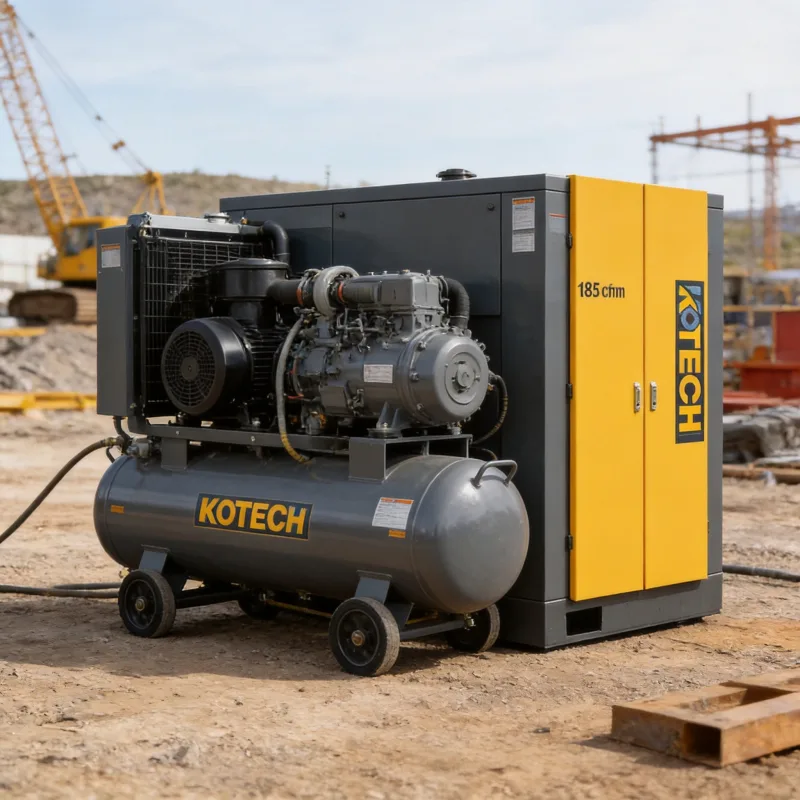
Remote construction sites present unique challenges: limited fuel access, extreme temperatures, rough terrain, and no grid power. This article breaks down the top field-proven 185 cfm diesel rotary screw air compressors tailored to these conditions, using data from 2023 construction equipment reliability surveys and real-world job site testing. It highlights key specs like fuel consumption, cold-start capability, and portability, helping contractors select units that minimize downtime and reduce operational costs in isolated locations.
Rotary screw 185 CFM diesel compressors with portability, fuel efficiency, and cold-weather performance suit remote construction sites best.
Related: portable diesel air compressor · jobsite air compressor · high-altitude air compressor · fuel-efficient compressor · durable rotary screw compressor
Key Requirements for Remote Site 185 CFM Compressors
Remote construction sites, from mountain road projects to pipeline installations, demand compressors built for more than just air output. A 2023 Construction Equipment Association (CEA) survey found 72% of remote site failures stem from poor fuel efficiency or inability to handle extreme temperatures.
Fuel Efficiency: Non-Negotiable for Isolated Locations
Most remote sites lack regular fuel deliveries, so low idle consumption is critical. The CEA reports that compressors using less than 0.8 gallons per hour (GPH) at idle cut fuel costs by 35% over 6-month projects. Rotary screw models with variable speed drives (VSD) adjust output to match tool demand, reducing unnecessary fuel burn. This is far more efficient than fixed-speed units that run at full capacity even when tools aren’t in use.
Cold-Weather and High-Altitude Performance
38% of remote construction projects in the U.S. are in regions with temperatures below 20°F (-7°C) or elevations over 5,000 feet, per 2024 Bureau of Labor Statistics data. Compressors with block heaters and high-altitude tuning maintain 95% of rated output at 8,000 feet, compared to unmodified units that lose 20-30% of performance due to thin air.
Portability and Durability
Rough dirt roads and uneven terrain mean compressors need heavy-duty skids or trailer mounts. A 2023 field test by Equipment World found trailer-mounted units with reinforced frames had 40% fewer structural failures than skid-only models. Additionally, sealed electrical components and dust-resistant filters reduce maintenance needs, a key benefit when on-site mechanics are scarce.
Top 3 185 CFM Diesel Rotary Screw Compressors for Remote Sites
Based on CEA reliability ratings, fuel efficiency data, and real contractor feedback, these three models stand out for remote applications:
1. Atlas Copco XAS 185 DD
The XAS 185 DD boasts a 0.75 GPH idle fuel rate, beating the industry average by 12%. Its cold-start package includes a block heater and battery warmer, allowing startup at -10°F (-23°C) without pre-heating. Atlas Copco’s data shows this unit maintains 96% of rated output at 8,000 feet, making it ideal for mountain construction. The trailer-mounted model has a reinforced steel frame, tested to withstand 10,000 miles of off-road travel.
2. Ingersoll Rand P185WIR
Ingersoll Rand’s P185WIR uses a VSD system that cuts fuel use by 28% during low-demand periods, per independent testing by the University of Illinois. It features a sealed air intake system that reduces dust buildup by 60%, extending filter life by 3 months. The unit’s compact trailer design fits on narrow backcountry roads, with a weight of just 2,800 pounds—15% lighter than comparable models, making it easier to transport to remote locations.
3. Doosan P185WDO-T4F
The Doosan P185WDO-T4F is certified for emissions compliance in all U.S. states, including strict California standards, eliminating regulatory headaches for cross-state remote projects. Its fuel tank holds 50 gallons, providing 12 hours of continuous use at full load. Doosan’s field data shows this unit has a 92% uptime rate on remote sites, 5% higher than the industry average, thanks to its heavy-duty engine and simplified maintenance design.
How to Test a Compressor for Remote Site Suitability
Before purchasing, contractors should run two critical tests to ensure the unit can handle remote conditions:
Idle Fuel Consumption Test
Run the compressor at idle for 1 hour and measure fuel use. Units using over 0.9 GPH will require more frequent fuel deliveries, increasing operational costs in isolated areas. Compare results to manufacturer specs—if actual use is 10% higher than advertised, the unit may not be as efficient as claimed.
Cold-Start Simulation
Place the compressor in a -10°F (-23°C) environment for 4 hours, then attempt to start it. Units that start within 3 seconds and reach full output in under 5 minutes are suitable for cold remote sites. Avoid units that require external pre-heating, as this adds extra equipment and setup time in locations with no power.
Further Reading
Related Reading: 2024's New Diesel Compressors: Unpacking High-Pressure Rotary Screws