
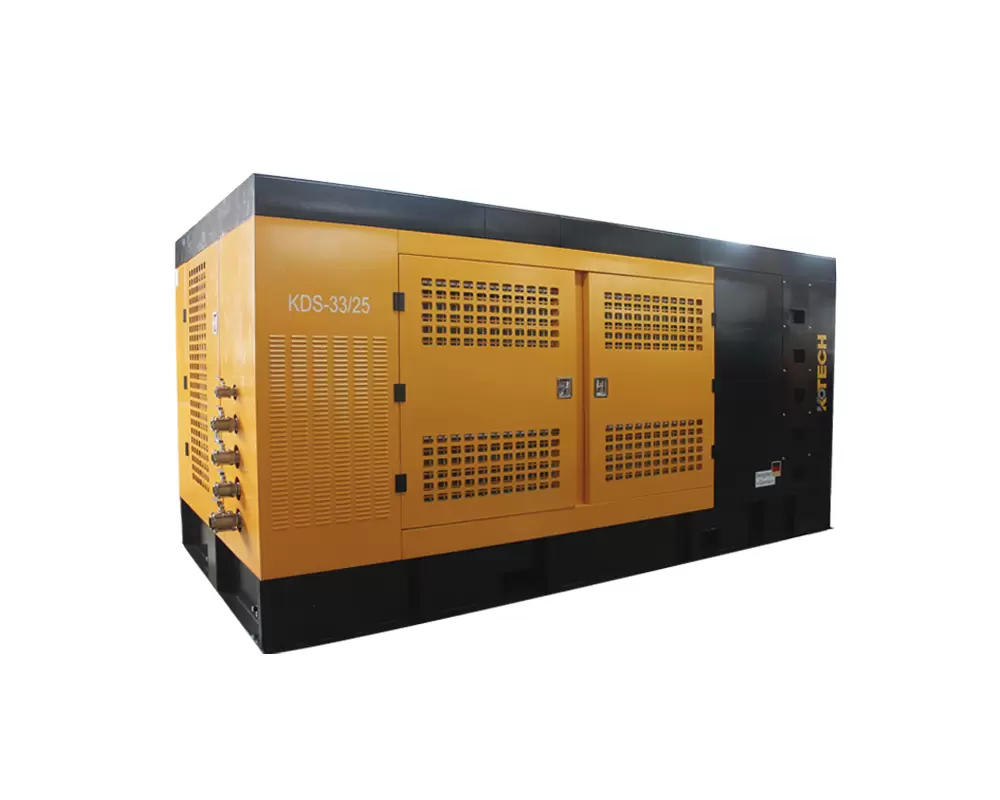
Selecting a 500 CFM air compressor for heavy industrial use demands a deep dive into the trade-offs between diesel and electric models. While diesel units offer unparalleled mobility and independence from grid infrastructure, they come with higher fuel costs, more complex maintenance, and direct emissions. Electric compressors, conversely, present lower operating costs, reduced maintenance, and zero point-of-use emissions, but require robust electrical infrastructure and sacrifice mobility. This article provides a data-driven comparison, examining total cost of ownership, operational flexibility, environmental impact, and performance consistency to guide industrial managers toward the optimal choice for their specific operational context and long-term strategic goals.
Choosing between 500 CFM diesel and electric industrial air compressors hinges on TCO, site mobility, and environmental priorities.
Related: heavy-duty air compressor comparison · industrial air compressor selection guide · site power requirements · operating cost analysis air compressor · emissions compliance industrial equipment · portable air compressor performance · electrical infrastructure for industrial compressors · fuel efficiency diesel compressor · total cost of ownership industrial compressor · mobile air compressor solutions
For heavy industrial operations, the air compressor isn’t just a piece of equipment; it’s a critical utility powering everything from pneumatic tools to essential process automation. When the demand hovers around 500 CFM, a common requirement for tasks like sandblasting, heavy-duty demolition, or powering multiple impact wrenches simultaneously, the decision between a diesel-powered unit and its electric counterpart becomes a pivotal strategic choice. This isn’t a one-size-fits-all answer; rather, it’s a nuanced evaluation of initial investment, ongoing operational costs, site specificities, and environmental responsibilities.
Key Insights
- Diesel compressors offer superior mobility and site independence, ideal for remote or frequently changing industrial environments.
- Electric models typically present lower long-term operating costs due to cheaper energy and reduced maintenance.
- Total Cost of Ownership (TCO) analysis is crucial, encompassing purchase price, fuel/electricity, maintenance, and potential infrastructure upgrades.
- Environmental regulations and noise considerations increasingly favor electric units, especially in urban or indoor settings.
- Performance consistency in varied climates and the availability of robust electrical infrastructure are significant decision factors.
Initial Capital Outlay vs. Long-Term Operating Costs: The Financial Showdown
The upfront price tag often captures immediate attention, but a holistic financial assessment demands a Total Cost of Ownership (TCO) perspective. Typically, a new 500 CFM diesel air compressor can range from $45,000 to $70,000, depending on brand, features, and Tier 4 Final compliance. An equivalent 125 HP electric rotary screw compressor, requiring similar CFM output, might initially appear slightly less expensive, often between $35,000 and $60,000. However, this initial comparison is incomplete without factoring in the cost of electrical infrastructure.
Unpacking Operating Expenses: Fuel, Electricity, and Maintenance
The real financial divergence emerges in operating costs. A 500 CFM diesel compressor, under a 75% load factor, can consume approximately 6-8 gallons of diesel per hour. With current industrial diesel prices fluctuating between $3.50 and $4.50 per gallon, this translates to $21-$36 per operating hour. Over a typical 2,000-hour industrial year, this amounts to $42,000-$72,000 in fuel alone. In contrast, a 125 HP electric motor draws around 90-100 kW under similar load. At an average industrial electricity rate of $0.10-$0.15 per kWh (rates vary significantly by region, e.g., California often higher, Texas lower), the hourly electricity cost would be $9-$15. Annually, this is $18,000-$30,000 – a substantial saving of $24,000-$42,000 per year compared to diesel.
Maintenance further widens this gap. Diesel engines require regular oil changes (every 250-500 hours), fuel filter replacements, air filter changes, and often Diesel Particulate Filter (DPF) regeneration or cleaning, costing hundreds to thousands annually. Electric motors, with fewer moving parts, typically only require periodic bearing lubrication and electrical component checks, leading to significantly lower maintenance expenditures and less downtime. A recent study by a leading industrial equipment provider indicated that maintenance costs for diesel compressors in heavy industrial settings can be 2.5 to 3 times higher than for equivalent electric models over a five-year period.
Mobility, Site Flexibility, and Infrastructure Demands: Where Each Shines
The core advantage of a diesel air compressor is its unparalleled mobility. These units are self-contained, often trailer-mounted, and can be deployed anywhere accessible by vehicle. This makes them indispensable for construction sites, remote mining operations, roadwork, pipeline maintenance, and emergency backup power where grid access is nonexistent or unreliable. Their rapid deployment capability minimizes setup time and maximizes operational flexibility, a critical factor in dynamic industrial environments.
The Electric Grid’s Embrace: Powering Stationary Operations
Electric compressors, by their nature, are tethered to a power source. A 125 HP unit requires a robust 480V, 3-phase power supply with significant amperage (typically 125-150 amps). For facilities with existing heavy-duty electrical infrastructure, this is often a non-issue. However, for new installations or temporary setups, the cost and time associated with upgrading transformers, running heavy gauge cabling, and installing appropriate switchgear can be substantial, potentially adding tens of thousands of dollars to the initial project cost. This infrastructure dependency makes electric models less suitable for highly mobile applications but ideal for permanent, stationary installations like manufacturing plants, workshops, or large-scale processing facilities where consistent power is readily available.
Geographically, the availability and cost of high-voltage industrial power vary. In densely populated industrial parks, robust grids are common. In rural or developing industrial zones, the infrastructure investment for an electric unit might outweigh its long-term operating savings, pushing the preference back towards diesel despite its higher running costs.
Environmental Footprint and Regulatory Compliance: A Growing Concern
Environmental responsibility and regulatory adherence are increasingly influencing industrial equipment procurement. Diesel compressors, despite significant advancements in engine technology (e.g., Tier 4 Final emissions standards in the US, which drastically reduce NOx and particulate matter), still emit greenhouse gases and other pollutants directly into the atmosphere at the point of use. These regulations add complexity and cost to diesel engines, often requiring Diesel Exhaust Fluid (DEF) and advanced aftertreatment systems.
Noise Levels and Local Regulations
Noise pollution is another critical factor. A typical 500 CFM diesel compressor operates in the 70-80 dB(A) range at 7 meters, which can be problematic in urban areas, residential proximity, or enclosed industrial spaces where occupational noise limits are strict. Electric compressors, conversely, are significantly quieter, often operating below 70 dB(A), making them preferable for indoor operations, facilities with noise abatement requirements, or locations near residential zones. Many local ordinances and occupational safety bodies (like OSHA) have strict guidelines regarding permissible noise exposure, making electric units a more compliant choice in sensitive environments.
Electric compressors produce zero direct emissions at the point of use. While their overall environmental impact depends on the electricity generation source (e.g., coal-fired vs. renewable energy), the shift towards cleaner grids in many regions makes them an increasingly attractive “green” option. This aligns with corporate sustainability goals and helps avoid potential future carbon taxes or more stringent emission regulations.
Maintenance Regimen, Downtime, and Longevity: Operational Realities
The complexity of maintenance directly impacts operational uptime and long-term reliability. Diesel engines, by their very nature, are intricate machines requiring frequent attention. This includes regular oil changes, fuel filter replacements, air filter checks, coolant system maintenance, and often, aftertreatment system upkeep (DEF refills, DPF cleaning). Neglecting these can lead to costly breakdowns and significant downtime. For a heavy industrial user, unexpected downtime can translate into tens of thousands of dollars in lost production per hour.
Simplicity and Durability of Electric Motors
Electric motors are renowned for their simplicity and robustness. With fewer moving parts and no combustion process, their maintenance schedule is far less demanding. Routine checks typically involve motor bearing lubrication, electrical connection inspections, and ensuring proper ventilation. This translates to extended service intervals, reduced maintenance costs, and significantly higher uptime potential. While a well-maintained diesel compressor can last for many years, the inherent simplicity of an electric motor often leads to a longer operational lifespan with less intensive care, making them a strong contender for continuous, high-demand industrial applications where reliability is paramount.
Performance Consistency and Power Delivery in Demanding Environments
Both diesel and electric 500 CFM compressors are engineered for demanding industrial use, but their performance characteristics can vary based on environmental factors and power supply quality.
Adapting to Extremes: Cold Starts and Power Fluctuations
Diesel compressors are generally more resilient to extreme environmental conditions. With proper cold-weather packages (block heaters, fuel heaters), they can reliably start and operate in sub-freezing temperatures, which is crucial for outdoor industrial work in northern climates or high-altitude regions. Their power output is independent of local grid stability, offering consistent performance even in areas prone to voltage fluctuations or brownouts. However, altitude can slightly impact engine performance, though modern engines compensate well.
Electric compressors depend entirely on the stability and quality of the electrical grid. While they offer consistent power when the supply is stable, they can be susceptible to voltage drops or surges, potentially affecting motor efficiency or even causing damage without proper protection. Starting an electric motor of this size also involves a high inrush current, which can sometimes strain smaller or less robust electrical systems, potentially causing momentary dips in power for other connected equipment. For operations in controlled indoor environments with stable power, electric units deliver highly consistent and reliable performance.
Ultimately, the choice between a 500 CFM diesel and electric air compressor for heavy industrial use is a strategic one, deeply intertwined with the specific operational context. For mobile, remote, or temporary applications where grid access is limited, diesel remains the undisputed champion. For stationary, long-term installations with readily available electrical infrastructure, the lower operating costs, reduced maintenance, quieter operation, and environmental benefits of an electric unit often present a compelling case. A thorough TCO analysis, coupled with a realistic assessment of site mobility needs and environmental priorities, will guide industrial decision-makers toward the most economically viable and operationally effective solution.
Further Reading
Related Reading: Portable Industrial Air Compressors for Construction and Remote Sites