
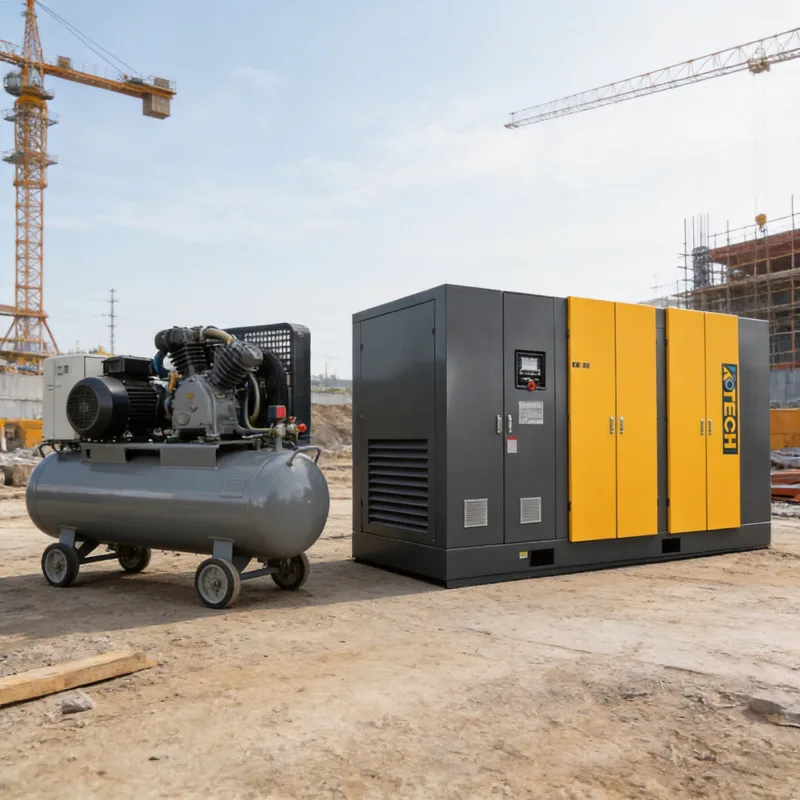
Investing in a reliable portable diesel air compressor with an integrated generator for construction work involves more than just the initial purchase price. These essential units, critical for powering pneumatic tools and providing auxiliary electricity on remote job sites, range from $15,000 for entry-level models to upwards of $80,000 for high-capacity, feature-rich units. Key cost drivers include CFM output, PSI, generator wattage, engine emissions tier, and brand reputation. Beyond the sticker price, savvy contractors must factor in the Total Cost of Ownership (TCO), encompassing fuel consumption, maintenance, parts, and depreciation. Understanding these multifaceted financial aspects is crucial for strategic procurement and maximizing long-term return on investment. **Key Insights:** * **Initial Purchase Price Varies Widely:** Expect to pay between $15,000 (entry-level) and $80,000+ (premium, high-capacity) for a new unit. * **Performance Metrics Drive Cost:** Higher CFM, PSI, and generator wattage directly correlate with increased pricing. * **Emissions Compliance is a Cost Factor:** Tier 4 Final engines, while more expensive upfront, offer long-term fuel efficiency and regulatory compliance. * **Total Cost of Ownership (TCO) is Critical:** Beyond the sticker price, budget for fuel, maintenance, parts, and depreciation, which can significantly impact long-term expenses. * **Brand and Aftermarket Support Matter:** Reputable brands often command higher prices but typically offer better reliability, resale value, and service networks, reducing downtime and TCO. * **Regional Market Dynamics Affect Pricing:** Shipping costs and local dealer availability can add 5-15% to the final purchase price, making geographical sourcing an important consideration.
A reliable portable diesel air compressor with generator for construction work typically costs between $15,000 and $80,000, depending on specifications and brand.
Related: construction equipment pricing · portable air compressor cost · generator compressor budget · heavy-duty air compressor · industrial portable power · job site power solutions · equipment financing · total cost of ownership · diesel compressor prices · construction machinery investment
Understanding the Core Cost Drivers: What Influences the Price Tag?
The price of a reliable portable diesel air compressor with an integrated generator for construction work is not a static figure; it’s a dynamic sum influenced by several critical specifications and market factors. At its core, the cost is driven by the unit’s performance capabilities, primarily measured by its air output (Cubic Feet per Minute, CFM) and pressure (Pounds per Square Inch, PSI), alongside the generator’s electrical output (kilowatts, kW). For instance, a unit delivering 185 CFM at 100 PSI with a 5 kW generator will inherently cost less than one pushing 400 CFM at 150 PSI with a 15 kW generator. This direct correlation between power and price is fundamental.
Engine technology also plays a significant role. Modern units often feature Tier 4 Final compliant diesel engines, which, while more expensive to manufacture due to advanced emissions control systems (like Diesel Exhaust Fluid – DEF and Diesel Particulate Filters – DPF), offer superior fuel efficiency and meet stringent environmental regulations. This upfront cost premium for Tier 4 engines can add 10-20% to the base price compared to older, non-compliant models, but it often translates into long-term savings on fuel and avoids potential fines in regulated areas. Brand reputation, manufacturing quality, and the comprehensiveness of the warranty also contribute substantially to the final purchase price, reflecting perceived reliability and anticipated service life.
Navigating Price Tiers: Entry-Level, Mid-Range, and Premium Investments
The market for portable diesel air compressors with generators can be broadly segmented into three price tiers, each catering to different operational needs and budget constraints.
Entry-Level Units: The $15,000 – $25,000 Range
These units typically offer air output in the 185-250 CFM range at 100-150 PSI, coupled with a 5-10 kW generator. They are ideal for smaller construction projects, utility work, or as backup units. Brands in this segment might include lesser-known manufacturers or specific models from major brands designed for cost-efficiency. While offering a lower initial investment, buyers should scrutinize warranty terms and local service availability. A common specification in this tier might be a 185 CFM, 100 PSI compressor with an 8 kW generator, perfect for running a single jackhammer and some auxiliary lighting.
Mid-Range Workhorses: The $25,000 – $45,000 Range
This category represents the sweet spot for many general contractors. These units typically provide 250-400 CFM at 150-200 PSI and a 10-20 kW generator. They are robust enough to power multiple pneumatic tools simultaneously, such as several jackhammers, demolition tools, or sandblasters, while also supplying ample power for job site trailers, welding equipment, or heavy-duty lighting. Leading brands like Doosan Portable Power, Sullair, and Atlas Copco offer highly competitive models in this range, balancing performance, reliability, and advanced features. A popular configuration here is a 375 CFM, 150 PSI compressor with a 15 kW generator, capable of supporting a medium-sized crew.
Premium & Heavy-Duty Solutions: The $45,000 – $80,000+ Range
At the top end, these machines are built for demanding applications requiring high air volume and pressure, often exceeding 400 CFM (up to 900+ CFM) and 200-250+ PSI, with powerful generators ranging from 20 kW to 50 kW or more. They are indispensable for large-scale infrastructure projects, pipeline work, deep foundation drilling, or projects requiring significant auxiliary power. These units often come equipped with advanced telematics, sophisticated control systems, and enhanced fuel efficiency features. The price reflects not only superior performance but also reinforced construction, extended warranties, and comprehensive service packages. A 600 CFM, 200 PSI compressor with a 30 kW generator from a top-tier manufacturer could easily fall into the upper end of this price bracket.
Beyond Sticker Price: Calculating the Total Cost of Ownership (TCO)
A critical aspect often overlooked when budgeting for a portable diesel air compressor with a generator is the Total Cost of Ownership (TCO). The initial purchase price is merely the entry point. Savvy procurement strategies must encompass ongoing operational expenses to truly understand the financial commitment.
Fuel Consumption: A Major Recurring Expense
Diesel fuel is a substantial and ongoing cost. A mid-range 375 CFM unit, operating for an average of 8 hours a day, 5 days a week, can consume anywhere from 4 to 8 gallons of diesel per hour, depending on load and engine efficiency. At an average commercial diesel price of $4.00 per gallon, this translates to $128 – $256 per day, or roughly $2,560 – $5,120 per month in fuel alone. Over a year, this can amount to $30,000 – $60,000, easily surpassing the unit’s initial purchase price in just a few years. Tier 4 Final engines, while more expensive upfront, often demonstrate 10-15% better fuel efficiency than older models, leading to significant long-term savings.
Maintenance, Parts, and Service
Regular maintenance is paramount for reliability and longevity. This includes scheduled oil changes (typically every 250-500 hours), filter replacements (air, oil, fuel, DPF), and fluid checks (coolant, DEF). A typical minor service can cost $300-$600, while major services (every 1000-2000 hours) involving valve adjustments, detailed inspections, and component replacements can run $1,500-$4,000. Parts availability and the cost of specialized components, especially for Tier 4 systems (e.g., DEF injectors, DPF filters), must be factored in. A strong local dealer network can significantly reduce downtime and service costs.
Depreciation and Resale Value
Like all heavy equipment, these units depreciate. Expect a depreciation rate of 15-25% in the first year, followed by 10-15% annually. However, well-maintained units from reputable brands often retain better resale value. A 5-year-old unit from a top-tier manufacturer with documented service history might still fetch 40-50% of its original price, whereas a lesser-known brand could drop to 20-30%. This factor impacts the effective long-term cost of ownership, influencing decisions regarding equipment lifespan and replacement cycles.
Regional Market Dynamics and Supply Chain Impact on Pricing
The geographical location of the buyer relative to manufacturing plants and major distribution hubs can significantly influence the final purchase price. Shipping costs for heavy equipment are substantial and can add anywhere from 5% to 15% to the total cost, especially for units traveling across large distances within the United States. For example, purchasing a unit manufactured in the Midwest for a construction project on the West Coast will incur higher freight charges than sourcing from a regional distributor.
Furthermore, the strength and density of a manufacturer’s dealer network within a specific region can impact pricing. Areas with multiple competing dealers might see more aggressive pricing and better service packages. Conversely, regions with limited dealer presence may experience higher prices due to reduced competition and increased service call-out fees. Supply chain disruptions, as seen in recent years, can also lead to price volatility and extended lead times, making pre-planning and early procurement more financially advantageous.
Strategic Purchasing: Maximizing Value and Minimizing Outlay
Making an informed purchasing decision requires a holistic view of the investment. Instead of solely focusing on the lowest sticker price, consider the long-term value proposition.
Assess Actual Job Site Needs
Over-specifying a unit means paying for unused capacity, both in initial cost and ongoing fuel consumption. Under-specifying leads to inefficiency, potential breakdowns, and increased rental costs for supplemental equipment. Accurately matching CFM, PSI, and generator kW to your typical project requirements is paramount. For instance, if your primary need is powering two medium jackhammers (requiring ~150 CFM each) and a few power tools (5 kW), a 300 CFM/10 kW unit is far more economical than a 600 CFM/30 kW powerhouse.
Evaluate Financing Options
Many dealers offer various financing solutions, including leases, lease-to-own agreements, and traditional loans. Leasing can preserve capital and offer tax advantages, but typically results in higher overall costs than outright purchase. Analyzing interest rates, down payments, and contract terms from multiple providers can lead to significant savings over the equipment’s lifespan. Some manufacturers also offer promotional financing rates that can make higher-tier units more accessible.
Prioritize Aftermarket Support and Warranty
A comprehensive warranty, readily available parts, and a responsive service network are invaluable. Downtime on a construction site is incredibly expensive, potentially costing thousands of dollars per day in lost productivity and project delays. Investing in a unit from a brand known for its robust aftermarket support, even if it carries a slightly higher initial price, can lead to substantial savings in reduced downtime and faster repairs. Look for warranties that cover major components for at least two years or 2,000 hours, and inquire about extended warranty options.
Consider Used Equipment with Caution
Purchasing a used unit can significantly reduce the initial outlay, sometimes by 30-60%. However, this comes with inherent risks. Thorough inspection by a qualified mechanic is crucial, focusing on engine hours, maintenance records, and the condition of the air end and generator components. While a 3-5 year old unit with low hours from a reputable brand might be a smart buy, older units or those with unclear histories can quickly become money pits due to unexpected repairs and higher operational costs. Always factor in the potential for immediate maintenance costs when budgeting for a used purchase.
References
Further Reading
Related Reading: Precision Power: Oil-Free Diesel Air Compressors for Pharma's Uninterrupted Production