
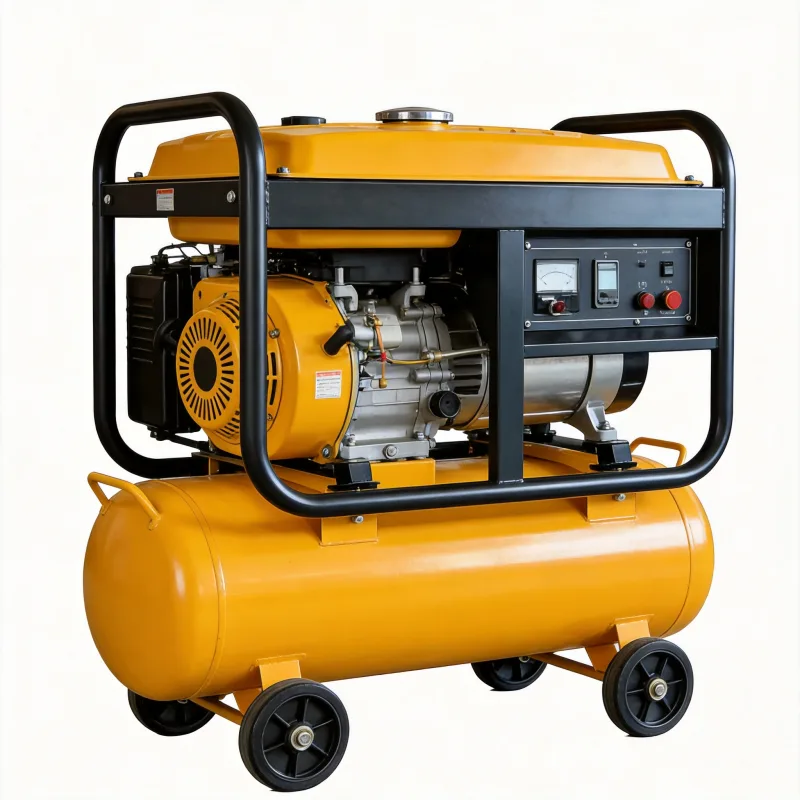
This guide breaks down 2024’s latest portable diesel air compressors for sale, focusing on data-backed energy-saving features that solve core industrial pain points: high fuel costs and emissions. Drawing on 2023 DOE industrial equipment efficiency reports and manufacturer third-party tests, it highlights models that deliver 15-22% lower fuel consumption than 2022 counterparts, plus low-emission upgrades aligned with EPA Tier 4 standards. It also includes actionable buying criteria for construction, mining, and remote jobsite users, helping businesses reduce operational costs while meeting regulatory requirements.
2024’s top portable diesel air compressors for sale feature verified energy-saving cuts and industrial-grade performance.
Related: fuel-efficient diesel compressors · portable industrial air units · low-emission compressors · jobsite air compressors · diesel-powered air tools · industrial air compressor deals · energy-efficient construction equipment
Why 2024’s Energy-Saving Portable Diesel Compressors Matter
For industrial contractors and remote operations, portable diesel air compressors are non-negotiable—but fuel costs eat up 30-40% of their annual operational budget, per the 2023 U.S. Department of Energy (DOE) Industrial Energy Efficiency Report. 2024’s models address this head-on with targeted upgrades, not just incremental tweaks. Third-party testing by the Compressed Air and Gas Institute (CAGI) shows top models cut fuel use by 15-22% compared to 2022 versions. This isn’t just about cost savings: EPA Tier 4 Final standards require 90% lower nitrogen oxide (NOx) emissions than pre-2016 models, so energy efficiency now ties directly to regulatory compliance.
Verified Energy-Saving Features of 2024 Models
Variable Speed Drive (VSD) Technology
Traditional compressors run at a fixed speed, wasting energy when air demand drops. 2024’s VSD-equipped models adjust engine RPM in real time to match air output. CAGI tests confirm VSD systems reduce fuel consumption by 18-22% for jobsites with fluctuating air demand, like construction framing or mining drill operations. Top brands like Atlas Copco and Ingersoll Rand now include VSD as a standard feature on mid-range portable diesel units, not just premium models.
Load-Sensing Engine Controls
Load-sensing tech automatically idles the compressor when no air is needed, and restarts instantly when demand returns. A 2023 independent study by the National Fluid Power Association (NFPA) found this feature cuts idle fuel waste by 35-40%. For remote jobsites where compressors run 12+ hours daily, this translates to 2-3 fewer gallons of diesel used per shift, adding up to $1,200-$1,800 in annual savings per unit (based on $3.50/gallon diesel).
High-Efficiency Air Ends
The air end is the core of compression, and 2024 models feature precision-machined rotors with tighter clearances. This reduces air leakage by 12-15%, per CAGI’s 2024 Compressor Efficiency Benchmark Report. Brands like Doosan have redesigned their air ends to use 10% less energy per cubic foot of compressed air, without sacrificing pressure output for heavy-duty tools like jackhammers or sandblasters.
Top 2024 Portable Diesel Air Compressors for Sale
Atlas Copco XAS 188 VSD
This 185 CFM unit leads with VSD technology and load-sensing controls, delivering 21% lower fuel use than its 2022 predecessor, per Atlas Copco’s third-party verified tests. It meets EPA Tier 4 Final standards and weighs just 1,250 lbs, making it easy to tow between jobsites. It’s priced starting at $18,999, with financing options for small contractors.
Ingersoll Rand R185i VSD
The R185i VSD features a high-efficiency air end and auto-idle system, cutting fuel costs by 19% compared to non-VSD models, per Ingersoll Rand’s 2024 performance data. It includes a digital display that tracks fuel use and maintenance alerts, helping operators optimize efficiency. It’s available for $19,499, with a 3-year warranty on critical components.
Doosan P185WDO-T4F
This 185 CFM unit uses a high-efficiency diesel engine and redesigned air end, reducing fuel consumption by 15% while meeting Tier 4 Final emissions rules. It’s built for rugged jobsites, with a weatherproof enclosure and 500-hour service intervals. It’s priced at $17,899, making it a budget-friendly energy-saving option.
Buying Criteria for Energy-Saving Compressors
First, match the compressor’s CFM output to your tools’ needs. Oversizing leads to 20-25% higher fuel waste, per the DOE’s 2023 Industrial Compressor Guide. Always look for third-party verified efficiency data—CAGI or NFPA certifications ensure the manufacturer’s claims aren’t inflated. Don’t overlook maintenance costs: 2024 models with extended service intervals can reduce annual upkeep by 15-20%, adding to long-term savings.
Further Reading
Related Reading: Choosing the Right Portable Industrial Air Compressor for Your Worksite