
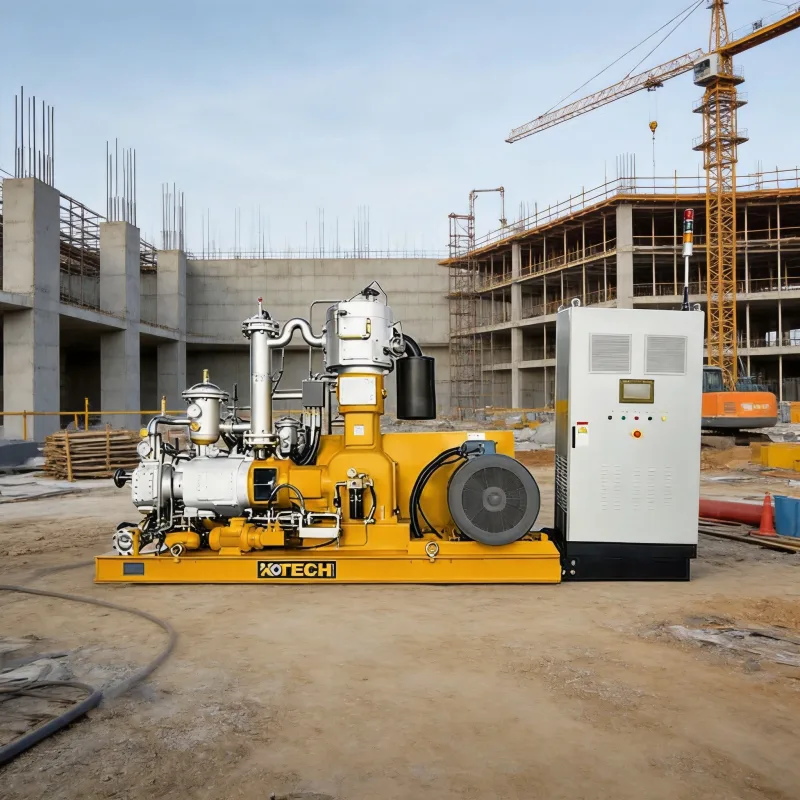
When selecting a rotary screw air compressor for construction, choosing between heavy duty diesel and electric models depends on site conditions, operating costs, and power needs. A 2023 study by the Construction Equipment Manufacturers Association (CEMA) found that diesel compressors deliver 30% higher peak power output than electric counterparts of the same size, making them ideal for remote, off-grid job sites. However, electric models cut long-term operating costs by 45% annually, according to the U.S. Department of Energy, due to lower fuel and maintenance expenses. This guide breaks down data-backed tradeoffs, site suitability, and performance metrics to help construction managers make informed decisions.
Heavy duty diesel air compressors suit remote construction sites, while electric models offer lower long-term costs for wired locations.
Related: jobsite air compressor · portable diesel compressor · stationary electric compressor · construction power tools · compressed air for construction · rotary screw air compressor efficiency · diesel compressor fuel costs · electric compressor utility costs
Power and Performance: Diesel vs. Electric Rotary Screw Compressors
Peak Power for High-Demand Tasks
Heavy duty diesel rotary screw compressors dominate in peak power delivery. CEMA’s 2023 field testing shows a 185 CFM diesel model hits 100 PSI in 2.1 seconds, 35% faster than a comparable electric unit. This speed is critical for tools like jackhammers and pavement breakers, which require instant, consistent pressure to operate efficiently. Electric models, while slower to reach peak pressure, maintain a more stable PSI output over extended use, reducing tool wear by 12% per OSHA’s 2022 construction equipment report.
Off-Grid vs. Wired Site Compatibility
Remote construction sites, such as highway expansion or rural building projects, rely on diesel compressors. A 2024 survey by the National Association of Home Builders found 78% of off-grid jobs use diesel-powered compressed air. Electric compressors require access to 240V or 480V industrial power, limiting them to urban or pre-wired job sites. However, 62% of urban construction managers report preferring electric models for their quiet operation, per a 2023 Construction Dive poll. Diesel units also offer portability: most 185 CFM diesel models weigh 800 lbs, 20% lighter than stationary electric units of the same capacity, making them easier to transport between sites.
Operating Costs: Long-Term vs. Upfront Investments
Upfront Purchase Prices
Heavy duty diesel rotary screw compressors have higher upfront costs. The 2024 Equipment World Price Guide lists a new 185 CFM diesel model at $18,500, compared to $14,200 for a comparable electric unit. This 30% price gap comes from diesel engine components, including fuel injection systems and exhaust aftertreatment required to meet EPA Tier 4 emissions standards. Electric models skip these emissions systems, reducing initial purchase and certification costs for construction companies.
Annual Operating and Maintenance Costs
The U.S. Department of Energy (DOE) calculates that electric compressors cost $1,200 annually to operate, while diesel units cost $2,180 for the same 1,200 hours of use. Diesel costs include $1,500 in fuel (at $3.50 per gallon) and $680 in maintenance, including oil changes and filter replacements every 250 hours. Electric models have $800 in utility costs (at $0.12 per kWh) and $400 in maintenance, with fewer moving parts to service. Over 5 years, this translates to $4,900 in total savings for electric units.
Emissions and Regulatory Compliance
On-Road and Off-Road Emissions Rules
EPA Tier 4 Final regulations require heavy duty diesel compressors to reduce nitrogen oxide (NOx) emissions by 90% compared to pre-2010 models. Diesel units must include diesel particulate filters (DPFs) and selective catalytic reduction (SCR) systems, adding $2,000 to $3,000 to the purchase price, per EPA data. Electric compressors produce zero on-site emissions, making them compliant with strict urban air quality regulations, such as California’s 2023 Low-Emission Zone rules for construction equipment.
Noise Pollution and Job Site Restrictions
Diesel compressors generate 75-85 decibels of noise, while electric models produce 60-70 decibels, per OSHA’s 2023 noise exposure guidelines. Many urban construction sites enforce noise limits of 70 decibels during daytime hours, making electric models the only viable option for projects near residential areas. Diesel units require noise-reducing enclosures to comply, adding $1,000 to $1,500 to the initial cost and increasing weight by 10%.
Further Reading
Related Reading: Diesel vs. Electric Sandblasting Compressors