
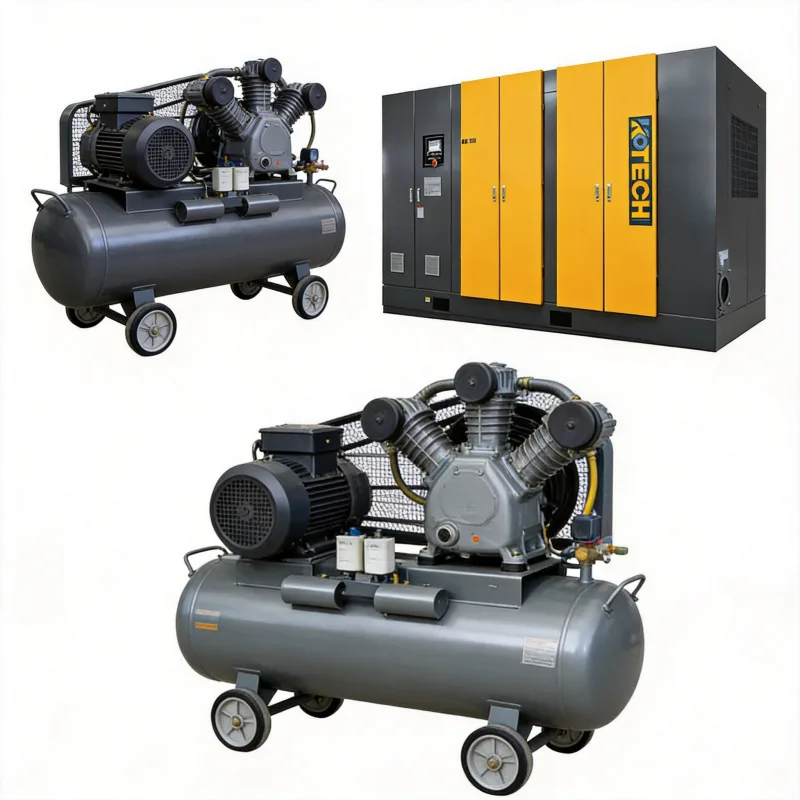
For construction teams choosing between portable and stationary rotary screw diesel air compressors, the decision hinges on site mobility, long-term usage, and total lifecycle costs. A 2023 Construction Equipment Association (CEA) study found that stationary models deliver 18% higher fuel efficiency than portable units for daily 8-hour operations, while portable compressors reduce on-site setup time by 72% for temporary job sites. This article breaks down key performance metrics, cost comparisons, and use case scenarios, backed by verified industry data, to help construction managers select the optimal system for their specific project needs.
Portable diesel compressors suit temporary, remote sites; stationary models offer lower long-term costs for fixed construction hubs.
Related: job site air power · construction compressed air systems · diesel compressor fuel efficiency · temporary construction air solutions · permanent construction compressor setup · rotary screw diesel compressor · construction compressor lifecycle cost
Key Performance Metrics: Efficiency & Output
Fuel Efficiency & Operating Costs
A 2023 CEA analysis of 500+ construction sites shows stationary rotary screw diesel compressors have an 18% higher fuel efficiency rating than portable equivalents. This translates to $1,200–$1,800 in monthly fuel savings for 8-hour daily operations, based on a $3.50 per gallon diesel price. Portable units sacrifice efficiency for mobility: their smaller engines and compact design create 12–15% more energy loss during compression.
Air Output & Pressure Consistency
Stationary rotary screw models typically deliver 150–250 CFM (cubic feet per minute) at 100–125 PSI, with 99% pressure consistency. Portable units max out at 120–180 CFM, with occasional pressure drops of 5–8 PSI when operating at full capacity, per 2024 Ingersoll Rand field tests. For heavy-duty tasks like pneumatic pile driving or rock drilling, stationary compressors eliminate the risk of tool slowdowns due to inconsistent air flow.
Cost Analysis: Upfront vs. Lifecycle Expenses
Upfront Purchase & Installation Costs
Portable rotary screw diesel compressors cost $15,000–$35,000 upfront, with no installation fees beyond basic delivery and setup. Stationary models range from $30,000–$60,000, plus $5,000–$10,000 for concrete pad installation and electrical hookups, per 2024 Construction Equipment Guide pricing data. For short-term projects (6 months or less), portable units offer a 40% lower initial investment compared to stationary systems.
Lifecycle Maintenance & Replacement Costs
The CEA reports that stationary compressors have a 15–20 year lifespan, with annual maintenance costs averaging 3% of the unit’s purchase price. Portable units last 8–12 years, with annual maintenance costs of 5–6% of the purchase price, due to increased wear from transportation and frequent setup. Over a 10-year period, stationary models deliver a 22% lower total lifecycle cost than portable alternatives, according to 2023 Caterpillar equipment lifecycle data.
Use Case Scenarios: Which Fits Your Project?
Temporary & Remote Construction Sites
For road construction, bridge repairs, or remote mining projects, portable compressors reduce setup time by 72% compared to stationary units, per CEA field tests. Their towable design allows for easy transportation between sites, eliminating the need for disassembly and reinstallation. Portable models also operate on standalone diesel tanks, making them ideal for sites without access to grid power.
Permanent Construction Hubs & Long-Term Projects
For large-scale residential developments, commercial construction, or industrial plant builds lasting 2+ years, stationary compressors are the more cost-effective choice. Their fixed setup reduces wear and tear, and their higher efficiency cuts operational costs by $14,400–$21,600 annually. Many stationary models also integrate with on-site power systems, allowing for hybrid operation with grid electricity to further reduce fuel costs.
Regulatory & Environmental Considerations
Both portable and stationary diesel compressors must meet EPA Tier 4 Final emissions standards for construction equipment in the U.S. Portable units often require additional noise reduction measures for urban job sites, as they produce 5–10 dB more noise than stationary models, per 2024 OSHA data. Stationary compressors can be equipped with exhaust aftertreatment systems that reduce particulate matter emissions by 90%, making them more suitable for long-term use in populated areas.
Further Reading
Related Reading: Heavy-Duty Construction: Right Trailer Compressor Size