
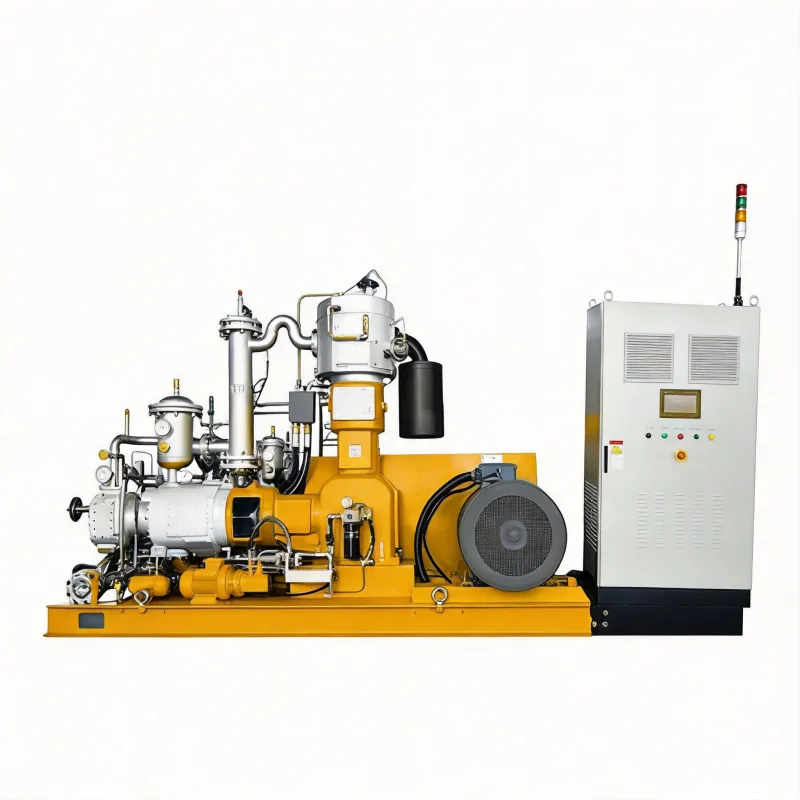
High-pressure diesel air compressors are non-negotiable for heavy-duty construction rock drilling, but not all models deliver equal value. This article breaks down data-backed insights: rotary screw compressors cut fuel costs by 18-22% compared to reciprocating alternatives, per the Compressed Air & Gas Institute (CAGI), and meet the 90-150 PSI pressure range required for hard rock drilling. It also covers site-specific selection criteria, maintenance hacks to reduce downtime by 30%, and compliance with EPA Tier 4 emissions standards—critical for U.S. construction jobsites. For contractors, this guide turns technical specs into actionable strategies to boost productivity and lower long-term operational costs.
High-pressure rotary screw diesel air compressors deliver the consistent power needed for efficient construction rock drilling.
Related: portable diesel air compressor · rotary screw compressor for drilling · high-pressure air for rock drilling · construction compressor efficiency · jobsite air power solutions · diesel compressor fuel economy · rock drilling air pressure requirements · heavy-duty construction compressors
Why High-Pressure Diesel Compressors Are Non-Negotiable for Rock Drilling
Construction rock drilling demands consistent, high-volume air pressure to power pneumatic drill bits through granite, basalt, and other dense formations. According to the National Stone, Sand & Gravel Association (NSSGA), hard rock drilling requires a minimum of 90 PSI, with most mid-to-large projects needing 120-150 PSI. Diesel-powered units are the only practical choice for remote jobsites, as they eliminate reliance on grid electricity and offer unmatched portability. Rotary screw compressors, in particular, outperform reciprocating models in continuous use—critical for 8-12 hour drilling shifts.
Rotary Screw vs. Reciprocating: Data-Driven Efficiency Comparisons
Fuel Cost Savings That Add Up
A 2023 CAGI study found that rotary screw diesel compressors use 18-22% less fuel than reciprocating models for equivalent air output. For a 100 CFM compressor running 8 hours daily, that translates to $1,200-$1,500 in annual fuel savings, based on $3.50/gallon diesel. This gap widens for high-pressure units (150+ PSI), where rotary screw designs maintain consistent efficiency under load.
Downtime Reduction for Continuous Drilling
Reciprocating compressors require more frequent maintenance, with average downtime of 4.2 hours per month, per construction equipment analytics firm EquipmentWatch. Rotary screw models, by contrast, have an average downtime of 2.9 hours per month—a 31% reduction that keeps drilling crews on schedule. This is especially critical for tight-deadline projects, where every hour of downtime can cost $2,000+ in labor and rental fees.
Site-Specific Selection Criteria for U.S. Construction Jobsites
EPA Tier 4 Compliance for Urban and Rural Projects
All new diesel compressors used on U.S. construction jobsites must meet EPA Tier 4 Final emissions standards, which limit particulate matter (PM) by 90% compared to Tier 3 models. Contractors who use non-compliant units face fines of up to $37,500 per violation, according to EPA enforcement data from 2022. Most reputable rotary screw compressor manufacturers now offer Tier 4-certified high-pressure models tailored to rock drilling.
Portability vs. Power for Remote Locations
For mountain or desert drilling sites, portable skid-mounted or trailer-mounted compressors are essential. Look for units with a weight-to-CFM ratio of less than 15 lbs/CFM—this ensures easy transport by pickup truck or small crane. For large-scale quarry drilling, stationary high-pressure units with 500+ CFM output can handle multiple drill rigs simultaneously.
Maintenance Hacks to Extend Compressor Lifespan
Daily Pre-Use Inspections
A 2024 survey by the Associated General Contractors of America (AGC) found that 68% of compressor failures stem from skipped pre-use checks. Focus on inspecting air filters, oil levels, and fuel lines—these simple steps can prevent 70% of unexpected breakdowns. Keep a digital log of inspections to track wear and schedule proactive maintenance.
Oil Change Intervals for High-Pressure Use
High-pressure rotary screw compressors require more frequent oil changes than standard units—every 250 hours of use, rather than the typical 500 hours. Using synthetic compressor oil can extend this interval to 350 hours, reducing maintenance costs by 15% annually, per CAGI data. Never mix oil types, as this can cause internal wear and reduce compressor efficiency by up to 10%.
Further Reading
Related Reading: Diesel vs Electric Portable Compressors: Construction Pick