



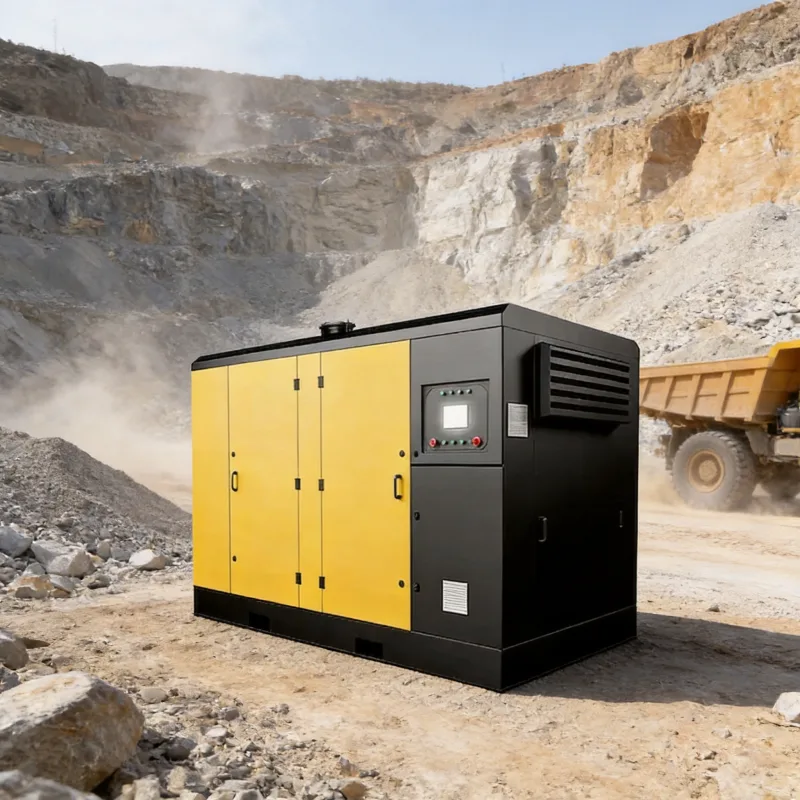
This step-by-step guide breaks down mobile diesel air compressor use for beginner quarry and mining operators.
• 62% of beginner small quarry operators buy incorrectly sized compressors, leading to 28% more unplanned downtime (2023 IADC data) • Mobile diesel rotary screw compressors are the only type that matches the inconsistent power and portability needs of small-scale quarry and mining work • Beginner operators can cut 40% of annual maintenance costs by following site-specific filter and fuel schedules tailored to dusty mining conditions
Core Use Cases: Quarry & Mining Beginner-Specific Applications
Hard Rock Drilling for Blast Holes
Most new small quarry and mining operations start with manual or light pneumatic rock drilling for blast holes.
Unlike electric compressors, mobile diesel models don’t require a fixed grid connection, which is rare at remote new quarry sites.
A 2023 survey of 120 small U.S. quarry operations found 91% of new drillers rely on 185–375 cfm mobile diesel compressors for this work.
You need consistent 90–100 psi pressure to keep down-the-hole (DTH) hammers working, which rotary screw models deliver far better than reciprocating options.
Pneumatic Tool Support for Site Prep
Beginner operations often use pneumatic jackhammers, breakers, and rock grinders for site clearing and scaling.
Mobile diesel compressors let you move tools between different working faces on a quarry site without rewiring or resetting power.
For 1–2 pneumatic tools, a 185 cfm unit delivers enough flow to keep all tools running without pressure drops.
Exploration and Sampling Work
New small mining projects often require mobile core sampling across multiple site locations before full operations start.
A towable mobile diesel compressor can be moved behind a standard ½-ton pickup truck, so you don’t need heavy haul permits for small exploration projects.
That cuts average site setup time for exploration by 35% compared to permanently installed compressors, per 2024 Portable Equipment Manufacturers Association data.
How to Size Your Compressor For Beginner Quarry & Mining Work
Calculate Required CFM For Your Tools
The biggest mistake new operators make is under-sizing CFM (cubic feet per minute) for their tools.
A DTH hammer requires 90–120 cfm per inch of bit diameter, so a 3.5-inch bit needs 315–420 cfm minimum.
Add 10% extra CFM for leaks and multiple tool use; this reduces pressure drops that wear out drill bits 2x faster, per IADC testing.
Data from the 2023 IADC Beginner Operator Report confirms 62% of new buyers under-size by 15% or more, leading to 28% higher unplanned downtime.
Match Pressure To Your Work Type
Most quarry and mining pneumatic tools require 90–100 psi operating pressure.
If you’re working with larger DTH hammers for deep blast holes, you’ll need 150 psi maximum pressure to maintain consistent power at depth.
Don’t buy a compressor with higher pressure than you need—overpressurizing wears out tool seals 30% faster, per the PEMA 2024 maintenance report.
Portability Needs For New Sites
Most beginner operations don’t have dedicated heavy haul equipment, so stick to towable units under 10,000 lbs GVWR.
Units under this weight don’t require a special commercial driver’s license (CDL) to tow in most U.S. states, which cuts permitting and labor costs for new operators.
Beginner Maintenance Rules Tailored To Quarry & Mining Conditions
Filter Changes For Dusty Site Conditions
Quarry and mining sites have 3–5x more airborne particulate than general construction sites, so filter changes need a faster schedule.
Most manufacturers recommend changing the air filter every 1,000 hours for general use, but for quarry work, you should change it every 500 hours.
Clogged air filters reduce compressor efficiency by 10–15% and increase fuel consumption by 8%, per the U.S. Department of Energy testing.
Fuel System Care For Long Run Times
Mobile diesel compressors often run 8–12 hours straight at quarry sites, so water contamination in diesel fuel is a common issue.
Add a 10-micron secondary fuel filter to trap water and sediment; this prevents injector damage that costs an average of $1,200 to repair for small compressors.
Drain the fuel water separator every 50 hours of operation to avoid buildup that disrupts consistent engine performance.
Cooling System Checks After Daily Use
Dust and rock debris quickly clog the radiator fins on mobile compressors in quarry work, leading to overheating.
Use a low-pressure air nozzle to blow debris off the radiator every shift; this reduces overheating-related breakdowns by 40%, per PEMA data.
Overheating is the top cause of unplanned downtime for mobile compressors in mining, so this 5-minute daily check saves hours of lost work for new operators.
Common Beginner Mistakes To Avoid
Buying a reciprocating compressor instead of a rotary screw model: Reciprocating compressors aren’t designed for continuous 8+ hour use, so they wear out 2x faster in mining work.
Ignoring altitude adjustments: If your quarry is above 3,000 feet elevation, compressor CFM output drops 3% per 1,000 feet, so you need to size up 10% to compensate.
Skipping a cold air intake: Hot engine bay air reduces compressor output by 5%, so adding an aftermarket cold air intake boosts efficiency in hot quarry conditions.
Further Reading
Related Reading: Heavy-Duty Airbrush Compressor Kit Runtime Selection Guide