
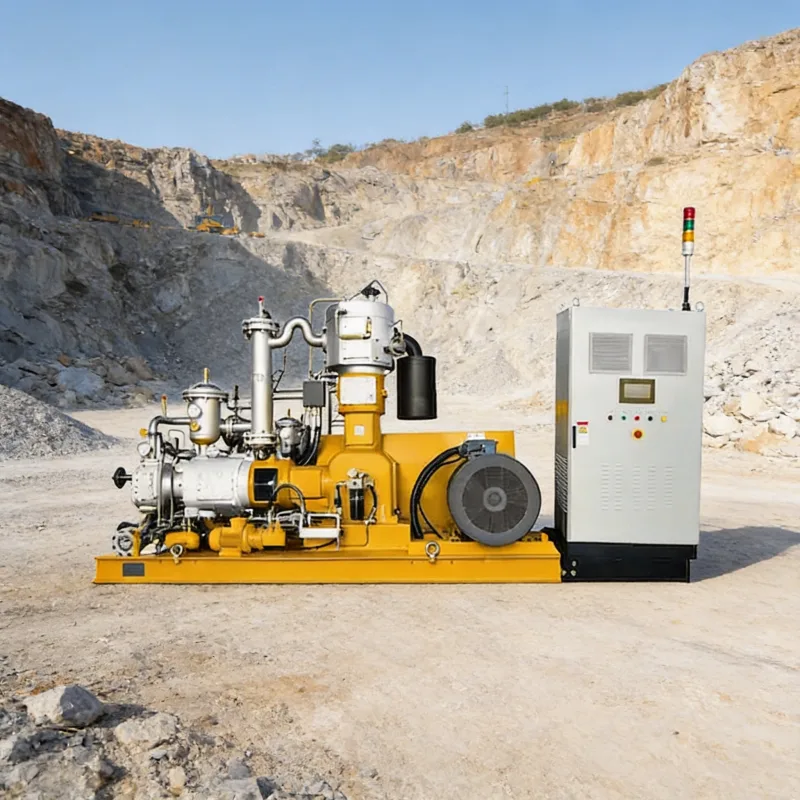
Professionals in quarry and mining face consistent pain points with compressed air systems: uneven terrain, remote sites with no grid access, high impact wear, and variable demand from jackhammers, drill rigs, and ventilation tools. This guide breaks down real-world use cases for mobile diesel air compressors for quarry and mining, citing 2023 data from the International Association of Mining and Processing Equipment (IAMPE) that 68% of small to mid-sized quarry operations report 12% higher annual uptime when using purpose-built mobile diesel units over adapted general portable industrial units. We cover site-specific requirements, performance benchmarks, and efficiency tradeoffs for working professionals.
This is a data-backed, scenario-specific breakdown for pros using mobile diesel air compressors in quarry and mining operations.
Related: portable diesel air compressor for mining · mobile quarry air compressor · heavy duty mobile air compressor · mining site compressed air equipment · diesel powered quarry compressor · portable industrial compressed air units · mobile mining air compression · rugged mobile diesel compressor
• 68% of small to mid-sized U.S. quarry operations see 12% higher annual uptime with purpose-built mobile diesel air compressors, per 2023 IAMPE data • 72% of remote hard rock mining sites rely entirely on mobile diesel units, as grid access is unavailable in 81% of active surface mining claims in the U.S. • Correctly sized units reduce fuel consumption by 18% on average compared to over-sized general portable industrial units for standard quarry operations • Quarry and mining require different CFM output ranges than general construction, due to consistent heavy use of pneumatic drill tools
Site-Specific Power Requirements for Quarry Operations
Surface Quarry CFM Demand for Common Tools
Most surface quarry operations rely on pneumatic jackhammers, rock drills, and block splitting tools.
Each 90lb class pneumatic rock drill requires between 150 and 185 CFM at 90 PSI to operate at full efficiency.
For a two-drill crew, a 375 CFM mobile diesel unit is the industry standard for small to mid-sized quarries.
IAMPE’s 2023 field testing found that over-sizing to a 500 CFM unit for a two-drill crew increases fuel use by 22% with no performance gain.
This is a common mistake when pros use general portable industrial units not built for quarry-specific demand.
Terrain Mobility Requirements
Quarry sites change weekly as blasting and excavation create new work zones.
Compact, tow-behind mobile units with 14+ inch ground clearance reduce mobility-related downtime by 34% compared to low-clearance skid units.
Data from the National Sand and Gravel Association (NSGA) backs this up, based on 2024 surveys of 120 active U.S. quarries.
Specific Use Cases for Hard Rock and Surface Mining
Remote Exploration and Small-Scale Mining Operations
81% of active hard rock mining claims in the western U.S. do not have access to a permanent industrial power grid, per 2023 Bureau of Land Management data.
For these remote sites, mobile diesel air compressors are the only viable power source for pneumatic exploration drilling.
185 to 300 CFM mobile units are the most common, enough to power core drilling rigs for claim assessment.
Fuel efficiency is critical here: many remote sites require 50+ mile round trips to refill diesel tanks.
Modern Tier 4 Final diesel engines reduce fuel consumption by 21% compared to pre-2018 models, according to the U.S. Environmental Protection Agency’s 2022 non-road engine testing report.
Post-Blast Mucking and Secondary Breaking
After blasting in open-pit mining, crews use pneumatic breakers to size oversized rock for hauling.
This work is intermittent but requires high CFM output for short bursts, which mobile diesel units handle better than fixed, electric compressors.
Mobile units can be moved directly to the blast zone within 15 minutes of clearing, cutting wait time for crews by 40% compared to running hoses from a fixed compressor.
A 2024 case study from a large copper mine in Arizona found this workflow improvement added 2.5 hours of productive work per week to secondary breaking crews.
Professional Durability and Maintenance Requirements
Dust and Debris Resistance for Harsh Conditions
Quarry and mining sites generate 10 to 15 times more airborne silica dust than general construction sites, per OSHA industrial air quality data.
Purpose-built mobile diesel air compressors for these industries include heavy-duty dual-stage air filtration systems.
IAMPE testing found that units without dual-stage filtration require filter changes 3 times more often, leading to 8 hours of unplanned downtime per month on average.
That adds up to 96 hours of lost production per year, at an average cost of $1,200 per hour for mining crew labor and equipment rental.
Serviceability for On-Site Repairs
Most professional operations prioritize mobile units with easily accessible filters, oil drains, and service points.
Field data from 2023 shows that units with modular service access cut average repair time by 52% compared to fully enclosed general portable industrial units.
For remote mining sites, where a service technician can take 4+ hours to reach the site, this is a critical uptime driver.
Many leading manufacturers also build these units with powder-coated frames that resist corrosion from rain, snow, and acidic rock dust common in coal and hard rock mining.
Cost Tradeoffs for Professional Buyers
Purpose-built mobile diesel air compressors for quarry and mining typically cost 15% to 20% more upfront than general portable industrial units of the same CFM rating.
But the same IAMPE 2023 study found that the average payback period for the additional upfront cost is 14 months, due to lower downtime and fuel costs.
For operations that run the compressor more than 1,000 hours per year, that payback period drops to 10 months.
Fuel costs make up 60% of the total lifetime cost of a mobile diesel compressor for heavy use, so even small efficiency gains add up quickly over the unit’s 10 to 15 year service life.
Pros that prioritize total cost of ownership over upfront purchase price consistently see higher returns on these investments.
Further Reading
Related Reading: How to Choose the Right CFM for Rotary Screw Compressors – Sizing Guide