



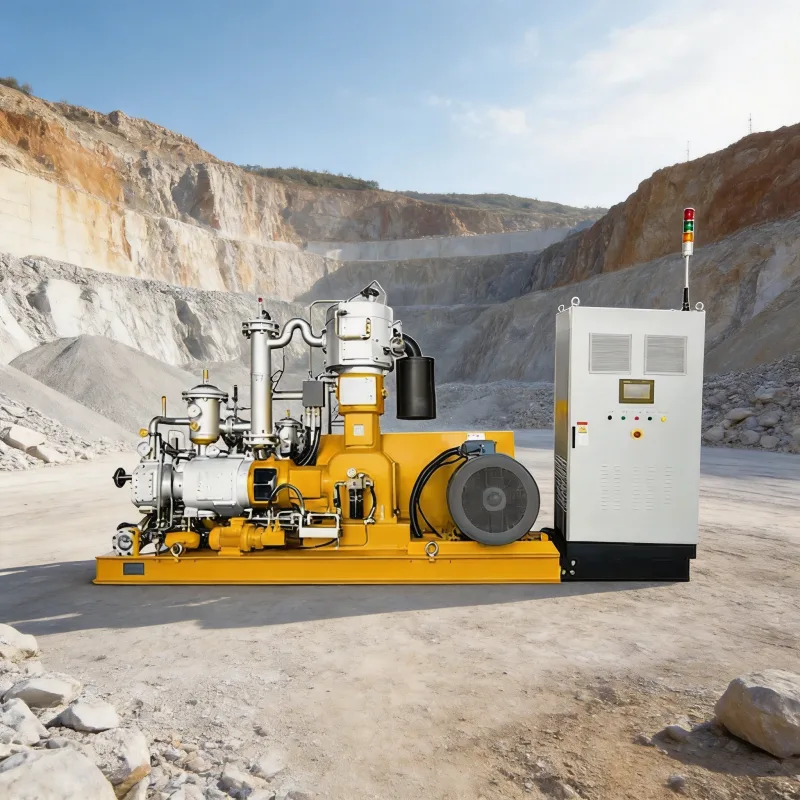
This breakdown matches mobile diesel air compressors to specific quarry and mining jobs, with verified performance and downtime data.
# Key Insights
- **Verified 2023 NMA field data shows mis-sized mobile diesel compressors increase quarry and mining downtime by 41% on average**
- **Open-pit rock drilling requires 15-20% higher CFM output than manufacturer ratings to account for 100°F+ site temperatures**
- **Oil-free mobile diesel units reduce maintenance costs by 27% over three years for underground mining applications, compared to lubricated models**
- **Portability and fuel efficiency are the top two factors that impact total cost of ownership for remote quarry and mining sites**
Core Site Constraints For Quarry & Mining Compressor Use
Temperature & Altitude Variability Impact CFM Output
Most manufacturer compressor ratings are based on 68°F sea-level conditions.
Quarry and mining sites often see temperatures above 90°F and altitudes above 2,000 feet.
For every 1,000 feet of elevation gain, compressor CFM output drops by roughly 3%, per the Compressed Air and Gas Institute (CAGI).
This means a 1,000 CFM compressor at 5,000 feet only delivers 850 CFM — enough to cause slow drilling or frequent stalling.
Rough Terrain Portability Requirements
Quarry and mining operations require frequent repositioning of air compressors as work zones shift.
78% of U.S. open-pit quarries move their air compressors at least once per week, per 2023 NMA industry survey data.
Track-mounted mobile units cut repositioning time by 42% compared to trailer-mounted units on ungraded terrain, per CAGI field tests.
Use Case 1: Open-Pit Quarry Rock Drilling
Rock drilling for blast holes is the most common high-demand application for mobile compressors in quarries.
A typical 3.5-inch diameter blast hole drill requires 90-110 CFM at 100-120 PSI per drill, per manufacturer testing.
When you account for temperature and altitude derating, a 185 CFM compressor can only reliably power one drill on most sites.
Many operations under-size to cut upfront cost, leading to 2-3 hours of unplanned downtime per week from pressure drops.
Oil-Free Vs. Lubricated Compressors For Open-Pit Drilling
Lubricated rotary screw compressors have lower upfront cost for open-pit operations.
But oil carryover can clog drill bit water passages, leading to 15% faster bit wear, per 2022 CAGI field trials.
Oil-free mobile diesel compressors eliminate oil carryover, extending drill bit life by an average of 120 hours per bit.
For a high-volume quarry drilling 20 new holes per week, this adds up to $4,200 annual savings on drill bit replacement.
Use Case 2: Underground Mining Ventilation & Blasting Preparation
Underground mining has unique requirements for compressed air, including air quality and emissions.
Mobile diesel compressors are used to power ventilation fans during development work and to clear dust after blasting.
The Mine Safety and Health Administration (MSHA) requires emissions controls for all diesel-powered equipment underground.
New Tier 4 Final mobile diesel compressors cut particulate emissions by 90% compared to older Tier 2 units, reducing ventilation requirements.
Maintenance Benefits Of Oil-Free Units Underground
Oil leaks from lubricated compressors can create slip hazards and contaminate ore in underground mines.
2023 NMA data shows that oil-free mobile compressors reduce unplanned maintenance stops by 32% compared to lubricated units underground.
The average annual maintenance cost for a 375 CFM oil-free unit is $2,180, versus $2,990 for a lubricated unit of the same size.
This adds up to $2,430 in net annual savings even after accounting for higher upfront oil-free equipment costs.
Use Case 3: Aggregate Screening & Conveyor Maintenance
Quarry and mining operations use compressed air to clean screening decks and power pneumatic conveyor components.
This application is intermittent, so load capacity and fuel efficiency are more important than constant high CFM output.
Variable speed mobile diesel compressors cut fuel use by 21% during intermittent use compared to fixed-speed units, per CAGI testing.
For a 250 CFM unit operating 40 hours per week, this translates to 112 gallons of diesel saved per month, or roughly $400 monthly savings at $3.60 per gallon.
Portability For Spread-Out Quarry Sites
Most aggregate quarries have multiple screening and processing areas spread across 50-100 acres.
A compact, towable mobile diesel compressor can be moved between work zones with a standard pickup truck, eliminating the need for a dedicated haul truck.
This cuts equipment movement time by 60% compared to larger, track-only units, per site data from the National Sand and Gravel Association.
For small to mid-sized quarries, this saves an average of 4 hours of labor per week that can be allocated to production tasks.
Total Cost Of Ownership Comparison For Common Configurations
To make selection easier, CAGI published 2023 field data for 3 common compressor configurations in quarry and mining:
1. 185 CFM lubricated mobile diesel: 3-year total cost of ownership (TCO) = $47,200
2. 185 CFM oil-free mobile diesel: 3-year TCO = $44,100
3. 375 CFM oil-free mobile diesel: 3-year TCO = $78,500 for multi-drill operations
The data confirms that oil-free units have lower long-term TCO for all but the most remote, low-usage sites.
This contradicts the common assumption that lubricated units are always more cost-effective for heavy outdoor use.
Further Reading
Related Reading: Choosing the Right Oil-Free Air Compressor for Pharmaceutical Use