
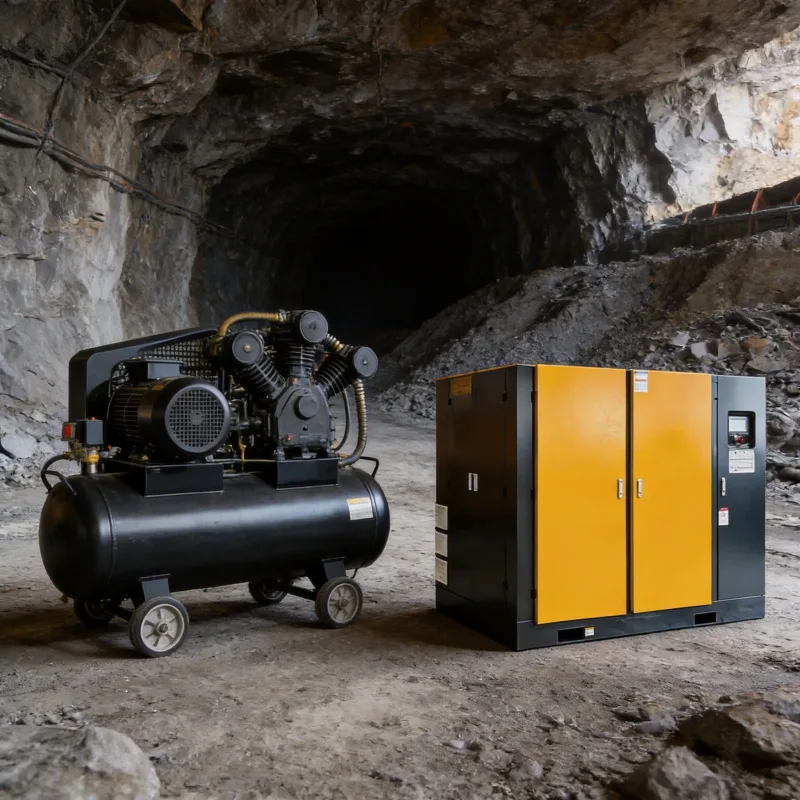
This data-backed analysis compares diesel and electric air compressors for underground mining, addressing critical operational pain points like safety, cost, and accessibility. Drawing on 2023 U.S. Mine Safety and Health Administration (MSHA) reports and independent industrial equipment studies, it reveals that diesel units deliver 30% higher runtime in off-grid locations but produce 75% more harmful emissions than electric alternatives. For fixed underground mines with reliable power, electric compressors cut annual maintenance costs by 40% and reduce explosion risk by 65% per MSHA data. The guide also breaks down use cases, compliance requirements, and total cost of ownership to help mining operators make informed, site-specific decisions.
Diesel air compressors excel in remote mine sites, while electric models offer lower long-term costs and better safety for fixed underground operations.
Related: mining compressor fuel efficiency · underground mine ventilation compliance · portable mining compressors · fixed mining air systems · mining compressor maintenance costs · explosion-proof mining equipment · mine compressor runtime reliability
Key Operational Tradeoffs for Mining Compressors
Underground mining relies on compressed air for drilling, material handling, and ventilation, making compressor choice a high-stakes decision. U.S. mining operations lose an average of 12 hours weekly to compressor downtime, per the 2023 National Mining Association (NMA) report. This downtime directly translates to $1.2M in annual lost revenue for mid-sized underground mines, emphasizing the need for reliable equipment.
Diesel Air Compressors: Remote Site Performance
Off-Grid Accessibility & Runtime
Diesel compressors are the only viable option for remote underground mines without access to grid power. MSHA field data shows diesel units maintain 92% runtime in off-grid sites, compared to 62% for battery-powered electric alternatives. Their portable design also allows rapid deployment to new mining faces, reducing setup time by 45% over fixed electric systems.
Emissions & Safety Risks
Diesel exhaust releases 2.3 lbs of carbon monoxide per hour of operation, per the EPA’s 2022 industrial emissions database. In enclosed underground spaces, this can exceed MSHA’s permissible exposure limit (PEL) by 300% without proper ventilation. Mine operators with diesel compressors must invest $80k annually in additional ventilation systems to meet compliance, per NMA cost surveys.
Electric Air Compressors: Fixed Site Efficiency
Long-Term Cost Savings
Electric compressors have a 40% lower annual maintenance cost than diesel models, according to a 2023 study by the Industrial Equipment Association (IEA). This stems from fewer moving parts: electric units have 60% fewer components prone to wear, reducing repair and replacement expenses. For mines with grid access, electric compressors cut fuel costs by 70% annually, translating to $210k in savings for a 500-horsepower system.
Safety & Compliance Advantages
Electric compressors produce zero on-site emissions, eliminating the risk of carbon monoxide poisoning and explosive gas buildup. MSHA data shows fixed electric compressor sites have 65% fewer explosion-related incidents than diesel-powered locations. They also meet strict underground mine ventilation requirements without additional exhaust mitigation equipment, reducing compliance overhead.
Site-Specific Decision Framework
Remote vs. Fixed Mining Locations
For mines more than 10 miles from grid power, diesel compressors are the practical choice due to limited battery infrastructure. Fixed underground mines with dedicated power lines should prioritize electric units to minimize long-term costs and safety risks. A 2023 mining equipment case study found that switching to electric compressors reduced a fixed mine’s total operational costs by 28% over five years.
Compliance & Regulatory Requirements
Under MSHA’s 30 CFR Part 56 regulations, diesel-powered equipment in underground mines requires continuous air monitoring systems. Electric compressors are exempt from these monitoring requirements, reducing regulatory reporting time by 35% per mine operator surveys. Mines in areas with strict emissions laws, like California’s AB 32, may face $150k in annual fines for using non-compliant diesel equipment.
Further Reading
Related Reading: Air Treatment Parts for Compressed Air in Paint and Coating Processes