



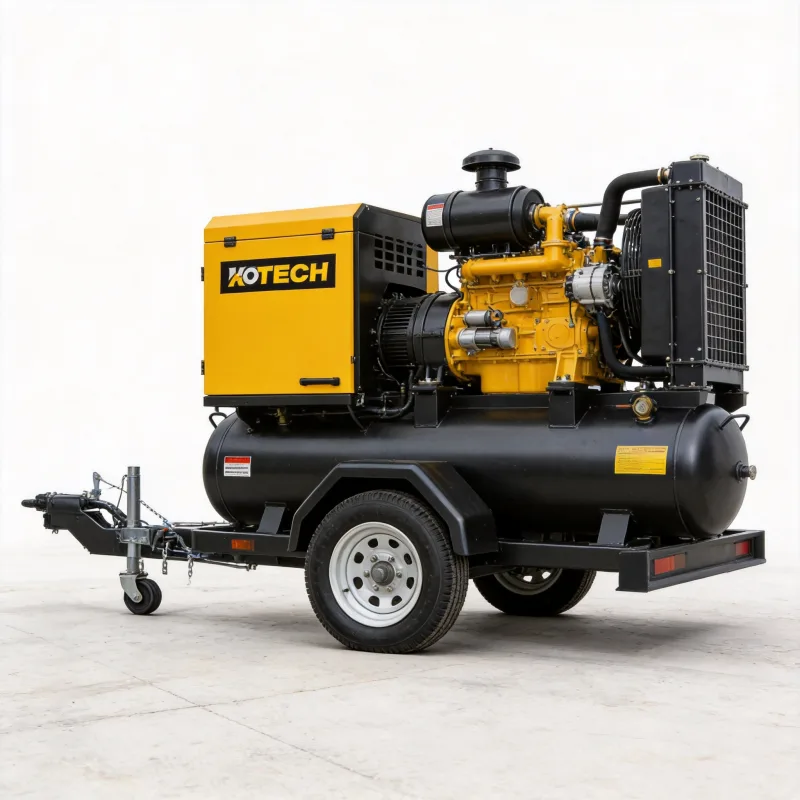
Choosing the right size diesel air compressor with generator for road repair requires precise load matching, but ensuring operational continuity hinges on effective diagnosis and repair of common unit failures.
The Critical Interplay: Diesel Engine, Compressor, and Generator Faults in Road Repair Units
Road repair projects operate under tight deadlines and budgets, making equipment reliability non-negotiable. A diesel air compressor with a generator is the backbone for many operations, powering pneumatic tools like jackhammers (requiring 40-80 CFM at 90 PSI), asphalt cutters (100-200 CFM at 100-125 PSI), and simultaneously providing electricity for lighting, welders, and other auxiliary equipment (often demanding 5-15 kW). When these integrated units falter, the cascading impact on project timelines and costs is immediate and severe. Industry data suggests that a single hour of unexpected downtime on a major road repair site can incur costs ranging from $1,000 to $5,000, encompassing labor, lost productivity, and potential penalty fees. Understanding the intricate relationship between the diesel engine, the air compressor, and the generator is the first step in effective diagnosis. A fuel delivery issue in the diesel engine, for example, might manifest as low air pressure *and* unstable electrical output, making a clear diagnosis challenging without a systematic approach. The engine is the primary power source for both the compressor and the generator; therefore, any engine performance degradation directly impacts both outputs. Conversely, an overloaded compressor or generator can strain the engine, leading to premature wear or outright failure.
Initial Assessment: Distinguishing Symptoms Across Systems
Effective troubleshooting begins with precise symptom identification. Is the problem primarily with air delivery (low pressure, low flow, moisture), electrical output (voltage fluctuations, no power), or engine performance (stalling, overheating, excessive smoke)? Often, symptoms are intertwined. For instance, an engine that’s running rough might lead to insufficient RPMs for optimal compressor operation, resulting in low air pressure, while simultaneously causing the generator to produce unstable voltage. If the unit struggles under load for both air and power, the focus should immediately shift to the diesel engine’s fuel, air intake, and exhaust systems. Conversely, if the engine runs smoothly but only one output is compromised, the issue is likely isolated to that specific component—the compressor or the generator. Documenting the exact conditions under which the failure occurs (e.g., cold start, under heavy load, after prolonged operation) provides crucial diagnostic clues.
Systematic Troubleshooting: Diagnosing Performance Issues in Your Integrated Unit
Once symptoms are identified, a structured diagnostic process is vital to avoid costly trial-and-error repairs. This approach prioritizes the most common and easily verifiable issues first.
Diesel Engine Diagnostics: The Heart of the Operation
Given that the diesel engine powers both primary functions, it’s often the root cause of integrated unit failures. Start with the basics: 1. **Fuel System:** Check fuel levels, quality, and filters. Contaminated fuel or clogged filters are a leading cause of diesel engine issues, accounting for an estimated 30-40% of all engine failures in heavy equipment. Inspect fuel lines for leaks or blockages. Ensure the fuel pump is delivering adequate pressure. 2. **Air Intake System:** A restricted air filter can choke the engine, reducing power and efficiency by 5-10%. Inspect the filter, intake hoses, and turbocharger (if equipped) for obstructions or damage. 3. **Exhaust System:** A blocked exhaust can create back pressure, hindering engine performance. Check for damaged mufflers or particulate filters. 4. **Cooling System:** Overheating is a common engine killer. Verify coolant levels, check for leaks, and inspect the radiator and fan for obstructions or malfunction. 5. **Lubrication System:** Ensure oil levels are correct and the oil is clean. Low oil pressure can trigger safety shutdowns or cause catastrophic engine damage. 6. **Electrical System (Engine Side):** Test batteries, starter, and alternator. A weak battery can prevent starting, while a faulty alternator impacts the engine’s ability to run and recharge.
Air Compressor Diagnostics: Ensuring Consistent Pneumatic Power
If the engine is running optimally but air output is compromised, focus on the compressor section: 1. **Air Filters:** Clogged intake air filters are a primary culprit for low CFM and pressure. Replace them regularly. 2. **Pressure Regulator/Unloader Valve:** Malfunctions here can lead to incorrect pressure delivery or continuous cycling. Test for proper operation. 3. **Air/Oil Separator:** A clogged separator can restrict airflow and lead to oil carryover into the air lines. This impacts tool performance and air quality, crucial for applications like shot blasting or critical drying. 4. **Hoses and Fittings:** Leaks in the air lines, hoses, or fittings significantly reduce effective pressure and flow. A 1/8-inch leak in a 100 PSI system can waste up to 25 CFM, equivalent to a small jackhammer’s consumption. Use a soapy water solution to identify leaks. 5. **Compressor Oil:** Incorrect oil level or type can cause overheating and reduced efficiency. Ensure proper lubrication. 6. **Safety Valves:** Stuck-open safety valves will prevent pressure buildup.
Generator Diagnostics: Reliable Electrical Supply
When the engine runs well but electrical power is erratic or absent, the generator section requires attention: 1. **Output Breakers:** Check if the circuit breakers are tripped. This is the simplest fix for “no power” issues. 2. **Voltage Regulator:** A faulty automatic voltage regulator (AVR) is a common cause of voltage fluctuations or complete lack of output. Testing typically requires specialized equipment or a qualified technician. 3. **Windings/Stator:** Damaged generator windings or stator can lead to low voltage or no output. This usually requires professional repair or replacement. 4. **Brushes (if applicable):** Older generators might have brushes that wear out, leading to intermittent power. 5. **Output Receptacles:** Inspect outlets for damage or loose connections. 6. **Grounding:** Improper grounding can lead to safety hazards and operational issues.
Preventative Maintenance as a Diagnostic Tool: Mitigating Future Failures and Optimizing Uptime
Preventative maintenance (PM) is not merely about avoiding breakdowns; it’s a continuous diagnostic process that uncovers potential issues before they escalate into costly failures. Regular inspections and scheduled component replacements provide invaluable insights into the unit’s health. For instance, consistent monitoring of fuel consumption trends can indicate a developing engine problem (e.g., injector wear). Analyzing compressor oil samples can reveal early signs of bearing wear or contamination, allowing for proactive intervention. Similarly, tracking generator output stability over time can highlight a degrading AVR or insulation issues. Implementing a rigorous PM schedule, based on manufacturer recommendations and operational hours, can extend the lifespan of your unit by 20-30% and significantly reduce the likelihood of unexpected failures.
Key PM Diagnostic Checkpoints:
- **Daily Pre-Operation Checks:** Visual inspection for leaks, loose connections, abnormal noises, and fluid levels. This quick check can catch incipient failures like a developing hose leak or a loose battery terminal.
- **Weekly Inspections:** Check air filter restriction indicators, inspect belts for tension and wear, clean debris from cooling fins, and verify safety shutdown functions.
- **Monthly/Bi-Monthly Service:** Lubricate moving parts, inspect electrical connections, check battery specific gravity, and test all gauges and alarms. This deeper dive often reveals subtle issues that daily checks miss.
- **Scheduled Fluid and Filter Changes:** Adhering to manufacturer guidelines for engine oil, fuel filters, air filters, and compressor oil changes is paramount. These replacements are not just maintenance; they are opportunities to inspect related components for wear or damage. For example, when changing a fuel filter, inspecting the removed filter for excessive debris can indicate a problem with the fuel tank or supply.
Beyond the Basics: Advanced Diagnostics and Professional Intervention
While many common issues can be diagnosed in-house, some problems necessitate professional expertise and specialized equipment. When symptoms are complex, intermittent, or defy basic troubleshooting, it’s time to call in a certified technician.
When to Seek Professional Help:
- **Persistent Electrical Faults:** Issues like consistent low voltage under load, high frequency deviations, or complete generator failure that isn’t a simple breaker trip often point to internal winding damage or advanced AVR failure, requiring specialized diagnostic tools like oscilloscopes and megohmmeters.
- **Engine Internal Issues:** If basic checks don’t resolve engine performance problems (e.g., unusual knocking, persistent excessive smoke colors—blue for oil, black for fuel, white for coolant), it might indicate internal engine damage (e.g., piston rings, valves, fuel injectors). These often require compression tests, cylinder leak-down tests, or fuel pressure tests, which are best performed by experienced mechanics.
- **Compressor Air End Failure:** A failing compressor air end (the rotary screw or piston assembly) will typically produce severe noise, vibration, or a complete inability to build pressure despite the engine running correctly. Repairing or rebuilding an air end is a highly specialized task.
- **Control System Malfunctions:** Modern units often feature sophisticated electronic control units (ECUs) that manage engine, compressor, and generator parameters. Faults in these systems usually require proprietary diagnostic software and tools.
A professional technician can leverage their experience and specialized diagnostic equipment, such as thermal imaging cameras to detect overheating components, vibration analysis tools to identify bearing failures, and advanced electrical testers, to pinpoint the exact root cause efficiently, saving you time and preventing further damage.
Right-Sizing for Reliability: Preventing Overload and Premature Wear
While this article focuses on diagnosis and repair, it’s crucial to acknowledge that improper initial sizing can be a *precursor* to frequent failures. An undersized unit constantly operating at its maximum limits will experience accelerated wear and tear on all components—engine, compressor, and generator. This leads to more frequent breakdowns and a shorter operational lifespan. For road repair, accurately calculating the combined CFM requirements for all simultaneous pneumatic tools and the total kW demand for all electrical loads (including a 20-25% buffer for startup surges and future expansion) is critical. Overloading is a common “self-inflicted” failure, leading to overheating, reduced efficiency, and premature component failure. For example, continuously running a 185 CFM compressor at 100% duty cycle when only 150 CFM is needed is less damaging than attempting to draw 250 CFM from it. However, pushing a 185 CFM unit to supply 200 CFM due to miscalculation or adding tools leads to rapid wear. Similarly, exceeding a generator’s rated kW output causes voltage drops, overheating, and potential damage to both the generator and connected equipment. Investing in a slightly oversized unit can often be a more cost-effective strategy in the long run, providing a cushion against unexpected demands and reducing the frequency of diagnostic interventions.