
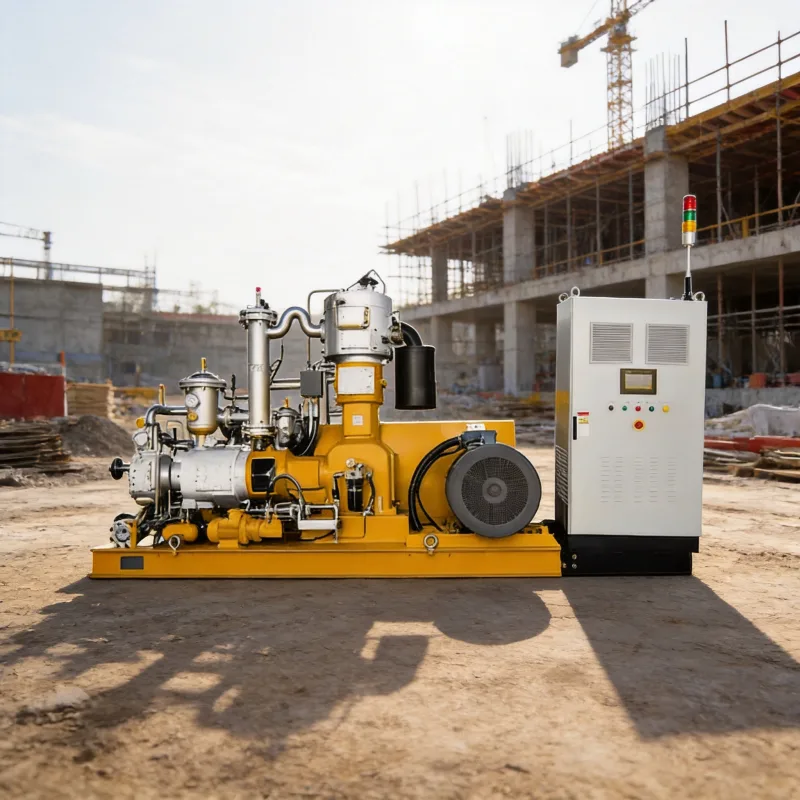
Selecting a quiet operation diesel air compressor for construction sites demands a methodical approach beyond basic specifications. This guide outlines practical steps, starting with a deep dive into acoustic signatures and manufacturer data, moving through pre-purchase vetting of noise reduction technologies, and culminating in effective site integration and long-term maintenance strategies. We challenge the conventional reliance on single dBA ratings, advocating for a holistic evaluation of frequency spectrums and psychoacoustic impacts. By focusing on verifiable data, such as real-world noise attenuation figures from specific enclosure designs and engine modifications, and integrating these into a comprehensive selection protocol, construction managers can significantly reduce noise pollution. This leads to enhanced worker safety, improved community relations, and compliance with increasingly stringent urban noise ordinances, often requiring levels below 70 dBA at property lines.
Achieve quiet operation on construction sites by strategically selecting and deploying diesel air compressors with advanced noise reduction technologies and proper site management.
Related: low noise diesel compressor · portable quiet compressor · attenuated diesel compressor · industrial quiet air compressor · soundproof air compressor · noise control construction equipment · diesel compressor selection guide · job site quiet equipment · acoustic performance diesel compressor · urban construction noise compliance
**Key Insights for Quiet Compressor Selection & Deployment**
- **Prioritize Acoustic Signature Analysis:** Don’t just look at dBA; evaluate the full frequency spectrum to understand perceived noise and identify problem frequencies.
- **Vet Manufacturer Claims Deeply:** Demand independent noise test reports (e.g., ISO 3744) and inquire about specific noise reduction technologies like multi-stage mufflers and isolated engine compartments.
- **Implement Strategic Site Planning:** Position compressors away from sensitive areas, utilize natural barriers, and consider temporary acoustic screens to maximize noise attenuation.
- **Focus on Engine & Enclosure Synergy:** The quietest units combine low-RPM diesel engines with robust, sound-attenuating enclosures and anti-vibration mounts.
- **Commit to Proactive Maintenance:** Regular checks of seals, mounts, and exhaust systems are crucial for preventing noise escalation over the compressor’s lifespan.
Understanding Acoustic Signatures: Beyond dB Ratings
Choosing a quiet operation diesel air compressor for a construction site isn’t simply about finding the lowest decibel (dBA) number on a spec sheet. That’s a rookie mistake. The perceived “quietness” is profoundly influenced by the *frequency spectrum* of the noise. A compressor rated at 70 dBA with a dominant low-frequency rumble might be less disruptive than one at 68 dBA emitting a high-pitched whine. This is due to psychoacoustics – how humans perceive sound. Our ears are more sensitive to certain frequencies.
For instance, studies by the National Institute for Occupational Safety and Health (NIOSH) indicate that while overall dBA is important, high-frequency noise (above 2000 Hz) can be particularly irritating and contribute to fatigue, even at lower overall sound pressure levels. When evaluating compressors, demand access to full spectral analysis data, often presented as octave band or 1/3 octave band measurements. Look for units that specifically attenuate these higher-frequency components. A manufacturer that provides ISO 3744 or ISO 9614-2 compliant noise emission data, detailing sound power levels across frequency bands, demonstrates a commitment to real-world acoustic performance.
Pre-Purchase Protocol: Vetting Compressor Noise Reduction Technologies
The true quietness of a diesel air compressor for a construction site comes from a combination of design choices, not a single feature. Your pre-purchase protocol must involve a rigorous examination of these integrated technologies.
First, investigate the **engine type and speed**. Lower RPM diesel engines inherently produce less mechanical noise and exhaust sound. For example, a compressor using a 1500 RPM engine will typically generate significantly less noise than a comparable unit running at 2200 RPM, even with similar power output. This reduction can be as much as 3-5 dBA at the source for equivalent power. Beyond the engine, scrutinize the **air end (compressor block)**. Helical screw air ends, especially those with advanced rotor profiles, are generally quieter than piston-driven units for similar air volumes.
Next, focus on the **acoustic enclosure design**. This is where significant noise attenuation occurs. Look for multi-layered sound-attenuating materials, not just thin metal panels. High-density rock wool or mineral fiber insulation, often 2-4 inches thick, can reduce sound transmission by 10-15 dBA. Check for robust sealing around doors and access panels. Gaps as small as 1/8 inch can compromise the entire enclosure’s effectiveness, allowing noise to leak out. Furthermore, **anti-vibration mounting systems** for both the engine and compressor block are crucial. Elastomeric isolators or spring mounts prevent vibrations from transmitting to the compressor’s frame and the ground, which would otherwise amplify noise. A unit with properly isolated components can see an additional 2-4 dBA reduction in ground-borne noise compared to rigidly mounted systems.
Finally, examine the **exhaust system**. A multi-stage muffler, designed to specifically target different frequency ranges, is far superior to a single, basic muffler. Some advanced systems incorporate reactive and absorptive elements, reducing exhaust noise by up to 20 dBA from the raw engine exhaust. Don’t overlook the cooling fan design; axial fans with optimized blade profiles and variable speed control can significantly reduce fan noise, a common culprit, especially in hot conditions.
Site Integration Strategies: Minimizing Noise Footprint Post-Acquisition
Even the quietest diesel air compressor can become a nuisance if not strategically deployed on a construction site. Effective site integration is a critical operational step.
**Strategic Placement:** The simplest and most effective strategy is distance. Noise levels decrease by approximately 6 dBA for every doubling of the distance from the source. Positioning the compressor as far as practically possible from residential areas, offices, and break zones is paramount. If your site plan allows for a 50-foot setback instead of 25 feet, you’ve already achieved a significant noise reduction.
**Utilizing Barriers:** Natural or artificial barriers can block direct line-of-sight noise transmission. Earth berms, existing buildings, or even material stacks can serve as effective sound barriers. For temporary solutions, consider deploying purpose-built **acoustic screens or noise curtains**. These typically consist of heavy, sound-absorbing materials mounted on a frame. A well-designed acoustic barrier, positioned correctly, can provide a 5-10 dBA reduction in specific directions, particularly for mid to high-frequency noise. Research from the Transportation Research Board indicates that a 10-foot high, continuous barrier can reduce noise by 5 dBA at a distance of 100 feet, assuming no flanking paths.
**Optimizing Airflow and Exhaust Direction:** Ensure the compressor’s exhaust port and cooling fan discharge are directed away from sensitive receptors. Avoid pointing them towards residential areas or adjacent buildings. Obstructing airflow can lead to overheating, which may cause the engine to work harder, increasing noise levels. Maintain clear space around the unit, as per manufacturer guidelines, typically 3-5 feet on all sides, to ensure efficient cooling and prevent sound reflection off nearby surfaces.
**Foundation and Ground Treatment:** The surface beneath the compressor can also impact noise. Placing the unit on a firm, level, non-resonant surface is ideal. Concrete pads are generally better than loose gravel, which can vibrate and amplify certain frequencies. For highly sensitive areas, consider placing the compressor on a specialized anti-vibration mat or a dedicated concrete foundation with integrated isolation pads to further mitigate ground-borne vibrations.
Maintenance for Sustained Silence: Long-Term Operational Tactics
The initial quiet performance of your diesel air compressor for a construction site can degrade rapidly without a rigorous maintenance schedule. Sustaining low noise levels is an ongoing operational commitment.
**Regular Inspections of Acoustic Enclosure:** Periodically inspect the sound-attenuating enclosure for any damage, loose panels, or compromised seals. Even small cracks or gaps can significantly reduce the enclosure’s effectiveness. Gaskets around doors and access hatches can degrade over time, creating pathways for noise leakage. Replace worn seals promptly. A quarterly visual inspection should be standard practice.
**Muffler and Exhaust System Integrity:** The muffler is a critical component for noise reduction. Inspect it for corrosion, holes, or loose connections. A damaged muffler can drastically increase exhaust noise. Similarly, check all exhaust piping for leaks. Exhaust leaks not only create noise but also pose safety hazards. Manufacturers often recommend muffler inspections every 250-500 operating hours.
**Engine and Air End Servicing:** A well-maintained engine runs smoother and quieter. Adhere strictly to the manufacturer’s schedule for oil changes, air filter replacements, and fuel filter changes. Clogged air filters can strain the engine, leading to increased operational noise. Lubricate all moving parts as recommended. For the air end, ensure proper oil levels and quality, as internal friction can contribute to noise if not adequately lubricated. Worn bearings in either the engine or air end are significant noise sources that can only be identified and addressed through routine servicing.
**Anti-Vibration Mount Checks:** Over time, anti-vibration mounts can harden, crack, or become loose. Inspect these mounts regularly for signs of wear or damage. Replace them if they show any deterioration. Failed mounts will transmit engine and compressor vibrations directly to the frame and ground, negating their noise reduction benefits. This check should be part of a semi-annual preventive maintenance routine.
**Fan and Cooling System Maintenance:** Keep the cooling fins and radiator clear of dust and debris. A clogged cooling system can lead to higher operating temperatures, causing the fan to run at higher speeds or the engine to work harder, both increasing noise. Ensure fan blades are clean and undamaged. Any imbalance in the fan can create excessive vibration and noise.
By implementing these operational steps and practical tutorials, construction managers can not only select a quiet operation diesel air compressor but also maintain its low noise footprint throughout its service life, contributing to a safer, more compliant, and community-friendly construction environment.
Further Reading
Related Reading: Best Heavy Duty Diesel Air Compressor For Jackhammer: Pro Picks & Guide