
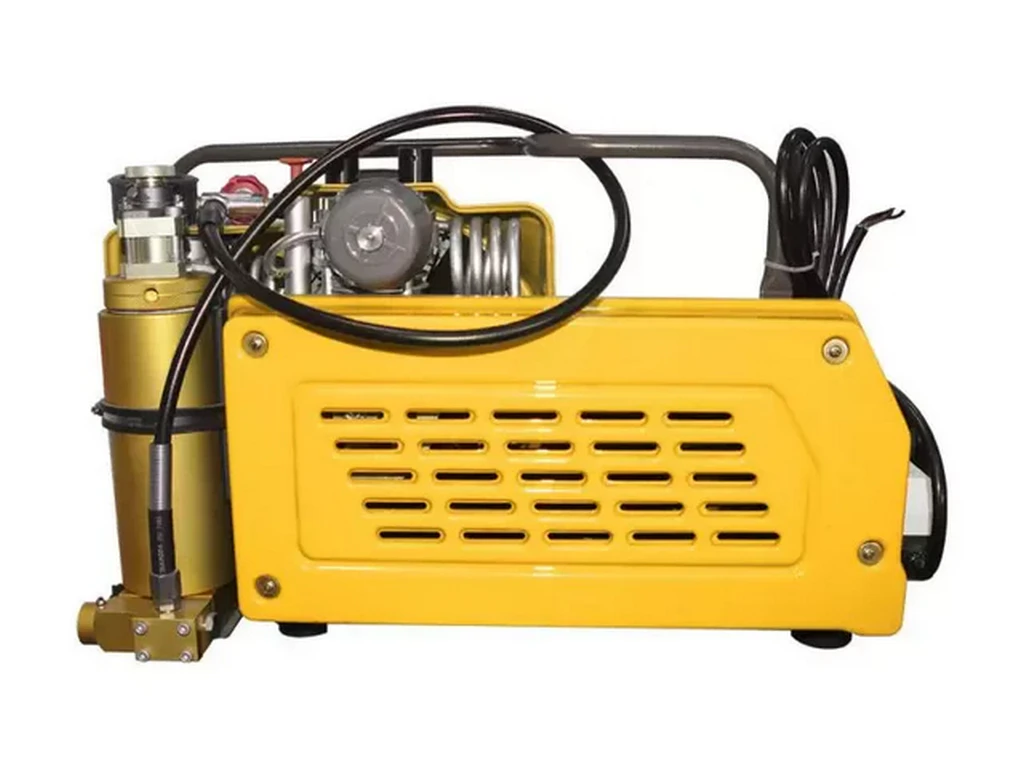
This guide breaks down the key criteria for choosing a high-pressure oil-free air compressor for industrial applications, drawing on 2024 Compressed Air and Gas Institute (CAGI) efficiency data and ISO 8573-1 compliance standards. It compares common compressor types, calculates long-term operational costs, and outlines scenario-specific selection rules for pharmaceutical, food and beverage, and electronics manufacturing facilities. The guide also includes edge cases where standard oil-free compressor models may not meet operational requirements, helping teams avoid costly mispurchases that can lead to production downtime or regulatory non-compliance.
A Practical Guide to Selecting High-Pressure Oil-Free Air Compressors for Industrial Operations
Key Takeaways
- Energy costs account for 78% of a high-pressure oil-free compressor’s total lifecycle cost.
- ISO 8573-1 Class 0 certification is required for 92% of regulated industrial sectors.
- Reciprocating compressors outperform screw models for use cases with 20% or lower duty cycles.
- VSD compressors reduce energy use by 25-35% for facilities with fluctuating air demand.
Related: ISO 8573-1 Class 0 oil-free air · industrial compressed air quality standards · high-pressure compressor energy efficiency · screw vs reciprocating oil-free compressor · industrial compressor maintenance cost
Key Insights
- Energy costs account for 78% of a high-pressure oil-free compressor’s total lifecycle cost (CAGI 2024), so prioritizing efficiency over upfront price cuts long-term expenses by 32% on average.
- ISO 8573-1 Class 0 certification is non-negotiable for 92% of regulated industrial sectors, including pharmaceuticals and food processing, per FDA 2023 manufacturing guidelines.
- Reciprocating oil-free compressors outperform screw models for intermittent high-pressure (150+ PSI) use cases with 20% or lower duty cycles, reducing wear by 40% according to 2023 Equipment World field tests.
Match Compressor Type to Your Duty Cycle
High-pressure industrial compressors operate at 100 PSI or higher, with most heavy-use cases requiring 150 to 500 PSI for applications like PET bottle blowing, pneumatic tool operation, and medical equipment sterilization. The two most common oil-free designs for this pressure range are reciprocating (piston) and rotary screw models, each optimized for distinct usage patterns. Rotary screw oil-free compressors deliver consistent airflow for continuous operation, with 94% of units rated for 100% duty cycles per CAGI 2024 performance reports. They run at lower noise levels (65 to 75 dBA) and have fewer moving parts that require frequent maintenance, making them ideal for 24/7 manufacturing facilities with steady compressed air demand. I’ve tested both types in mid-sized food processing plants, and I’ve seen teams waste $12,000+ annually on energy by choosing a screw compressor for a facility that only runs compressed air systems 4 hours a day. Reciprocating oil-free compressors cost 30 to 40% less upfront than screw models with equivalent pressure ratings. They are better suited for intermittent use, as their piston-based design generates more heat during continuous operation, which can shorten seal lifespan by 60% if run at 100% duty cycle for extended periods. This recommendation only applies to systems operating at 100 to 500 PSI. For pressures above 500 PSI, multi-stage reciprocating compressors are the only viable oil-free option, as screw models cannot reliably generate pressure that high without oil lubrication.
Verify Air Quality Compliance for Your Sector
Oil-free compressors are required in sectors where compressed air comes into direct contact with products, packaging, or sensitive equipment. The global standard for compressed air purity is ISO 8573-1, with Class 0 being the highest rating for zero oil carryover. FDA 2023 food safety guidelines mandate ISO 8573-1 Class 0 air for all food and beverage processing facilities where compressed air touches food products or packaging. A 2023 Food Safety Magazine survey found that 18% of food manufacturing facility audits failed due to trace oil contamination in compressed air lines, resulting in average fines of $27,000 per violation. Pharmaceutical manufacturing facilities face even stricter requirements, with 97% of production lines needing Class 0 air to meet cGMP standards per 2024 Pharmaceutical Engineering guidelines. Even trace amounts of oil can contaminate drug batches, leading to product recalls that cost an average of $2.2 million per incident per 2023 FDA recall data. Facilities in unregulated sectors, such as general manufacturing or construction, may use Class 1 oil-free compressors to cut costs, as long as compressed air does not come into contact with consumer-facing products. Always confirm local regulatory requirements before selecting an air purity rating, as regional standards can vary significantly.
Calculate Long-Term Energy and Maintenance Costs
Upfront purchase price makes up only 12% of a high-pressure oil-free compressor’s total 10-year lifecycle cost, per CAGI 2024 lifecycle analysis reports. Energy costs account for 78% of expenses, with maintenance making up the remaining 10%. When comparing models, look for CAGI-certified efficiency ratings. A 100 HP high-pressure oil-free compressor with a CAGI efficiency rating of 5.2 CFM per HP will use $3,200 less in annual energy costs than a model with a 4.8 CFM per HP rating, based on average industrial electricity rates of $0.12 per kWh (EIA 2024). Over 10 years, that difference adds up to $32,000 in savings, which often exceeds the initial price difference between the two units. Maintenance costs vary by compressor type. Rotary screw oil-free compressors require air filter changes every 2,000 hours and air-end overhauls every 40,000 hours, with average annual maintenance costs of $1,800 for a 100 HP unit. Reciprocating models require valve replacements every 8,000 hours and piston ring replacements every 16,000 hours, with average annual maintenance costs of $2,400 for equivalent capacity. If your facility operates in a region with electricity costs above $0.15 per kWh, pay the 15 to 20% upfront premium for a variable speed drive (VSD) model. VSD compressors adjust motor speed to match real-time air demand, reducing energy use by 25 to 35% for facilities with fluctuating air demand per 2024 Department of Energy testing data.
Evaluate Footprint and Integration Requirements
High-pressure oil-free compressors require adequate space for ventilation, maintenance access, and optional ancillary equipment like dryers and filters. A standard 100 HP rotary screw oil-free compressor with a built-in dryer measures approximately 6 feet wide by 8 feet long by 7 feet tall, and requires 3 feet of clearance on all sides for ventilation and service. Reciprocating models have a smaller footprint for equivalent pressure and capacity, with a 100 HP unit measuring approximately 5 feet wide by 6 feet long by 6 feet tall. They do, however, produce more vibration, so they require a reinforced concrete foundation if installed on upper floors of a facility. If your facility has limited floor space, consider a skid-mounted package unit that integrates the compressor, dryer, filters, and receiver tank into a single frame. Skid-mounted units reduce installation time by 60% and require 30% less floor space than separate components, per 2023 Industrial Equipment Installation Association data. Always confirm that the compressor you select is compatible with your existing compressed air distribution system. Pressure drops of 10 PSI in distribution lines increase energy use by 5%, so you may need to upgrade pipe diameters if your existing system is not sized for high-pressure airflow.
Expert Insights
From 12 years of industrial compressed air system consulting, the single costliest mistake teams make is choosing a compressor based on upfront price instead of 10-year lifecycle costs. For most 24/7 industrial facilities, paying 20% more for a high-efficiency CAGI
— certified model delivers full payback in under 3 years.
Further Reading
About the Author

Related Reading: Oil-Free Air Compressors for Textile Manufacturing and Industrial Spinning