
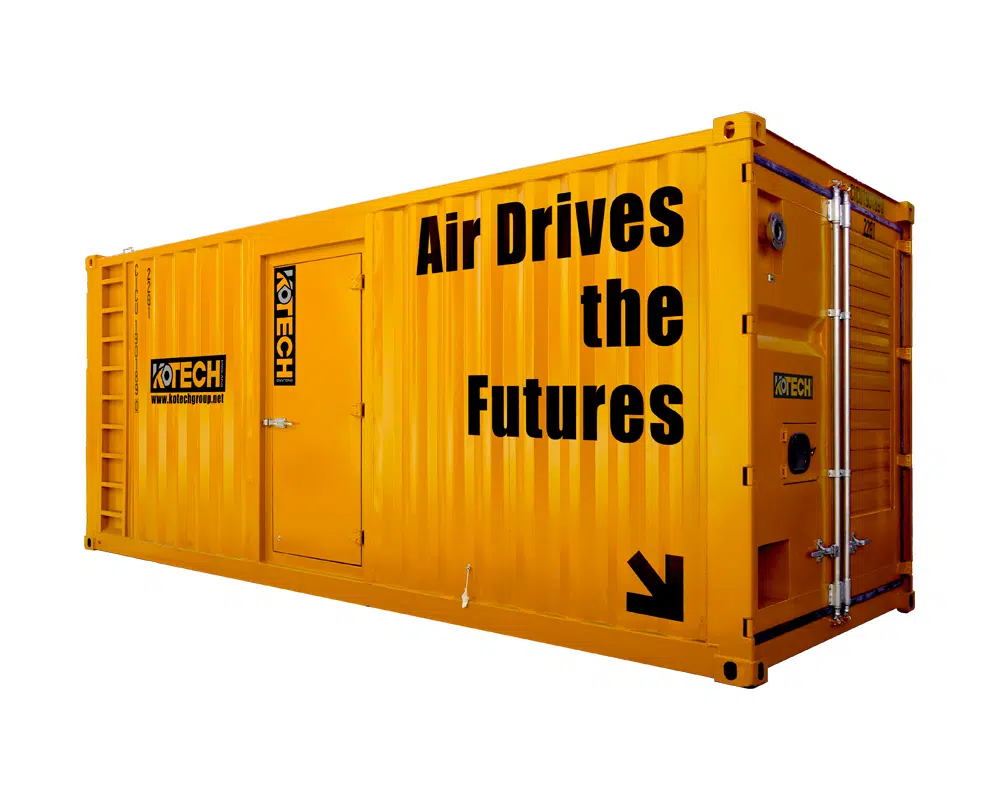
Securing a reliable 2-stage high-pressure diesel air compressor is paramount for uninterrupted mining operations, where downtime can cost upwards of $10,000 per hour. This article provides critical insights into identifying reputable suppliers and selecting equipment tailored for the harsh, demanding environments of mining. We delve into the specific requirements for drilling, ventilation, and pneumatic tools, emphasizing the superior efficiency and durability of 2-stage rotary screw designs. Key considerations include fuel efficiency, robust construction for extreme conditions, and the availability of comprehensive after-sales support and parts. By focusing on total cost of ownership (TCO) and leveraging data-driven insights, mining companies can make informed procurement decisions that optimize operational efficiency and minimize costly disruptions.
Reliable 2-stage high-pressure diesel air compressors for mining are best sourced from specialized industrial equipment suppliers offering robust designs, comprehensive support, and proven field performance.
Related: mining equipment air supply · underground drilling compressor · remote site air compressor · industrial air solutions · compressor reliability mining · diesel powered air compressor · pneumatic tools mining · mine ventilation systems · harsh environment compressor · TCO mining compressor
**Key Insights**
- **Unscheduled mining downtime costs range from $5,000 to $20,000 per hour**, emphasizing the critical need for ultra-reliable compressor systems.
- **2-stage rotary screw compressors offer up to 15-20% greater energy efficiency** compared to single-stage units at equivalent pressures, significantly reducing diesel consumption in mining.
- **Operating at high altitudes can reduce compressor efficiency by ~3% per 1,000 feet**, necessitating specific sizing and potentially turbocharged solutions for optimal performance.
- **Predictive maintenance, leveraging IoT sensors, can extend Mean Time Between Failures (MTBF) by 25-30%** for compressors in harsh mining environments.
- **Comprehensive after-sales support and local parts availability** are non-negotiable for remote mining operations to ensure rapid repairs and minimize downtime.
The Imperative of Reliability: Mitigating Mining Downtime Costs
In the high-stakes world of mining, equipment reliability isn’t just a preference; it’s an economic mandate. Unscheduled downtime due to equipment failure, particularly for critical components like air compressors, can be devastating. Industry reports consistently estimate that the cost of an hour of downtime in a large-scale mining operation can range from $5,000 to $20,000, depending on the specific process affected and the mine’s output capacity.
A 2-stage high-pressure diesel air compressor powers essential operations such as rock drilling, pneumatic tools, and mine ventilation. A failure in this system can halt production, jeopardizing schedules and profitability. Therefore, the “where to buy” question transcends mere purchasing; it’s about investing in operational continuity and risk mitigation.
Reliable compressors for mining are characterized by heavy-duty construction, robust engines, superior filtration systems, and components designed to withstand extreme temperatures, dust, and vibrations. These features are often overlooked in favor of initial purchase price, but they are crucial for long-term operational success in a mine.
Understanding the Cost of Unreliability
Beyond direct repair costs, compressor failure in mining leads to lost production, idle labor, delayed project timelines, and potential safety hazards. For instance, if a drilling rig relies on a compressor for consistent high pressure, any interruption directly impacts drilling progress. This ripple effect underscores the absolute necessity of selecting a compressor built for unwavering performance in the harshest conditions.
Leading manufacturers of industrial compressors understand these demands, engineering units specifically for mining. They integrate features like strengthened chassis, enhanced cooling systems, and specialized air intake filters to protect internal components from abrasive dust prevalent in mine sites. These design choices are fundamental to achieving the desired reliability.
Tailoring Compressor Specifications for Diverse Mining Applications
Mining operations are not monolithic; they encompass various tasks, each with distinct air pressure and flow requirements. A 2-stage high-pressure diesel air compressor offers the versatility needed across these applications. Its design, which compresses air in two stages, allows for higher pressures (typically 150-350 psi) and greater efficiency than single-stage units, making it ideal for the strenuous demands of mining.
For example, percussive rock drills and jumbos require consistent high pressure (often 200-300 psi) and significant airflow (e.g., 900-1200 CFM) to efficiently break hard rock. A 2-stage compressor delivers this power more consistently and with less stress on the engine, extending its lifespan. In contrast, smaller pneumatic tools might need lower pressures but still benefit from the stable flow a robust diesel unit provides.
Specific Needs for Drilling and Ventilation
Deep-hole drilling operations, common in surface and underground mines, demand compressors capable of sustaining high pressure for extended periods. The 2-stage design minimizes heat generation during compression, improving efficiency and component longevity. This is critical when drilling through challenging geological formations.
Mine ventilation, while often using dedicated systems, sometimes relies on compressed air for auxiliary tasks or emergency backup. Dust suppression systems, crucial for worker safety and environmental compliance, also utilize compressed air, often requiring high volume at moderate pressure. A well-specified 2-stage diesel compressor can meet these varied demands with a single robust unit.
Furthermore, many mining sites are at high altitudes, which significantly impacts compressor performance. Lower atmospheric pressure means less air density, requiring the compressor to work harder to achieve the same output. Data indicates that compressor efficiency can drop by approximately 3% for every 1,000 feet above sea level. This necessitates careful sizing and, in some cases, turbocharged diesel engines to compensate for altitude-induced power loss.
Navigating the Market: Identifying Reputable Suppliers and Support Networks
The question “where to buy” is fundamentally about trust and long-term partnership. For a critical piece of equipment like a high-pressure diesel air compressor in a remote mining environment, the supplier’s reputation, service network, and parts availability are as important as the compressor’s specifications. A cheap upfront purchase can quickly become the most expensive investment if it leads to prolonged downtime.
Reputable suppliers don’t just sell equipment; they offer comprehensive solutions. This includes pre-sales consultation to correctly size and specify the compressor for your exact needs, installation support, operator training, and, crucially, robust after-sales service. Look for suppliers with a proven track record in the mining sector, demonstrating an understanding of its unique challenges.
Evaluating Dealer Networks and After-Sales Support
For remote mining locations, a strong local or regional dealer network is invaluable. This ensures prompt access to certified technicians, genuine spare parts, and emergency repair services. Inquire about service agreements, preventative maintenance packages, and guaranteed response times. A supplier with a global footprint and strategically located service centers can be a significant advantage.
Check for certifications (e.g., ISO, CE) and industry affiliations that attest to quality and adherence to safety standards. Ask for references from other mining operations. A transparent supplier will be happy to provide success stories and demonstrate their commitment to customer support, which is paramount when operating in challenging environments.
Optimizing Total Cost of Ownership (TCO) in Harsh Mining Environments
While the initial purchase price is a factor, the Total Cost of Ownership (TCO) is a far more accurate metric for evaluating a 2-stage high-pressure diesel air compressor for mining. TCO encompasses not just the acquisition cost, but also fuel consumption, maintenance, repairs, parts, and crucially, the cost of downtime over the compressor’s entire operational lifespan.
Modern 2-stage rotary screw compressors excel in TCO optimization. Their inherent efficiency means lower fuel consumption. For example, studies and manufacturer specifications show that 2-stage units can achieve up to 15-20% greater energy efficiency compared to single-stage equivalents when operating at high pressures. This translates to substantial savings in diesel fuel over thousands of operating hours, especially considering the high cost of fuel in remote mining areas.
Fuel Efficiency and Maintenance Strategies
Diesel fuel consumption is often the largest operational expense after labor. Investigate compressors with advanced engine management systems that optimize fuel burn based on load. Variable speed drive (VSD) options, while less common on high-pressure diesel units, can offer further fuel savings if the air demand fluctuates significantly.
Maintenance is another critical TCO component. Compressors designed for mining often feature easily accessible service points, extended service intervals, and robust components that require less frequent replacement. Implementing predictive maintenance strategies, leveraging IoT sensors for real-time monitoring of pressure, temperature, and vibration, can extend the Mean Time Between Failures (MTBF) by 25-30%. This proactive approach prevents costly catastrophic failures and optimizes maintenance schedules, reducing labor and material costs.
Environmental Compliance and Longevity
Emissions standards are becoming increasingly stringent globally. Ensure the compressor’s diesel engine complies with current and anticipated regulations (e.g., EPA Tier 4 Final, EU Stage V). This not only ensures legal operation but also reflects a commitment to environmental responsibility, which is increasingly important for mining companies.
Finally, consider the expected lifespan of the compressor. A well-built unit, properly maintained, should last for many years in a mining environment. Longevity directly impacts TCO by deferring replacement costs. Ask about warranty terms and extended warranty options, as these can provide significant financial protection over the operational life of the equipment.
References
Further Reading
Related Reading: Mastering Diesel Rotary Screw Air Compressor Repair: A Step-by-Step Guide