



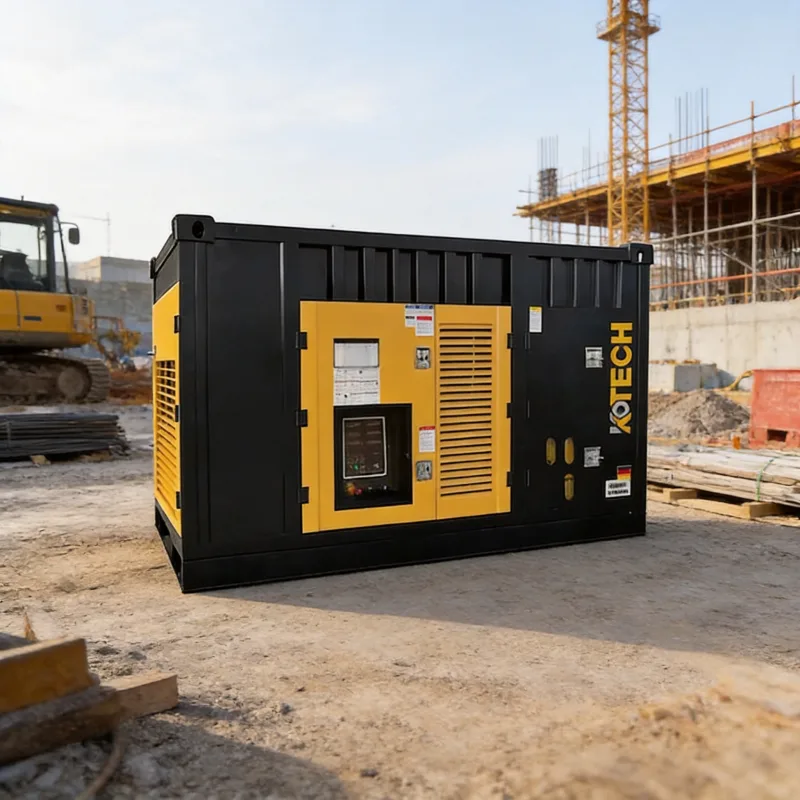
Choosing between a quiet diesel and an electric stationary air compressor hinges on balancing noise, TCO, and site-specific needs.
Key Insights:
- Modern Tier 4 Final diesel compressors achieve noise levels as low as 68-70 dBA at 7 meters, significantly narrowing the gap with electric units, which typically operate below 65 dBA. This challenges the perception that diesel is inherently “loud.”
- Total Cost of Ownership (TCO) analysis over a 5-year period often reveals electric compressors to be 20-40% more cost-effective in urban areas with stable grid power, primarily due to lower energy and maintenance expenses. However, initial electrical infrastructure investment can offset this.
- While electric compressors boast zero direct emissions, their environmental footprint is tied to the regional energy grid’s carbon intensity. Diesel units, particularly Tier 4 Final, have drastically reduced particulate matter and NOx emissions, making them viable even in some regulated zones.
- Operational flexibility remains the diesel compressor’s strongest suit for remote or rapidly changing construction sites lacking established electrical infrastructure. Electric units require careful planning for power supply and distribution.
Deciphering Noise: Diesel’s Advancements vs. Electric’s Inherent Silence
The quest for quiet operation on construction sites is no longer a luxury but a regulatory necessity in many urban and suburban areas. When evaluating air compressors, the perceived noise differential between diesel and electric units is often a primary decision driver. While electric stationary air compressors inherently offer superior quietness due to the absence of an internal combustion engine, modern quiet operation diesel air compressors have made significant strides, challenging outdated perceptions.
Electric compressors typically operate within a range of 60-65 dBA, making them ideal for noise-sensitive environments like residential construction zones or indoor projects. This low noise profile minimizes disruption to surrounding communities and improves on-site communication and worker comfort, directly impacting compliance with local noise ordinances which often cap construction noise at 70 dBA during specified hours.
Conversely, older diesel compressors were notorious for exceeding 80 dBA, making them unsuitable for many contemporary projects. However, manufacturers have invested heavily in noise reduction technologies. Today’s quiet operation diesel air compressors, especially those complying with Tier 4 Final emissions standards, often feature advanced acoustic enclosures, multi-stage mufflers, and optimized engine designs. These innovations allow many models to achieve noise levels as low as 68-70 dBA at 7 meters. This puts them remarkably close to the upper end of electric unit noise levels, offering a viable solution for sites where electric power is unavailable but noise must still be managed.
The Impact of Noise Regulations on Equipment Selection
Understanding local noise ordinances is paramount. For instance, New York City’s noise code limits construction noise to 75 dBA at 50 feet (approx. 15 meters) during daytime hours. A diesel unit producing 68 dBA at 7 meters would likely comply, whereas an 80 dBA unit would not. Therefore, the “quiet operation” specification for diesel units is a critical commercial and compliance differentiator, allowing them to compete in segments previously dominated by electric alternatives.
The True Cost of Power: A TCO Showdown for Construction Sites
Beyond the initial purchase price, the total cost of ownership (TCO) is the most critical financial metric for any long-term equipment investment. For air compressors, this primarily encompasses energy consumption, maintenance, and potential infrastructure costs. A detailed TCO analysis often reveals that electric stationary air compressors, despite potentially higher upfront installation costs, can offer significant long-term savings.
Consider a typical 185 CFM (Cubic Feet per Minute) air compressor operating 8 hours a day, 5 days a week. A diesel unit of this capacity might consume approximately 3-4 gallons of fuel per hour. At an average national diesel price of $4.00 per gallon, this translates to $96-$128 per day in fuel costs alone. Over a year (2000 operating hours), this could amount to $24,000-$32,000 in fuel.
An equivalent electric stationary compressor, rated at roughly 40-50 horsepower, would consume approximately 30-40 kWh (kilowatt-hours) per hour. With an average commercial electricity rate of $0.15 per kWh, the daily energy cost would be $36-$48. Annually, this totals $9,000-$12,000. This represents a substantial annual energy saving of $15,000-$20,000 for the electric unit, which compounds significantly over a 5-year operational period.
Maintenance and Infrastructure: Hidden Costs and Benefits
Maintenance costs further differentiate the two. Diesel engines require regular oil changes, fuel filter replacements, air filter replacements, and the use of Diesel Exhaust Fluid (DEF) for Tier 4 Final compliance. These can add several hundred to a few thousand dollars annually, depending on usage and local service rates. Electric motors, with fewer moving parts and no combustion process, typically have lower and simpler maintenance requirements, primarily focusing on air filters, lubrication, and electrical checks.
However, the initial setup for an electric stationary air compressor can involve substantial infrastructure costs. This includes trenching for power lines, installing transformers, and upgrading electrical panels to handle the significant amperage draw. For a large compressor (e.g., 150 HP), these costs can easily range from $10,000 to $50,000, depending on the site’s existing electrical capacity and layout. Diesel units, while requiring occasional refueling logistics, avoid these fixed infrastructure investments, making them more adaptable for temporary or evolving site configurations.
Factoring in both energy and maintenance, and amortizing initial infrastructure costs over five years, a comprehensive TCO analysis by equipment rental firm United Rentals in 2022 suggested that electric compressors can offer a 20-40% lower TCO in scenarios where robust electrical infrastructure is already present or easily installed. This makes them a compelling choice for long-term, fixed-location projects.
Operational Flexibility and Environmental Footprint: Matching the Compressor to the Job
The choice between a quiet diesel and an electric stationary air compressor is heavily influenced by the specific operational demands and environmental considerations of the construction site. Each type offers distinct advantages that cater to different project requirements and geographical locations.
For remote construction sites, highway projects, or rapidly changing urban landscapes where electrical hookups are either non-existent, unreliable, or prohibitively expensive to install, the quiet operation diesel air compressor remains the undisputed champion. Its self-contained power source provides unparalleled mobility and independence. A single diesel unit can be towed to multiple locations on a large site or easily moved between different job sites, offering maximum operational flexibility without being tethered to a power grid. This portability is a significant commercial advantage, reducing downtime and logistical complexities.
Conversely, electric stationary air compressors excel in fixed-location, long-duration projects such as high-rise building construction, manufacturing facilities, or infrastructure upgrades where consistent power is available. Their reliance on a stable electrical grid makes them less susceptible to fuel price fluctuations and eliminates the need for on-site fuel storage and refueling logistics, which can be a safety hazard and a source of administrative overhead. Furthermore, for indoor applications or enclosed spaces, electric compressors are the only viable option due to their zero direct emissions, ensuring a safe working environment free from exhaust fumes.
Environmental Impact: Beyond the Tailpipe
The environmental footprint of each compressor type extends beyond immediate emissions. Quiet operation diesel air compressors, particularly those meeting Tier 4 Final standards, incorporate sophisticated after-treatment systems like Diesel Particulate Filters (DPF) and Selective Catalytic Reduction (SCR) with DEF. These technologies drastically reduce particulate matter (PM) by over 90% and nitrogen oxides (NOx) by over 80% compared to older models. While still emitting CO2, their localized impact on air quality is significantly mitigated, making them acceptable in many urban areas where older diesels would be banned.
Electric compressors, while producing zero direct emissions at the point of use, shift the emissions burden upstream to the power generation source. In regions heavily reliant on renewable energy (e.g., hydropower in the Pacific Northwest, solar in California), the “well-to-wheel” emissions of an electric compressor can be exceptionally low. However, in areas where electricity is primarily generated from coal or natural gas, the overall carbon footprint might be higher than a highly efficient Tier 4 Final diesel unit. Project managers focused on holistic sustainability must consider the regional energy mix when making an environmentally conscious choice.
Initial Investment and Long-Term Maintenance: Balancing Upfront vs. Ongoing
The decision to invest in a quiet operation diesel or an electric stationary air compressor often involves a trade-off between initial capital outlay and long-term operational costs. While diesel units might appear to have a lower purchase price for comparable CFM output, the total picture is more nuanced.
A new 185 CFM quiet operation diesel air compressor can range from $25,000 to $45,000, depending on features and manufacturer. An equivalent electric stationary compressor (e.g., 40-50 HP) might have a similar purchase price, but the crucial difference lies in the installation. As discussed, the electrical infrastructure required for an electric unit can add significant costs, potentially making the initial *installed* price of an electric system higher than a diesel unit.
However, the long-term maintenance profile heavily favors electric compressors. Diesel engines, being complex internal combustion machines, require regular and specialized maintenance: oil changes every 250-500 hours, fuel filter replacements, air filter replacements, cooling system checks, and DEF replenishment. These routine services are essential for reliability and longevity and contribute significantly to ongoing expenses. For example, a comprehensive 500-hour service on a large diesel compressor can cost $500-$1,500, including parts and labor.
Electric compressors, by contrast, feature simpler designs with fewer wear parts. Maintenance typically involves checking electrical connections, motor bearings, and replacing air filters, which are generally less frequent and less costly than diesel engine services. This lower maintenance burden translates to higher uptime and reduced labor costs over the compressor’s lifespan, contributing to a more favorable TCO over 5-10 years, especially for high-utilization applications.
Ultimately, the optimal choice is a strategic decision that weighs immediate budget constraints against projected operational savings, environmental responsibilities, and site-specific logistical demands. For projects prioritizing flexibility and remote operation, modern quiet diesel units offer a compelling balance. For fixed sites with access to stable power and a strong emphasis on long-term cost savings and minimal emissions, electric stationary compressors stand out as the more sustainable and economically advantageous option.