
In demanding sectors like mining and heavy industry, the reliability of a 500 CFM diesel air compressor isn't merely a convenience; it's a foundational element of operational continuity and profitability. This article dissects the critical role these robust units play, moving beyond generic specifications to explore their specific impact across various applications. We uncover the hidden costs of unreliable pneumatic power, detailing how unscheduled downtime in mining can escalate beyond simple repair expenses to include significant safety risks and project delays. Furthermore, we provide data-backed insights into how purpose-built 500 CFM compressors optimize remote drilling operations, enhancing drill bit life and penetration rates. The discussion extends to diverse industrial demands, from quarrying to infrastructure projects, highlighting how advanced engine technologies and predictive maintenance strategies contribute to superior performance and reduced total cost of ownership in the harshest environments. Key Insights: Unreliable 500 CFM compressors can cost mining operations 3-5% of total operational expenditure due to unscheduled downtime, not just repairs. Consistent, pulsation-free air supply from a reliable 500 CFM unit can extend drill bit life by up to 15% in hard rock drilling, significantly reducing consumable costs. Advanced telematics on portable 500 CFM diesel compressors can reduce unscheduled maintenance by 25% and extend equipment lifespan by 10% in demanding industrial applications. Optimal air pressure and flow from a 500 CFM compressor can improve blast hole drilling penetration rates by up to 8% in specific geological conditions. Investing in Tier 4 Final compliant 500 CFM diesel compressors leads to an average 5-7% reduction in fuel consumption and lower emissions, improving operational efficiency and environmental compliance.
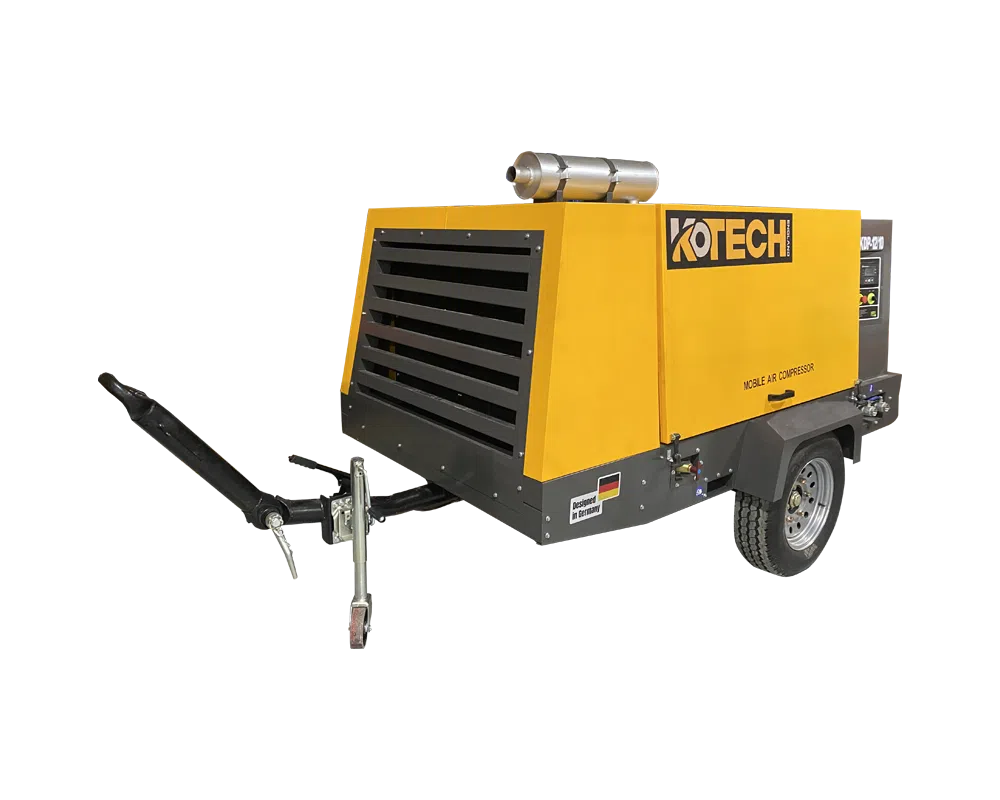
A reliable 500 CFM diesel air compressor is essential for continuous, demanding pneumatic operations in remote industrial and mining environments.
Related: portable diesel compressor · heavy-duty air compressor · drilling air supply · pneumatic tools mining · remote site air power · reliable compressed air solutions · quarrying air compressor · construction air compressor
The Unseen Costs of Unreliability: Beyond Downtime in Mining Pneumatics
In the relentless world of industrial mining, the performance of every piece of equipment is under constant scrutiny. A 500 CFM diesel air compressor, often seen as a workhorse, carries a disproportionate burden of operational success or failure. Its reliability extends far beyond its immediate function.
The true cost of an unreliable compressor in a remote mining operation is multifaceted. It’s not just the direct expense of repairs or parts. Unscheduled downtime for critical pneumatic systems, such as blast hole drills or ventilation, can halt an entire production chain.
A study by McKinsey & Company on mining equipment reliability found that unscheduled downtime costs can reach 3-5% of total operational expenditure for critical machinery. Compressed air systems, while seemingly auxiliary, are often pivotal. Their failure cascades through the entire workflow.
Consider a blast hole drilling rig idled by a compressor failure. Beyond lost drilling time, there are ripple effects. Blasting schedules are delayed, impacting ore extraction rates. This can lead to missed production targets and significant financial penalties.
Moreover, safety risks escalate. Compromised ventilation systems in underground mines due to air supply issues directly endanger personnel. This translates into regulatory non-compliance and severe reputational damage, which are difficult to quantify but profoundly impactful.
The logistical nightmare of dispatching technicians and parts to a remote mine site for an emergency repair adds substantially to costs. This includes specialized transport, accommodation, and the potential for extended delays in obtaining specific components.
These hidden costs – safety breaches, reputational harm, logistical complexities, and production shortfalls – far outweigh the initial savings from choosing a less robust or cheaper 500 CFM unit. Investment in reliability is, in fact, an investment in operational resilience and long-term profitability.
Optimizing Remote Drilling Operations with Purpose-Built 500 CFM Units
For mining operations, particularly in exploration and blast hole drilling, a 500 CFM diesel air compressor is often the sweet spot for balancing power and portability. It provides sufficient airflow for a range of drilling applications without the logistical overhead of larger units.
Enhancing Drill Bit Life Through Stable Air Delivery
Blast hole drilling demands consistent, high-pressure air for effective rock penetration and debris clearing. A 500 CFM compressor, delivering between 100-150 psi, is typically ideal for single large-diameter drills or multiple smaller ones. Its stability is paramount.
Inconsistent airflow or pressure fluctuations can severely impact drill bit performance. Surges and drops stress the bit, leading to premature wear and tear. This directly translates to increased consumable costs and more frequent bit changes, reducing operational efficiency.
Research by Sandvik indicates that consistent, pulsation-free air supply can extend drill bit life by up to 15% in hard rock applications. This is a significant factor in total drilling cost. A reliable 500 CFM unit ensures this critical stability.
Beyond bit life, optimal air pressure and flow directly influence penetration rates. In specific geological conditions, a consistent 500 CFM supply can improve blast hole drilling penetration rates by up to 8%. This accelerates the drilling cycle, moving operations forward faster.
For exploration drilling, especially reverse circulation (RC) and smaller diamond drilling rigs, portable 500 CFM compressors are indispensable. They provide the necessary air for sample recovery and tool actuation in often extremely remote and challenging terrains.
The portability of these units allows them to be moved quickly between drill sites, minimizing setup and tear-down times. This agility is crucial for exploration campaigns where geological targets can be dispersed over vast areas. Fuel efficiency also becomes a key consideration in these isolated locations.
Powering Diverse Industrial Demands: From Quarrying to Heavy Construction
While mining is a prime example, the demand for reliable 500 CFM diesel air compressors extends across a broad spectrum of heavy industrial applications. Quarrying, aggregate production, and large-scale infrastructure projects heavily rely on these robust machines.
Mitigating Environmental Impact with Advanced Diesel Engines
In quarrying operations, 500 CFM compressors power rock breakers, pneumatic drills for secondary blasting, and even dust suppression systems. The environment is often dusty, abrasive, and demanding. Compressor durability and filtration systems are critical here.
The ability to operate continuously in these harsh conditions, often for extended shifts, defines a compressor’s value. Downtime means stalled aggregate production, impacting supply chains for concrete and asphalt, which are vital for construction.
Heavy civil construction, including bridge building, road infrastructure, and pipeline projects, utilizes 500 CFM units for a variety of tasks. These include powering heavy-duty jackhammers, rivet busters, concrete spraying equipment, and even some pile driving applications.
The mobility of these units is equally important on large construction sites, allowing them to follow the workfront. Their robust construction ensures they can withstand the rigors of a dynamic and often rough construction environment.
Modern 500 CFM diesel air compressors are increasingly equipped with advanced engines, often meeting Tier 4 Final emissions standards. This isn’t just about regulatory compliance; it translates directly into operational benefits. These engines are designed for improved fuel efficiency.
Investing in Tier 4 Final compliant 500 CFM diesel compressors leads to an average 5-7% reduction in fuel consumption compared to older models. This significantly lowers operational costs over the lifespan of the equipment, especially given fluctuating diesel prices.
Reduced emissions also contribute to a smaller environmental footprint, which is increasingly important for public and private sector projects. It supports corporate sustainability goals and can even be a factor in winning bids for environmentally conscious projects.
Beyond the Spec Sheet: Key Features for Uninterrupted Performance in Harsh Environments
Selecting a 500 CFM diesel air compressor for demanding industrial and mining operations requires looking beyond basic CFM and PSI ratings. The features that ensure long-term reliability and performance in extreme conditions are paramount.
A heavy-duty chassis and robust enclosure are non-negotiable. These protect internal components from physical impact, dust, and moisture – common adversaries in mining and construction. Skid-mounted options offer enhanced stability for stationary applications, while trailer-mounted units provide superior mobility.
Advanced filtration systems are crucial. Multi-stage air intake filters prevent abrasive particles from entering the engine and compressor block, extending their operational life. Fuel filtration is equally important, especially when drawing from varied fuel sources in remote areas.
Cold-weather starting capabilities, including engine block heaters and specialized lubricants, ensure reliable startup in sub-zero temperatures. Conversely, oversized cooling systems are vital for sustained operation in scorching desert environments, preventing overheating and premature wear.
The Role of Telematics in Predictive Maintenance
Serviceability is a significant factor in reducing total cost of ownership. Easy access to service points, clearly labeled components, and readily available spare parts minimize maintenance downtime. Quick-drain systems for oil and coolant further streamline routine checks.
Modern 500 CFM compressors often integrate advanced telematics and remote monitoring systems. These technologies provide real-time data on engine parameters, air pressure, temperature, fuel levels, and operational hours. This data is invaluable for predictive maintenance.
A recent case study by Atlas Copco showed that implementing advanced telematics on their portable compressors reduced unscheduled maintenance events by an average of 25%. It also extended equipment lifespan by 10% in demanding applications.
Predictive maintenance moves away from reactive repairs. It allows operators to anticipate potential failures based on performance anomalies. This enables scheduled maintenance during planned downtime, avoiding costly, unexpected breakdowns and optimizing resource allocation.
Geo-fencing capabilities within telematics systems also enhance security and asset management for portable units. It provides alerts if equipment moves outside designated areas, a critical feature for expensive machinery on large, open sites.
Choosing a compressor from a manufacturer with a strong global service network is also a strategic decision. Access to trained technicians and genuine spare parts, even in remote locations, significantly impacts the unit’s overall uptime and longevity.
Ultimately, a reliable 500 CFM diesel air compressor is more than just a machine; it’s a strategic asset. Its selection should be guided by a deep understanding of the specific operational demands, the environmental challenges, and the long-term cost implications of both performance and potential failure.
Conclusion
The demanding environments of industrial mining and heavy construction leave no room for compromise on equipment reliability. A 500 CFM diesel air compressor is a critical link in the operational chain, directly impacting productivity, safety, and profitability.
By focusing on purpose-built units with features designed for extreme conditions, and leveraging advancements like Tier 4 Final engines and telematics, operators can mitigate the unseen costs of unreliability. This proactive approach ensures continuous, efficient pneumatic power.
Investing in a truly reliable 500 CFM diesel air compressor, tailored to specific application scenarios, is not merely an expenditure. It is a strategic decision that underpins the success and sustainability of demanding industrial and mining operations globally.
Further Reading
Related Reading: Portable Industrial Air Compressors for Mining and Quarrying Operations