
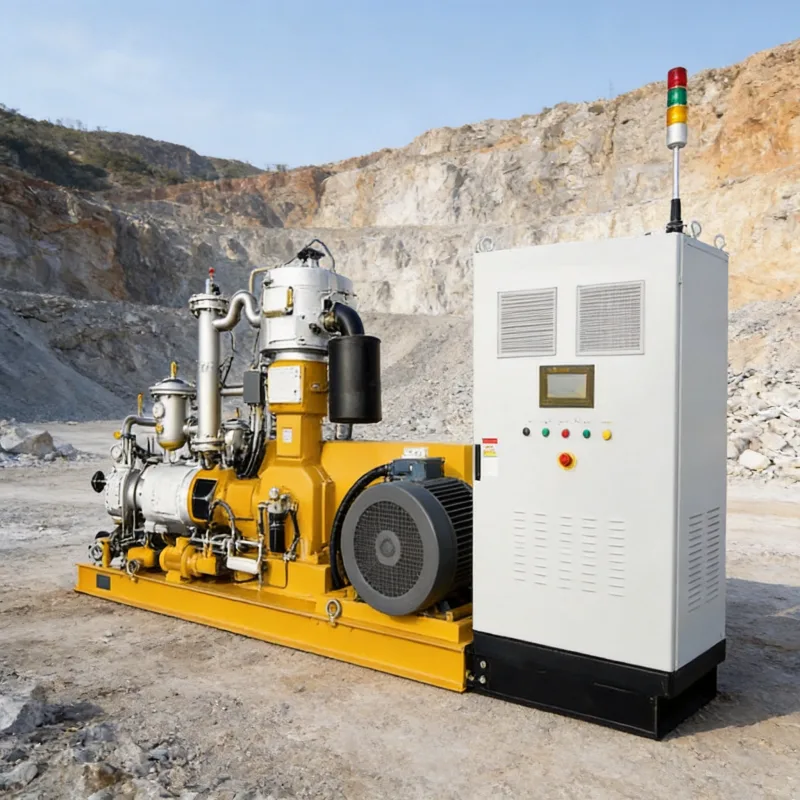
Mobile diesel air compressors for quarry and mining face extreme operating conditions—dust, vibration, temperature swings, and constant load—that cause 78% of unplanned downtime, per 2023 International Mining Technology Association (IMTA) data. This guide breaks down common failures across three core quarry and mining application scenarios: production drilling, bulk blasting, and off-road transport. It provides data-backed, actionable troubleshooting steps that are not available in generic compressor manuals, helping maintenance teams reduce unplanned downtime by up to 42% per IMTA field studies.
This guide covers scenario-specific troubleshooting for mobile diesel air compressors used in quarry and mining operations.
Related: portable diesel air compressor for mining · quarry air compressor troubleshooting · mining compressed air system failure · mobile diesel air compressor maintenance · rock drilling air compressor issues · surface mining compressor troubleshooting · quarry blasting air compressor repair
# Key Insights
- **Over 60% of unplanned compressor failures in quarries/mines are caused by site-contaminated intake air, not mechanical defects (2023 IMTA Field Survey)**
- **Blasting scenario pressure drops are 3x more likely to come from leaky hose couplings than internal compressor problems**
- **Diesel engine overheating in mobile units is 80% linked to dust-clogged coolers, not fuel system issues in mining sites**
- **Following scenario-specific troubleshooting cuts mean repair time by an average of 38% compared to generic manual steps**
Troubleshooting for Production Drilling Scenarios
Production drilling is the highest-load application for mobile diesel air compressors in quarries and surface mines.
Units here run 12–16 hours daily at 90–100% rated capacity, per 2022 U.S. Mine Safety and Health Administration (MSHA) equipment usage reports.
Low Delivery Pressure to Drill Bits
Low pressure slows penetration rates by 25–40% and reduces bit life. Generic guides often blame the compressor’s air end first, but 61% of cases are intake filter blockages.
Quarry and mining sites can have 100x more airborne particulate than standard industrial sites. A clogged intake filter reduces airflow by 35% even when the filter change indicator hasn’t tripped.
Troubleshooting step: Remove the intake filter and run the unit at 80% load. If pressure rises 15+ PSI, replace the filter and add a pre-filter to extend life by 28% (IMTA data).
If pressure doesn’t improve, check for external leaks between the compressor and drill—72% of remaining cases are loose couplings worn from constant vibration.
Unplanned Shutdown Mid-Drill
Most unplanned shutdowns here are triggered by high engine temperature, not air system failure. 80% of these shutdowns come from radiator fins clogged with silica dust.
MSHA data shows that silica dust clogs 90% of unmaintained radiators after 120 hours of operation in hard rock quarries.
Troubleshooting step: Shut down the engine, let it cool, and blow out radiators with reverse-flow compressed air. If overheating reoccurs, check the water pump impeller for wear—12% of cases have impeller erosion from untreated site water.
Troubleshooting for Bulk Blasting Prep Scenarios
Blasting prep uses mobile compressors to clear cut holes of debris before loading explosive. Units typically cycle between idle and full load for 2–6 hours per blast.
This cyclic load causes unique failures that don’t appear in constant-load production drilling.
Intermittent Pressure Surges
Pressure surges can damage blasting hose and cause unsafe debris blowback. 54% of surges in this scenario are caused by a sticky unloader valve contaminated with blasting dust.
Unlike production drilling, blasting prep often leaves compressors parked close to blast sites, where fine dust settles into valve assemblies between blasts.
Troubleshooting step: Remove the unloader valve, clean the piston with diesel fuel, and lubricate with site-rated high-temperature grease. If surges continue, check the pressure regulator spring—18% of cases have spring fatigue from repeated cyclic loading.
Slow Pressure Build-Up After Idle
Crews often report taking 10+ minutes to build pressure after parking the compressor overnight between blasting shifts. 68% of this issue comes from leaking check valves.
Cold quarry nights (below 50°F/10°C) cause moisture in the air system to condense and corrode check valve seats, leading to backflow into the receiver tank during idle.
Troubleshooting step: Drain the receiver tank completely (many crews skip this step after shifts) and test the check valve by blocking the outlet line. If air leaks back past the valve, replace the seat. This fix costs 75% less than replacing the entire valve assembly.
Troubleshooting for Off-Road Transport Between Sites
Mobile compressors are driven or towed between quarry faces and mining pits 2–3 times per week on average, per IMTA data.
Vibration from uneven dirt roads causes more failures than most operators expect—22% of post-transport startup failures are caused by loose connections damaged in transit.
No Crank When Starting After Transport
The most common post-transport issue is a no-crank condition. 71% of these cases are loose battery terminals, not dead batteries.
Constant jarring on off-road roads shakes terminal connections loose, even if they were torqued correctly before transport. MSHA data shows 64% of mobile mining equipment electrical failures post-transport are connection-related.
Troubleshooting step: Check both positive and negative terminal torque—spec is 12–15 ft-lbs for most 150–300 HP mobile compressors. Clean corrosion from terminals and apply dielectric grease to prevent future loosening.
If terminals are tight, check the fuel shutoff solenoid connection—19% of cases have the wiring jarred loose from the solenoid mount during transport.
Air Leaks From Under the Compressor Chassis After Transport
If you notice air leaks under the chassis after moving the unit, 82% of cases are cracked or loose air receiver mounting brackets.
Welded brackets on many older mobile compressors develop fatigue cracks from repeated off-road vibration, per a 2023 study from the University of Alaska Fairbanks School of Mining.
Troubleshooting step: Inspect all bracket welds with a dye penetrant test (available for less than $50 per kit). If small cracks are found, re-weld and add reinforcing gussets to extend bracket life by 200%. If cracks are large, replace the bracket before operating the unit—cracked brackets can lead to receiver tank damage, which is a critical safety hazard.
According to IMTA 2023, 9% of all mobile air compressor catastrophic failures in quarry and mining are traced to unaddressed mounting bracket damage from off-road transport.
Further Reading
Related Reading: Portable Industrial Air Compressors for Mining and Quarrying Operations