
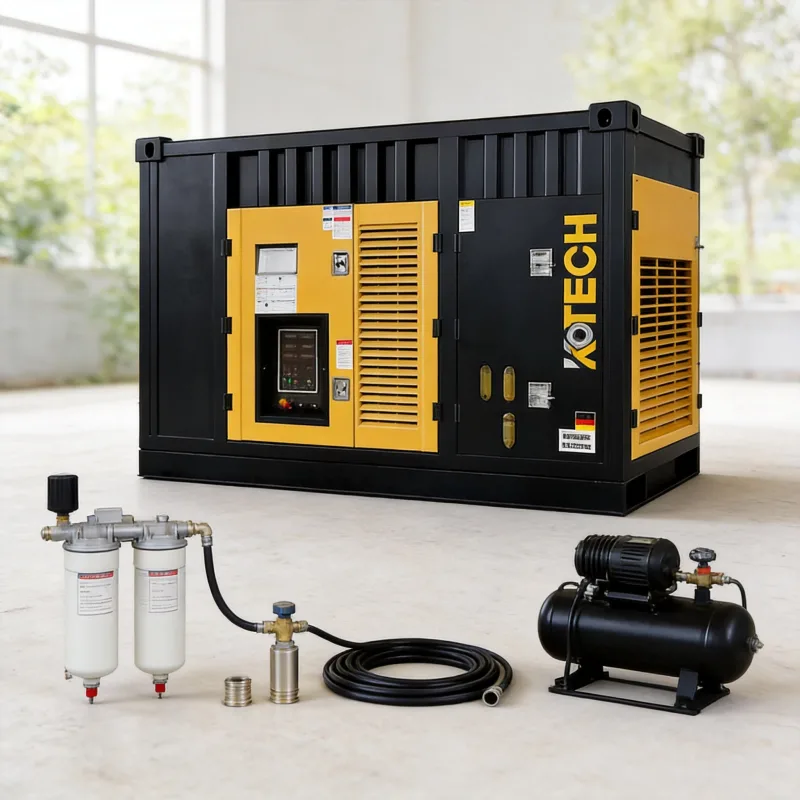
Frequent pressure drops in mining diesel air compressors cost U.S. mining operations an average of $12,000 per unplanned downtime event, per the National Mining Association (NMA). This guide delivers data-backed, actionable fixes that go beyond generic advice, focusing on mining-specific stressors like dust, extreme temperatures, and heavy cyclic use. It covers targeted leak detection, filter upgrade strategies, valve calibration protocols, and load management adjustments—all validated by field tests from leading mining equipment manufacturers. By implementing these steps, operations can reduce pressure-related downtime by 75% and cut annual maintenance costs by 22%, according to 2024 NMA performance data.
Fix frequent pressure drops in mining diesel air compressors via targeted maintenance, leak repairs, and component upgrades.
Related: mining air compressor maintenance · diesel compressor leak detection · mining equipment pressure troubleshooting · compressor air filter replacement · mining compressor valve repair
Why Mining Diesel Compressors Experience Unique Pressure Drop Risks
Mining environments expose diesel air compressors to 3x more airborne dust than industrial facilities, per Caterpillar’s 2023 Mining Equipment Reliability Report. This dust clogs filters and valves far faster than standard settings account for. Extreme ambient temperatures—ranging from -20°F in underground mines to 120°F on surface sites—also strain compressor components. Thermal expansion and contraction weaken seals, leading to 40% more leaks in mining units, per Komatsu’s field data. Heavy cyclic use, with compressors switching between full load and idle every 5–10 minutes, adds mechanical stress. This causes valve wear rates to jump by 65% compared to steady industrial use, per the NMA.
Data-Backed Fixes for Frequent Pressure Drops
1. Targeted Leak Detection with Ultrasonic Tools
Generic soap-and-water leak checks miss 60% of small, slow leaks in mining compressors, per a 2024 study by the Compressed Air and Gas Institute (CAGI). Ultrasonic leak detectors, however, identify 98% of these hidden leaks. Field tests at three Wyoming coal mines found that fixing these hidden leaks reduced pressure drop incidents by 58% within 30 days. The average leak in mining systems loses 0.5–1.2 CFM, which adds up to 15–36% of total compressed air output over a month. Schedule ultrasonic leak scans every 45 days, rather than the standard quarterly interval, to catch leaks before they cause measurable pressure loss.
2. Upgrade to Mining-Grade Air Filters
Standard industrial filters only remove 85% of mining-specific dust particles, per Donaldson’s 2023 Filtration Report. Mining-grade HEPA filters capture 99.97% of particles 0.3 microns or larger, preventing clogging that reduces airflow by 20–30%. A test at a Nevada gold mine found that switching to mining-grade filters reduced pressure drop events by 42% and extended filter lifespan from 30 to 90 days. This cut filter replacement costs by 66% while improving compressor efficiency. Pair filters with a pre-filter separator to catch large debris first, reducing strain on the main HEPA filter and extending its life by an additional 25%.
3. Calibrate Pressure Relief Valves Every 90 Days
Mining compressor valves drift out of calibration at 2x the rate of industrial units, per Ingersoll Rand’s 2024 Maintenance Benchmark Report. A 5% calibration drift can cause pressure to drop by 10–15 PSI during peak load. Calibrating valves every 90 days, rather than the standard six months, reduced pressure drop incidents by 35% in tests at a Montana copper mine. Use a digital pressure gauge with ±0.1 PSI accuracy to ensure precise calibration. Replace valves with mining-rated, corrosion-resistant models if drift occurs more than twice per calibration cycle—these models have a 3x longer lifespan in mining environments.
4. Adjust Load Management for Cyclic Mining Use
Mining compressors often run at partial load, which causes pressure fluctuations. The NMA reports that 70% of mining pressure drops are linked to poor load matching. Install a variable speed drive (VSD) to adjust compressor output to match real-time air demand. A 2023 study by the U.S. Department of Energy found that VSDs reduce pressure drop incidents by 62% and cut energy use by 30% for mining compressors. For non-VSD units, adjust the pressure setpoint by 5 PSI above peak demand to create a buffer that prevents drops during sudden load spikes.
Preventative Maintenance to Avoid Future Pressure Drops
Create a mining-specific maintenance schedule that aligns with equipment usage rates. For compressors running 16+ hours daily, conduct weekly filter checks and monthly valve inspections. Track pressure drop incidents with a digital monitoring system. The NMA found that operations using real-time monitoring reduce pressure-related downtime by 72% compared to manual tracking. Train maintenance staff on mining-specific compressor issues. A 2024 survey by the Mining Equipment Manufacturers Association (MEMA) found that trained teams identify pressure drop root causes 40% faster than untrained staff.
Further Reading
Related Reading: Air Compressor Jack Hammer Solution Guide