
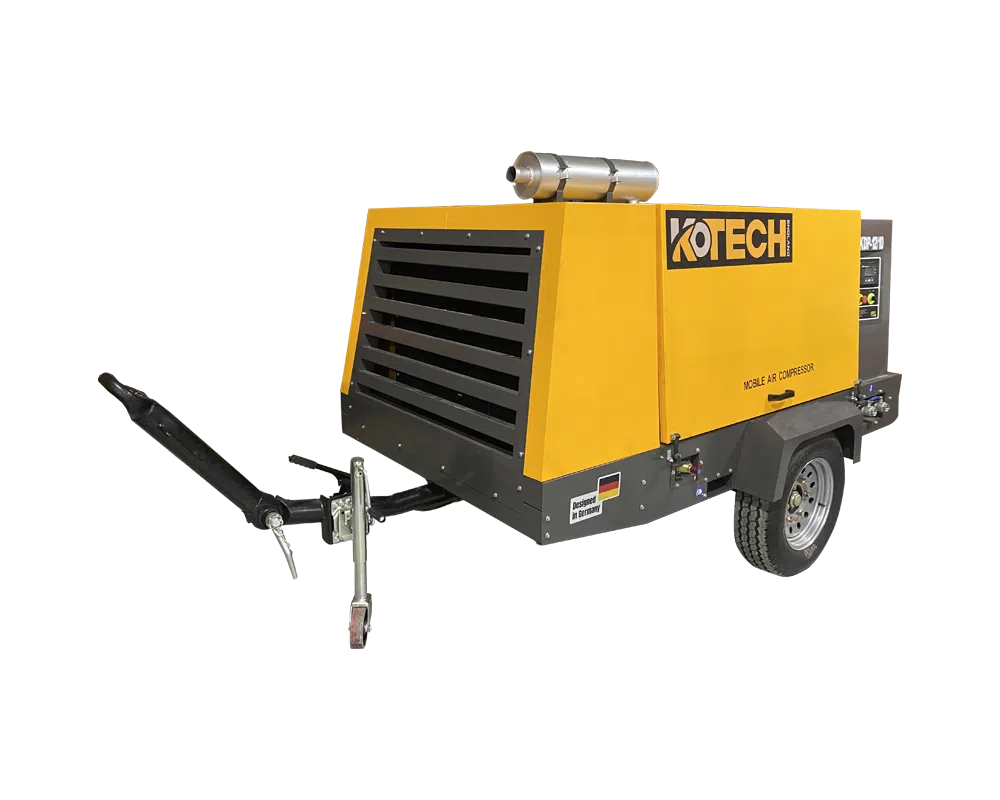
**Optimizing fuel consumption for a 500 CFM diesel air compressor in industrial settings requires a multifaceted, data-driven approach.** This guide provides practical steps to significantly reduce operational costs. **Key insights include:** * **Fuel consumption isn't linear; partial loads disproportionately increase specific fuel consumption (SFC) for fixed-speed diesel units.** Understanding your load profile is critical. * **Reducing discharge pressure by just 2 PSI can yield a 1% fuel savings, highlighting the impact of over-pressurization.** * **Systematic ultrasonic leak detection and repair can eliminate substantial fuel waste, with a single 1/8-inch leak potentially costing over $2,500 annually.** * **Proactive engine airflow management, extending beyond basic filter changes to include intake system integrity, is crucial for optimal combustion efficiency.** * **Comprehensive operator training and adherence to best practices are pivotal in achieving and sustaining daily fuel economy.** Implementing these strategies can lead to measurable savings and improved operational sustainability.
Optimize your 500 CFM diesel air compressor's fuel consumption by implementing demand-side management and proactive maintenance protocols.
Related: portable industrial air compressor · diesel fuel economy · compressed air system management · energy savings industrial · pneumatic system optimization · operational efficiency guide · air compressor maintenance tips · industrial equipment best practices
Understanding Your Compressor’s Fuel Consumption Profile
Optimizing fuel consumption for a 500 CFM diesel air compressor begins with a deep understanding of how these powerful units consume fuel under varying industrial conditions. It’s not as simple as “the more air, the more fuel.” The relationship is nuanced, particularly at partial loads.
Decoding the Load-Specific Fuel Curve
A common misconception is that a diesel engine’s specific fuel consumption (SFC – fuel per unit of power output) remains constant across its operating range. For fixed-speed industrial diesel engines powering 500 CFM compressors, this is far from the truth. While these engines are highly efficient at or near their rated full load, their SFC can increase significantly when operating at partial loads. For instance, a diesel engine might consume approximately 0.35 lbs/hp-hr at 100% load, but this can jump to 0.45-0.5 lbs/hp-hr at 50% load. This means that running a compressor at half capacity doesn’t necessarily mean half the fuel consumption; it often means a higher fuel cost *per CFM delivered*. Understanding your facility’s typical load factor – the average demand relative to the compressor’s maximum output – is the first critical step. If your compressor frequently operates below 70% capacity, you’re likely incurring disproportionate fuel expenses.
The Cost of Over-Pressurization
Many industrial applications needlessly run their compressed air systems at higher pressures than required. Operating a 500 CFM compressor at 120 PSI when 90 PSI is sufficient for all connected tools and processes is a direct drain on your fuel tank. Data from organizations like the U.S. Department of Energy (DOE) indicates that for every 2 PSI reduction in discharge pressure, a typical diesel compressor can see approximately a 1% reduction in energy consumption. This seemingly small percentage accumulates rapidly over thousands of operating hours. Identifying the absolute minimum effective pressure for your entire pneumatic system, then adjusting your compressor’s set point accordingly, can yield immediate and substantial fuel savings without impacting productivity.
Implementing Demand-Side Fuel Optimization Strategies
Once you understand the factors influencing fuel burn, the next step is to implement actionable strategies that directly address demand-side inefficiencies and operational adjustments.
Systematic Air Leak Detection and Repair Protocol
Air leaks are arguably the single largest source of wasted energy in many industrial compressed air systems, directly translating to wasted diesel fuel. A 500 CFM compressor constantly works harder, consuming more fuel, to compensate for air lost through leaks. A single 1/8-inch diameter leak at 100 PSI can waste up to 25 CFM, costing over $2,500 annually in equivalent energy consumption for continuous operation. This isn’t just a maintenance task; it’s a critical fuel-saving protocol.
- **Establish a Regular Leak Audit Schedule:** Implement a quarterly or semi-annual ultrasonic leak detection program. Ultrasonic detectors can pinpoint leaks that are inaudible to the human ear.
- **Tag and Track:** Clearly tag all identified leaks, documenting their location, estimated size, and repair priority. Use a system to track repair completion and verify effectiveness.
- **Focus on High-Impact Areas:** Prioritize leaks in frequently used lines, critical equipment, and larger diameter piping. Common leak points include quick-disconnect couplings, hose connections, pipe joints, and valve stems.
Matching Compressor Output to Real-Time Demand
For a fixed-speed 500 CFM diesel compressor, matching output to demand means more than just turning it on and off.
- **Optimize Load/Unload Cycles:** If your compressor has a load/unload control system, ensure it’s properly calibrated. Minimize the time the compressor spends in the “unload” or “idle” phase, as the engine is still consuming fuel without producing useful work. For extended periods of low demand, it is more fuel-efficient to shut the compressor down completely and restart it when needed.
- **Strategic Staging (Multiple Compressors):** If your facility uses multiple compressors, implement a staging strategy. Instead of running two 500 CFM units at 50% load each, run one at 90-100% load and the other only when demand exceeds the primary unit’s capacity. This keeps the primary unit operating in its most fuel-efficient range.
- **Reservoir Sizing:** Ensure your air receiver tank is adequately sized. A larger receiver can absorb short-term demand fluctuations, reducing rapid load/unload cycling and allowing the compressor to run more efficiently in longer, sustained load periods or remain off for longer during low demand.
Optimizing Pneumatic Tool and Application Pressure
Beyond the main compressor discharge pressure, individual tool and application pressures must be optimized. Many pneumatic tools are designed to operate optimally at 80-90 PSI, yet they are often supplied with 100+ PSI.
- **Point-of-Use Regulators:** Install and correctly set point-of-use pressure regulators for individual tools or processes. This ensures tools receive the precise pressure they need, preventing over-pressurization and reducing the overall demand on the main system.
- **Tool Selection:** Use the right tool for the job. An oversized or inefficient pneumatic tool will demand more air than necessary, forcing the compressor to work harder and consume more fuel. Regularly inspect tools for wear that might increase air consumption.
Advanced Maintenance and Operational Practices for Peak Efficiency
Beyond basic maintenance, several advanced practices can significantly impact the long-term fuel efficiency of your 500 CFM diesel air compressor.
Critical Engine Airflow Management Beyond Filter Changes
While regularly changing air filters is fundamental, optimal engine airflow goes deeper.
- **Monitor Intake Restriction:** Most diesel engines are equipped with an intake restriction gauge. Monitor this gauge diligently. An increase in restriction, even if the filter appears visually clean, indicates a problem. Even a slight increase in intake restriction (e.g., 5 inches of H2O beyond manufacturer specification) can increase specific fuel consumption by 2-3% because the engine must work harder to pull in combustion air.
- **Inspect Intake Piping and Pre-cleaners:** Check for blockages, damage, or loose connections in the entire intake system, from the pre-cleaner (if equipped) to the turbocharger inlet. A dirty pre-cleaner or a collapsed intake hose can severely restrict airflow.
- **Turbocharger Health:** Ensure the turbocharger is functioning correctly. A failing turbocharger will reduce the amount of air forced into the engine, leading to incomplete combustion and significantly higher fuel consumption and exhaust emissions. Regular inspection for shaft play and abnormal noises is crucial.
Fuel Quality, Additives, and Injection System Health
The quality of your diesel fuel and the health of the fuel injection system are paramount to efficient combustion.
- **Premium Diesel Fuel:** While seemingly a higher upfront cost, using high-quality, clean diesel fuel can prevent injector fouling and ensure better combustion. Lower quality fuels can lead to incomplete combustion, reducing power output and increasing SFC.
- **Fuel Additives:** Consider using reputable fuel additives, especially those designed to clean injectors, improve cetane number, or prevent gelling in colder climates. Clean injectors ensure precise fuel atomization, which is critical for efficient burning.
- **Injection System Maintenance:** The fuel injectors and fuel pump are precision components. Adhere strictly to manufacturer-recommended inspection and service intervals. Worn injectors can spray fuel unevenly, leading to poor combustion, increased soot, and substantially higher fuel consumption. A malfunctioning fuel pump can also negatively impact delivery pressure and timing.
Operator Training: The Human Factor in Fuel Economy
Even the most technologically advanced compressor can be inefficient if operated improperly.
- **Comprehensive Training:** Ensure all operators are thoroughly trained on the specific operational characteristics of the 500 CFM diesel compressor. This includes proper startup/shutdown procedures, understanding load indicators, recognizing signs of inefficiency, and the impact of their actions on fuel consumption.
- **Awareness of Best Practices:** Educate operators on the importance of minimizing idle time, using appropriate system pressures, and promptly reporting leaks or operational anomalies. A well-informed operator is your first line of defense against fuel waste.
- **Feedback and Incentives:** Provide operators with feedback on fuel consumption data (if available) and consider incentives for meeting fuel efficiency targets. This fosters a culture of efficiency and accountability.
Further Reading
Related Reading: Decoding the Cost: Offshore Corrosion-Resistant Large Capacity Diesel Air Compressors