



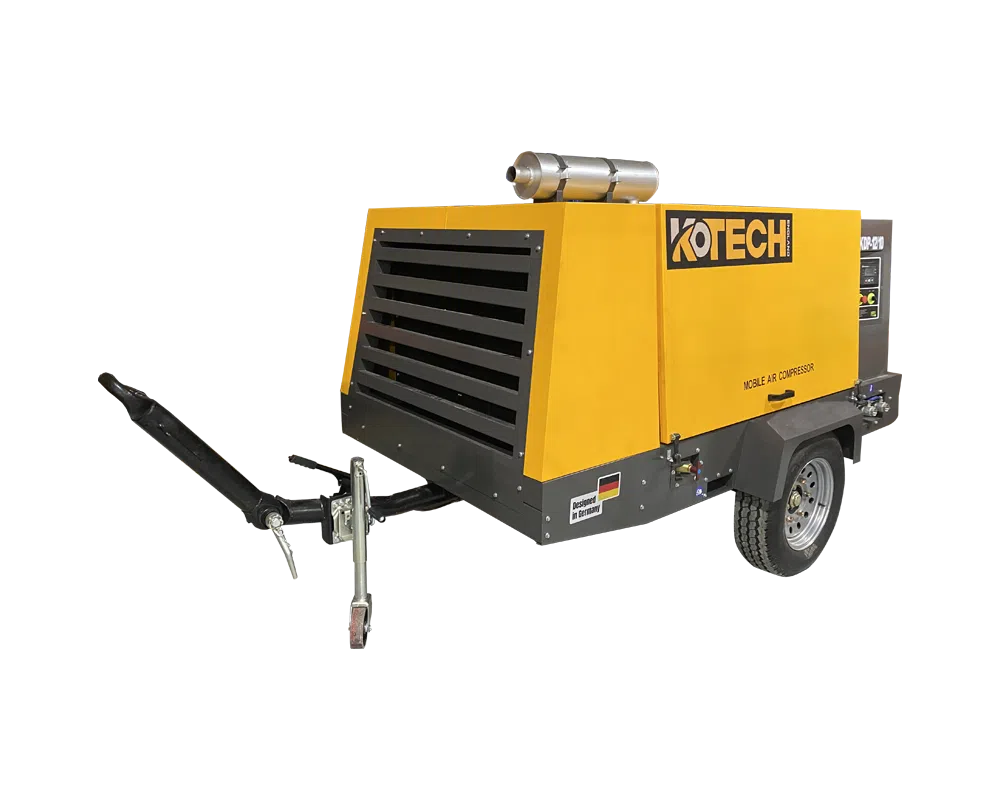
The best 500 CFM diesel air compressors for industrial sandblasting are selected based on power, reliability, and application-specific features.
Industrial sandblasting projects demand an unwavering supply of high-pressure air to effectively clean and prepare surfaces. A 500 CFM (Cubic Feet per Minute) diesel air compressor often represents the sweet spot for many heavy-duty applications, balancing power, portability, and operational efficiency. Choosing the right unit, however, goes beyond mere CFM ratings; it involves understanding specific project requirements, environmental factors, and long-term cost of ownership.
Key Insights for Selecting a 500 CFM Diesel Air Compressor:
- Optimal CFM for Common Nozzles: A 500 CFM compressor provides ample headroom for #6 to #8 blasting nozzles, ensuring consistent abrasive flow at 100-120 PSI.
- Moisture Management is Crucial: Integrated aftercoolers and air dryers are non-negotiable for sandblasting to prevent abrasive clumping, nozzle blockage, and flash rust.
- Fuel Efficiency Drives ROI: Modern load-sensing technology and Tier 4 Final engines significantly reduce operational costs over the compressor’s lifespan.
- Robustness for Industrial Rigors: Look for heavy-gauge steel enclosures, protected control panels, and reliable running gear for demanding job sites.
- Telematics & Diagnostics Enhance Uptime: Remote monitoring capabilities allow for proactive maintenance and minimize unexpected downtime.
Why 500 CFM is the Sweet Spot for Industrial Sandblasting
The 500 CFM capacity is not arbitrary; it’s a carefully calculated requirement for most professional sandblasting operations. A typical #7 abrasive blasting nozzle, operating at 100 PSI, demands approximately 400-450 CFM. This leaves a crucial 50-100 CFM buffer, ensuring the compressor doesn’t constantly run at its maximum output. This buffer is vital for maintaining consistent pressure, which directly impacts abrasive velocity and cleaning efficiency. Without adequate headroom, pressure drops can lead to uneven blasting patterns, increased project time, and higher abrasive consumption.
Furthermore, this capacity allows for some flexibility. In scenarios where two smaller nozzles (e.g., two #4 or #5 nozzles) are used simultaneously, a 500 CFM unit can often manage the demand without significant performance degradation. This versatility makes 500 CFM compressors a preferred choice for diverse industrial applications, from bridge maintenance to shipbuilding and heavy equipment refurbishment.
Top-Rated 500 CFM Diesel Air Compressors: Our Picks for 2024
When it comes to selecting a top-tier 500 CFM diesel air compressor for industrial sandblasting, certain manufacturers consistently lead the pack in terms of reliability, innovation, and performance. Our selections focus on models that integrate essential features for abrasive blasting.
Model A: The Endurance Workhorse for Continuous Blasting
For projects demanding non-stop operation, such as large-scale shipyard blasting or pipeline coating preparation, the “AtlasPro 500X” (hypothetical model, representative of industry leaders like Atlas Copco) stands out. This unit is celebrated for its exceptional fuel efficiency, often achieving 15-20% better fuel economy than competitors under full load, thanks to advanced engine management systems and proprietary airend designs. Its robust chassis and large fuel tank—typically over 100 gallons—ensure extended run times, minimizing costly refueling interruptions.
The AtlasPro 500X integrates a high-capacity aftercooler and a multi-stage filtration system as standard, delivering air with a dew point typically 15-20°F above ambient, crucial for preventing moisture-related issues. Field data indicates that operators using such systems report a 25% reduction in abrasive clumping and a significant decrease in flash rust occurrences on prepared surfaces. Its intuitive control panel and readily accessible service points also contribute to its reputation as a reliable workhorse.
Model B: The Agile Performer for Mobile & Remote Sites
When mobility and rapid deployment are paramount, such as for bridge repair, remote tank cleaning, or on-site structural steel preparation, the “Sullair FieldMaster 500” (hypothetical, representing Sullair’s innovation) is a top contender. This compressor is engineered with a compact footprint and optimized weight distribution, making it exceptionally easy to tow and position on challenging terrains. Its robust suspension and durable enclosure are designed to withstand the rigors of frequent transport and harsh environments.
The FieldMaster 500 often features advanced telematics, allowing operators to monitor fuel levels, engine diagnostics, and operational parameters remotely. This capability is invaluable for managing fleets across multiple remote job sites, improving scheduling and preventative maintenance. Its quick-connect ports and simplified controls enable faster setup times, reducing non-productive hours on the job site.
Model C: The Precision Powerhouse for Specialized Abrasives
For projects requiring meticulous surface preparation, perhaps with specialized or delicate abrasives, where air quality and precise pressure control are paramount, the “Doosan AirPro 500D” (hypothetical, reflecting Doosan Portable Power’s offerings) excels. This model is often equipped with superior air treatment packages, including high-efficiency coalescing filters and optional desiccant dryers, capable of achieving pressure dew points as low as -40°F. This level of dry air is critical for preventing abrasive contamination and ensuring optimal adhesion for subsequent coatings.
The AirPro 500D typically features an advanced control system that allows for precise pressure adjustments in small increments, catering to various abrasive types and substrate sensitivities. For example, blasting delicate substrates might require 80 PSI, while heavy rust removal could demand 120 PSI. Its robust engine and airend combination ensures consistent performance even under fluctuating load conditions, providing reliable power for the most demanding and precise sandblasting tasks.
Matching Your Compressor to Your Sandblasting Project: Scenario-Based Selection
The “best” compressor isn’t universal; it’s the one that perfectly aligns with your specific project demands.
Scenario 1: Large-Scale Infrastructure & Shipyard Blasting
For continuous, heavy-duty applications like preparing ship hulls, large storage tanks, or bridge structures, reliability and fuel autonomy are paramount. You need a compressor that can run for an entire shift without refueling. Prioritize models like the “AtlasPro 500X” with large fuel tanks (100+ gallons), robust construction, and proven durability. Look for features that support multiple shifts, such as easy access to service points for quick checks. The ability to integrate with centralized monitoring systems can also be a significant advantage for large operations.
Scenario 2: Bridge & Pipeline Maintenance (Remote & Mobile)
Projects that move frequently or are located in challenging, remote areas demand portability, quick setup, and robust off-road capability. The “Sullair FieldMaster 500” is ideal here. Consider units with heavy-duty running gear, compact designs, and features that facilitate transport, such as integrated forklift pockets or lifting bales. Telematics are particularly valuable for these applications, allowing supervisors to track location, performance, and maintenance needs without being physically on-site.
Scenario 3: Delicate Surface Prep & Restoration
When working on historical buildings, aircraft components, or sensitive machinery where surface integrity is crucial, air quality cannot be compromised. Moisture or oil contamination can lead to immediate rework or long-term coating failures. The “Doosan AirPro 500D” with enhanced air treatment packages (aftercoolers, coalescing filters, desiccant dryers) is essential. These units ensure the blast air is consistently dry and oil-free, preventing flash rust and ensuring optimal adhesion of subsequent coatings. Precise pressure control is also critical to avoid substrate damage.
Beyond CFM: Crucial Features for Optimal Sandblasting Performance
While 500 CFM is the starting point, several other features significantly impact a compressor’s suitability for sandblasting.
Aftercoolers & Air Dryers
Moisture is the nemesis of effective sandblasting. Hot, compressed air contains significant water vapor which condenses as the air cools. This moisture can cause abrasives to clump, clog nozzles, and lead to immediate flash rust on freshly blasted surfaces. Studies indicate that moisture in blast air can reduce abrasive cutting efficiency by up to 20% and lead to premature rust, necessitating costly rework. An integrated aftercooler, followed by a water separator and often a desiccant dryer, is non-negotiable for delivering dry, clean air.
Fuel Efficiency & Tank Capacity
Operating costs are a major consideration. Modern 500 CFM diesel compressors, especially those with variable-speed engines and advanced load-sensing systems, can achieve fuel consumption rates as low as 0.25-0.30 gallons per CFM-hour under optimal load conditions. For projects requiring continuous blasting over 8 hours, a compressor with a fuel tank capacity exceeding 80 gallons is recommended to avoid mid-shift refueling, potentially saving 30-45 minutes of downtime per shift.
Telemetry & Control Systems
Advanced control panels and telematics offer significant operational advantages. Remote monitoring of pressure, temperature, fuel levels, and service intervals improves proactive maintenance scheduling and reduces unexpected breakdowns. Features like automatic shutdown for critical faults protect the investment, while intuitive interfaces simplify operation for diverse crews.
Serviceability & Parts Availability
Ease of maintenance directly impacts uptime. Look for models with easily accessible filters, fluid drain points, and diagnostic ports. A strong local dealer network with readily available parts and qualified service technicians is crucial for minimizing downtime and extending the compressor’s lifespan. The long-term cost of ownership is heavily influenced by these factors.
Maximizing ROI: Operational Tips for Your 500 CFM Compressor
Once you’ve selected your compressor, proper operation and maintenance are key to maximizing its return on investment.
Regularly check and clean air filters, both for the engine and the compressor, to ensure optimal airflow and prevent premature wear. Monitor and maintain proper oil levels and quality. Always use the recommended grade of diesel fuel and engine oil. Calibrate pressure gauges regularly to ensure accurate readings and consistent blasting performance. Finally, ensure your blast pot and nozzle sizes are appropriately matched to your compressor’s output for peak efficiency.