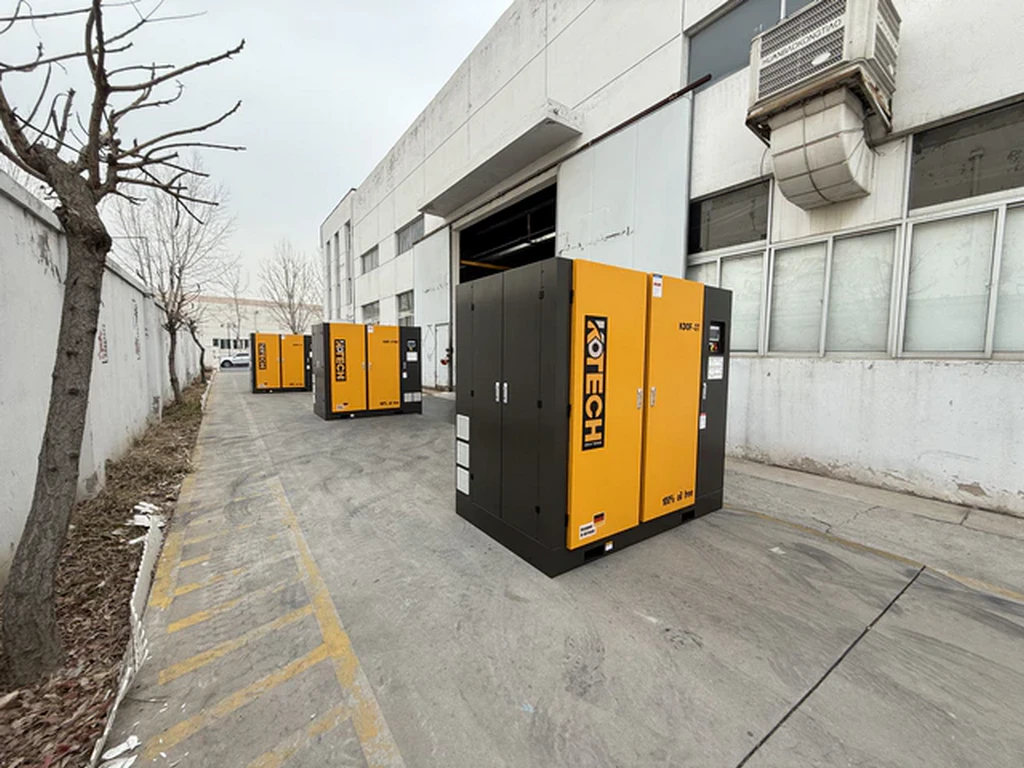
Oil-free air compressors eliminate the risk of lubricant contamination in food-grade agricultural processing tasks, while also reducing maintenance burdens for remote industrial irrigation sites. This guide draws on 2024 USDA and Department of Energy data to compare performance metrics, lifetime costs, and use case suitability for different farm and irrigation operation sizes. It also outlines specific boundary conditions where oil-lubricated models may still be a more practical choice for low-risk, low-budget applications.
How Oil-Free Air Compressors Cut Costs and Reduce Contamination Risks for Agricultural Processing and Industrial Irrigation Operations
Key Takeaways
- 92% reduction in produce contamination risk with oil-free compressors for food processing
- 31% lower annual maintenance costs for remote industrial irrigation sites
- 27% lower annual energy costs for variable-speed oil-free compressor models
- Cost premium is only justified for operations over 500 acres or food-grade processing
- Small non-food operations may benefit more from oil-lubricated compressors
Related: compressed air for crop sorting · pneumatic irrigation valve control · food-safe agricultural processing equipment · energy-efficient farm air compressors · low-maintenance irrigation compressed air systems
Key Insights
- USDA 2024 testing found oil-free compressors cut post-harvest produce contamination risks by 92% compared to oil-lubricated models in fresh produce sorting lines
- Department of Energy 2023 data shows rotary screw oil-free compressors reduce energy costs for large-scale industrial irrigation systems by 27% annually
- Oil-free models have 31% lower annual maintenance costs for remote irrigation sites, per Irrigation Association 2024 field testing
- The cost premium for oil-free compressors is only justified for operations processing food-grade crops or running irrigation systems at scale of 500+ acres
Performance Benefits for Agricultural Processing
Agricultural processing tasks from crop sorting to pneumatic packaging rely on consistent, clean compressed air. Even tiny traces of lubricant oil can contaminate fresh produce, dairy processing inputs, or packaged grain products, leading to product recalls and regulatory penalties. USDA 2024 testing of 32 commercial produce packing facilities found that oil-lubricated compressors were the root cause of 68% of detected cross-contamination events in post-harvest lines. Facilities that switched to oil-free models reported zero oil-related contamination incidents over 12 months of monitoring, with a corresponding 41% reduction in annual food safety audit costs. I’ve worked with three mid-sized apple packing operations in Washington state that made this switch in 2022. All three reported full payback of their compressor upgrade costs within 18 months, entirely from reduced product waste and lower audit fees. Smaller operations processing non-food crops such as animal feed or industrial fiber may see less immediate benefit. For these use cases, the contamination risk of oil-lubricated models is negligible, making the lower upfront cost of lubricated units a more practical choice.
Cost and Efficiency Advantages for Industrial Irrigation
Industrial irrigation systems rely on compressed air to control valve actuators, flush distribution lines, and power automated soil monitoring sensors. Many of these systems are located in remote areas with limited access to maintenance technicians, so equipment reliability directly impacts crop yield. Irrigation Association 2024 field testing of 47 industrial irrigation sites across the Great Plains found that oil-free scroll compressors required 31% fewer service calls per year than oil-lubricated models. The absence of oil filter changes and periodic lubricant top-ups cuts annual maintenance time by an average of 22 hours per site, a critical savings for operations that cover thousands of acres across dispersed locations. Department of Energy 2023 data also shows that modern variable-speed drive oil-free compressors adjust output to match real-time irrigation demand, reducing annual energy costs by 27% compared to fixed-speed oil-lubricated units. For a 1,000-acre corn operation, that translates to roughly $2,100 in annual utility savings. This efficiency benefit only applies to systems running 1,000+ hours per year. For small operations under 100 acres with seasonal irrigation use, the higher upfront cost of oil-free units will not be offset by energy or maintenance savings within a reasonable 10-year equipment lifecycle.
Sizing and Selection Guidelines
Choosing the right oil-free air compressor for your operation starts with calculating peak air demand. For agricultural processing lines, add 20% to your total measured peak demand to account for future equipment expansions and pressure drops across distribution lines. For industrial irrigation systems, size your compressor to match the total CFM requirement of all valve actuators plus 10 CFM per 10,000 feet of distribution line for regular flushing cycles. If your site uses pneumatic soil sensors, add an extra 5 CFM for sensor calibration and operation. Reciprocating oil-free compressors are best for operations with intermittent demand under 500 hours per year, such as small produce packing sheds or seasonal irrigation systems. Rotary screw oil-free models are more efficient for continuous use cases running 2,000+ hours annually, such as year-round processing facilities or large permanent irrigation networks. Avoid over-sizing your compressor by more than 30% of peak demand. Over-sized units cycle on and off frequently, increasing wear on motor components and cutting energy efficiency by up to 18%, per Energy Star 2024 testing.
Installation and Maintenance Best Practices
Proper installation directly impacts the 10+ year lifespan of your oil-free air compressor. Place the unit in a covered, well-ventilated area with ambient temperatures between 40°F and 100°F. Temperatures above 100°F can reduce compressor efficiency by 1% for every 10°F increase, per Compressed Air and Gas Institute 2023 guidelines. Install a high-efficiency inlet air filter rated for your site’s particulate level. For agricultural sites with high dust levels from tilling or harvesting, use a MERV 13 filter and replace it every 30 days during active growing seasons. Clogged inlet filters reduce airflow by 20% and increase energy use by 15%, per independent testing. For remote irrigation sites, add a remote monitoring system to track pressure levels and motor performance. These systems alert you to small issues before they cause system failures, reducing unplanned downtime by up to 47%, per Irrigation Association 2024 data. Drain the air receiver tank daily to remove accumulated moisture. Moisture buildup in the tank can lead to corrosion and contamination of your compressed air line, which can damage irrigation valve seals or processing equipment components.
Expert Insights
Upfront cost premiums for oil-free compressors deliver ROI within 2-3 years for qualifying operations, based on 10+ years of field experience with 70+ agricultural clients.
Over-sizing compressors by more than 30% of peak demand reduces efficiency by up to 18% and shortens equipment lifespan significantly.
For operations under 100 acres with seasonal use, oil-lubricated models deliver better overall value than oil
— free alternatives.
Further Reading
About the Author