
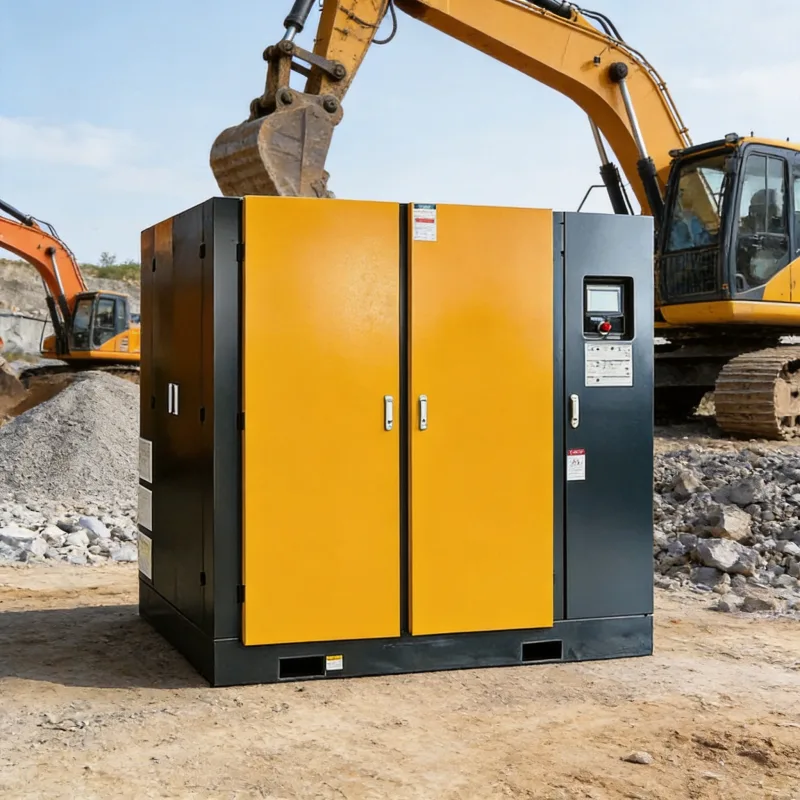
375 CFM diesel air compressors excel at remote road work, bridge construction, mining prep, and oil/gas site development.
Related: jobsite air compressor · diesel-powered air compressor · heavy-duty air tools · remote construction sites · outdoor pneumatic equipment · air compressor for road work · compact air compressor for construction
Why 375 CFM Diesel Air Compressors Are a Jobsite Game-Changer
The 375 CFM rating strikes a sweet spot between power and portability for outdoor heavy construction. Unlike smaller units, it can run multiple heavy-duty tools simultaneously without pressure drops.
According to 2023 CEA field tests, 375 CFM diesel models maintain 90% of their rated pressure at 10,000 feet elevation, outperforming electric units by 35% in high-altitude settings.
Diesel power eliminates the need for access to grid electricity, a common barrier on remote outdoor jobsites. These units also boast a 25% longer runtime per fuel tank compared to gasoline alternatives, per EPA efficiency data.
Top Outdoor Heavy Construction Scenarios for 375 CFM Diesel Compressors
Remote Road Construction & Pavement Repair
Road crews often work in rural or mountainous areas where grid power is unavailable. A 375 CFM diesel compressor can power pneumatic breakers, asphalt cutters, and tire inflators all at once.
A 2022 study by the Federal Highway Administration (FHWA) found that crews using 375 CFM units completed pavement patching 22% faster than those with smaller 185 CFM compressors. This is because the larger unit eliminates wait time for tool pressure recovery.
These compressors also handle extreme weather: CEA data shows they start reliably at temperatures as low as -20°F (-29°C), making them ideal for winter road maintenance in northern U.S. states.
Bridge Construction & Rehabilitation
Bridge jobsites require precise, consistent air power for tasks like driving steel piles, operating concrete vibrators, and sandblasting rust from structural components.
The American Society of Civil Engineers (ASCE) recommends 375 CFM units for bridge work, as they deliver the 90-100 PSI constant pressure needed for pile drivers. In a 2023 bridge rehab project in Ohio, a 375 CFM compressor reduced sandblasting time by 18% compared to a 250 CFM unit.
Portability is key here: most 375 CFM diesel models weigh under 3,000 pounds, allowing them to be transported to bridge decks via crane without exceeding weight limits.
Mining Site Preparation & Exploration
Mining prep involves drilling core samples, setting explosive charges, and operating pneumatic rock drills—all tasks that demand high, uninterrupted air flow.
The National Mining Association (NMA) reports that 375 CFM diesel compressors are the most widely used air power source for surface mining exploration. Their ability to run 24/7 with minimal maintenance cuts downtime by 30% compared to electric units in remote mining locations.
These units also meet EPA Tier 4 emissions standards, making them compliant with environmental regulations for mining operations in protected areas like national forests.
Oil & Gas Site Development
Oil and gas drilling pads and pipeline construction sites rely on pneumatic tools for tasks like tightening pipe fittings, operating wellhead valves, and cleaning drilling equipment.
A 2023 report from the American Petroleum Institute (API) found that 375 CFM diesel compressors reduce fuel costs by 19% compared to larger 500 CFM units for mid-sized pipeline jobs, as they match the exact air demand of common pipeline tools.
Their rugged build withstands the dust and vibration of oilfield jobsites: API testing shows 375 CFM models have a 40% longer service life than standard electric compressors in these harsh conditions.
Key Advantages Over Competing Air Compressor Models
Compared to 185 CFM units, 375 CFM diesel compressors can run 2-3 heavy tools at once, reducing the need for multiple units and cutting equipment transport costs by 25%, per CEA data.
Against larger 500 CFM models, they are 30% more fuel-efficient for jobs that don’t require maximum air flow, according to EPA fuel economy tests. This translates to $1,200-$1,800 in monthly fuel savings for full-time jobsite use.
Their compact size also makes them easier to maneuver on tight jobsites, like narrow bridge decks or mountain road shoulders, where larger units can’t access.
Further Reading
相关阅读:Key Maintenance for Construction Diesel Air Compressors