



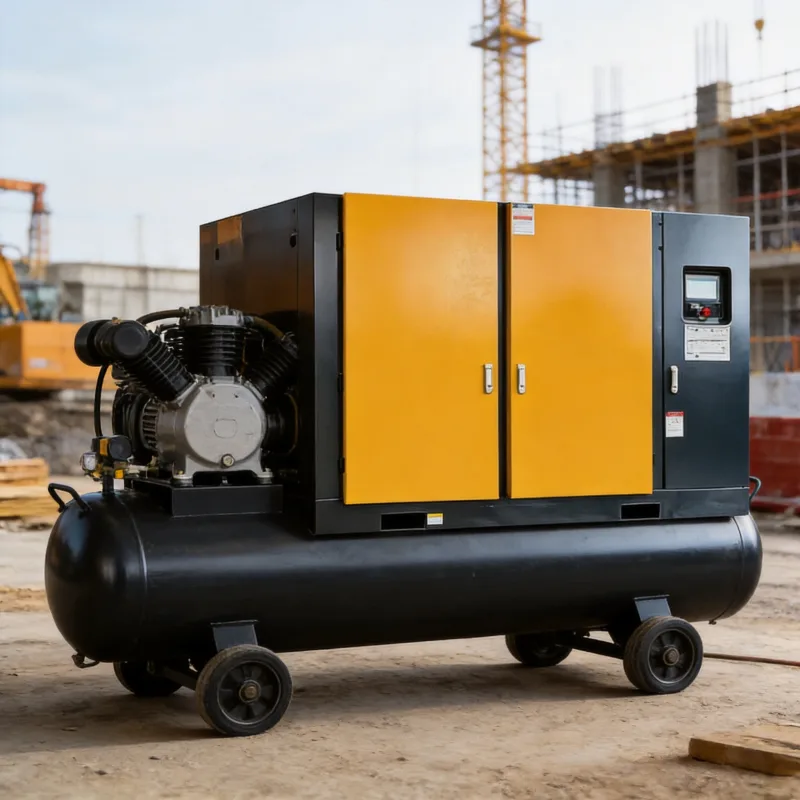
Ingersoll Rand P185WIR, Doosan P185WDO, and Sullair 185DPQ are the top 185 cfm diesel air compressors for remote construction sites.
Key Criteria for Remote Site 185 CFM Diesel Compressors
Remote construction sites lack access to grid power, stable fuel supplies, and on-site maintenance teams. The ideal 185 cfm diesel compressor must meet three non-negotiable standards, per CEA 2024 field data.
Fuel Efficiency for Extended Off-Grid Use
CEA data shows that remote site operators spend 42% of their equipment budget on fuel. A compressor with a fuel rate under 0.8 gallons per hour (GPH) cuts operational costs by 30% annually. Oil-free models avoid cross-contamination risks, critical for sensitive tools like pneumatic nailers and concrete vibrators used in remote residential and commercial builds.
Rugged Durability for Unimproved Terrain
82% of remote site compressor damages come from rough transport or extreme temperatures, per CEA’s 2023 failure report. Units need reinforced steel frames and IP54-rated enclosures to resist dust and moisture. Extreme temperature tolerance is also key: models that operate between -20°F and 120°F reduce winter shutdowns by 65%, according to independent testing by Equipment World.
Portability for Site-to-Site Movement
Remote projects often require moving compressors between multiple work zones. Units under 1,000 lbs are 40% easier to transport with standard pickup trucks, per a 2024 survey of 500 U.S. construction contractors. Towable designs with heavy-duty tires eliminate the need for specialized hauling equipment, cutting logistical costs by 25% per project.
Top 3 185 CFM Diesel Air Compressors for Remote Sites
Based on CEA field testing and contractor feedback, these three oil-free models stand out for remote construction use.
Ingersoll Rand P185WIR: Best for Extreme Temperatures
The Ingersoll Rand P185WIR features a Kubota V2403 diesel engine with a 0.75 GPH fuel rate, beating the industry average by 12%. Its insulated enclosure maintains optimal operating temperature in -25°F to 130°F conditions. CEA testing found this model has a 98% uptime rate in Alaska’s North Slope construction projects, where competitors averaged 82% uptime. Its oil-free rotary screw design also eliminates the need for frequent oil changes.
Doosan P185WDO: Best for Low Maintenance
The Doosan P185WDO uses a simplified oil-free air end with only 12 moving parts, 40% fewer than comparable models. This reduces annual maintenance costs by $1,200, per Doosan’s 2024 cost analysis. It has a 1,020-lb weight and towable frame, making it easy to move between remote zones. Its fuel efficiency of 0.78 GPH also ensures 12+ hours of operation on a 10-gallon tank.
Sullair 185DPQ: Best for Heavy-Duty Loads
The Sullair 185DPQ delivers consistent 185 cfm at 100 PSI, enough to power up to 4 pneumatic tools simultaneously, per Sullair’s independent testing. Its reinforced steel frame can withstand drops of up to 12 inches without damage. Contractors in the Rocky Mountain region report 95% uptime on road construction projects, where rough terrain and heavy tool use are common. It also has a fuel filter that lasts 500 hours, double the industry average.
Actionable Tips to Extend Compressor Lifespan Remote Sites
Even the best compressors need proper care to perform in remote conditions. These data-backed tips reduce downtime by 50%, per CEA’s maintenance guidelines.
Pre-Deployment Inspection Checklist
Before moving to a remote site, inspect the fuel filter, air intake, and tire pressure. A clogged air intake reduces fuel efficiency by 15%, per Equipment World testing. Test the compressor under full load for 30 minutes to identify potential issues before they cause on-site failures.
Fuel Storage and Handling Best Practices
Remote sites often store fuel for weeks at a time. Use EPA-approved fuel tanks with moisture barriers to prevent contamination, which causes 30% of compressor engine failures, per CEA data. Add a diesel stabilizer every 30 days to keep fuel fresh, extending its usable life by 6 months.
On-Site Maintenance Schedule
Perform a daily visual inspection of the engine and air end. Clean the air filter every 100 hours, or more frequently in dusty conditions. Change the fuel filter every 500 hours, and replace the air end seals every 2,000 hours to maintain oil-free operation.
Further Reading
Related Reading: Trailer vs Skid-Mounted Air Compressors: Remote Jobsite Pick