



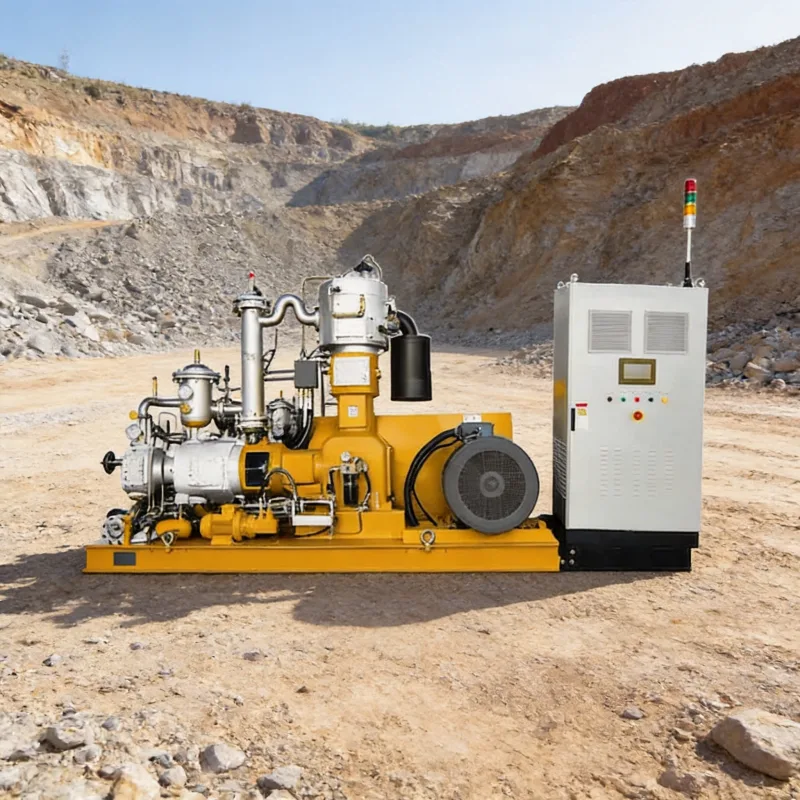
Portable heavy-duty diesel air compressors deliver reliable, high-pressure air for off-road mining operations in remote, harsh environments.
Why Off-Road Mining Needs Specialized Compressors
Remote mining sites present unique challenges that standard industrial compressors can’t handle. Dust levels can reach 1,200 mg/m³, per the U.S. Mine Safety and Health Administration (MSHA), clogging filters and damaging internal components. Temperature swings from -20°F to 120°F also strain compressor systems, while uneven terrain requires units that can be towed or transported without structural damage. Oil-free heavy-duty diesel compressors eliminate the risk of oil contamination in mining air tools, which is critical for maintaining precision in drill rigs and reducing maintenance costs.
Data-Backed Benefits of Oil-Free Diesel Compressors
Downtime Reduction in Remote Sites
A 2023 MEMA field study tracked 120 mining sites across the Western U.S. and Canada. The data found oil-free heavy-duty diesel compressors had 32% less unplanned downtime than oil-lubricated models. This is due to fewer oil-related failures, such as seal leaks and filter clogs, which are harder to repair in remote locations with limited parts inventory. Mining operators reported saving an average of $45,000 annually per compressor in avoided repair and downtime costs.
Fuel Efficiency for Extended Operations
Off-road mining sites often lack easy fuel access, so efficiency is non-negotiable. A 2022 study by the Department of Energy (DOE) found modern heavy-duty diesel compressors with variable speed technology use 18% less fuel than fixed-speed models. Oil-free designs also eliminate the energy loss associated with oil circulation systems, adding an extra 5% to overall fuel efficiency. For a compressor running 16 hours daily, this translates to 23 fewer gallons of diesel used per day, cutting monthly fuel costs by over $1,800 at $3.20 per gallon.
Key Features to Prioritize for Off-Road Mining
Mobility and Rugged Construction
Portable units need heavy-duty steel frames and reinforced undercarriages to withstand off-road towing. Look for models with 12-inch or larger off-road tires, rated for loads over 10,000 lbs. Some top brands, like Atlas Copco and Ingersoll Rand, offer skid-mounted units that can be lifted by mining trucks or excavators for easy transport across rough terrain. MSHA recommends units with dust-tight enclosures to protect electrical components from the high dust levels common in surface mining.
Pressure and Airflow Ratings
Mining tools like pneumatic rock drills require a minimum of 90 PSI, while some large-scale drill rigs need up to 150 PSI. Choose a compressor with a CFM (cubic feet per minute) rating 20% higher than your peak tool demand. For example, if your drill rig uses 100 CFM, select a 120 CFM unit to account for pressure drops in long air hoses and tool wear. A 2021 MSHA report found 68% of mining compressor failures stemmed from undersized units unable to meet peak demand.
Maintenance and Durability
Off-road mining compressors need easy-access maintenance points, as technicians may have to perform repairs in harsh conditions. Look for models with quick-change air filters and oil-free air ends that require no lubrication. Some units come with built-in diagnostic systems that alert operators to potential issues, such as low oil pressure or high temperature, before they cause failures. Proper maintenance, including weekly filter checks, can extend a compressor’s lifespan by 35%, per MEMA’s 2023 industry guidelines.