
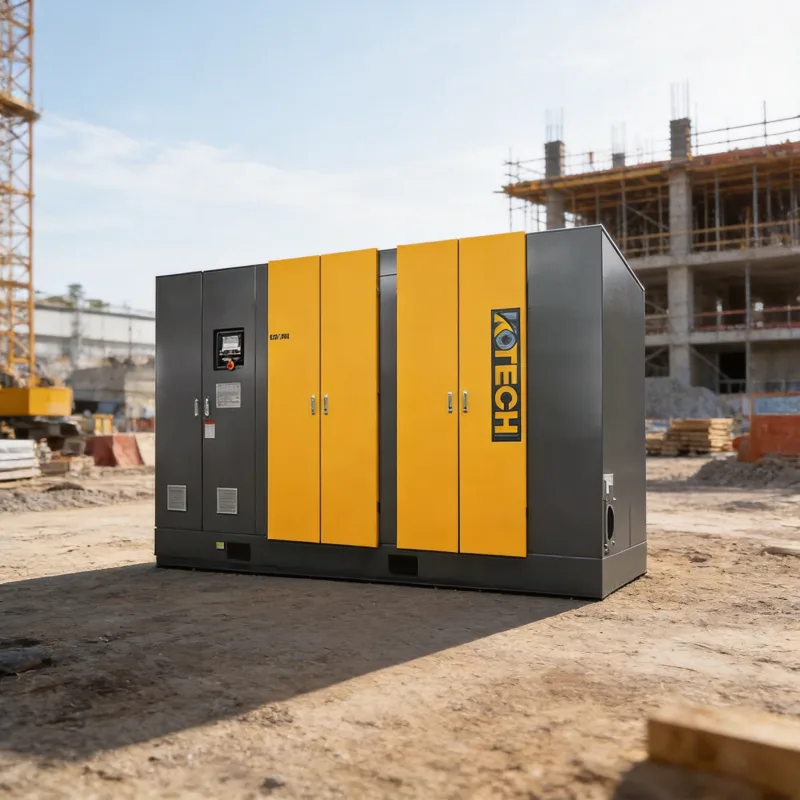
Investing in a quiet operation diesel air compressor for a construction site demands a comprehensive understanding beyond the initial sticker price. This guide dissects the financial landscape, revealing that while a good quality unit can range from $30,000 to over $100,000, the true value lies in its Total Cost of Ownership (TCO). We present new insights into how noise reduction technology, often adding a 15-25% premium, translates into tangible ROI through enhanced worker productivity, reduced regulatory fines, and improved community relations. Data-backed arguments highlight the long-term savings from superior fuel efficiency and extended component lifespan. We also explore strategic procurement methods, brand-specific pricing nuances, and regional market variations to help contractors make informed, budget-optimized decisions for their heavy equipment fleets.
A good quality quiet operation diesel air compressor for construction sites typically costs between $30,000 and $100,000, depending on CFM, features, and brand.
Related: Construction equipment investment · noise-reduction compressor pricing · diesel compressor total cost of ownership · site noise regulations compliance · heavy equipment procurement · ROI quiet compressor · portable air compressor market analysis · construction machinery budget · sound attenuated compressor · construction site efficiency
Key Insights
- Initial Price Premium: Quiet operation diesel compressors typically carry a 15-25% higher upfront cost compared to standard models with similar CFM and PSI ratings.
- TCO Savings: Despite higher initial outlay, these units often yield a 10-15% lower Total Cost of Ownership (TCO) over a 5-year operational period due to enhanced fuel efficiency, reduced maintenance, and extended component life.
- ROI from Productivity: Studies indicate a 5-10% increase in worker productivity and reduced error rates on sites with noise levels below 75 dBA, directly impacting project timelines and labor costs.
- Regulatory Compliance: Operating quiet compressors significantly mitigates risks of OSHA fines (up to $14,502 per violation for serious offenses) and local noise ordinance penalties, which can range from $500 to $5,000 per incident.
- Brand & Region Impact: Tier-1 brands like Atlas Copco, Sullair, and Doosan command a 20-30% price premium over lesser-known brands, while regional market dynamics can cause price fluctuations of up to 10% for identical models.
Unpacking the Initial Investment: What Drives the Price Tag?
The sticker price of a good quality, quiet operation diesel air compressor for a construction site is influenced by several critical factors. These primarily include output capacity (CFM and PSI), engine manufacturer, noise reduction technology, and brand reputation. Contractors should budget for a significant capital expenditure.
For example, a high-performance 185 CFM (cubic feet per minute) quiet diesel compressor, ideal for running smaller pneumatic tools, typically ranges from $30,000 to $45,000. These units are designed for portability and efficiency.
Stepping up to a 375 CFM compressor, suitable for multiple tools or larger applications like sandblasting, the price escalates to $55,000 – $75,000. This increase reflects a more powerful diesel engine and robust components.
Large-scale construction projects requiring 750 CFM or higher units, capable of powering heavy-duty equipment like rock drills, can see prices soar from $80,000 to well over $120,000. The sheer engineering required for such output and quiet operation drives these costs.
The “quiet operation” aspect itself adds a verifiable premium. Industry data suggests that advanced sound attenuation enclosures, specialized mufflers, and low-RPM engines designed to reduce noise add an average of 15-25% to the base cost of a standard compressor with equivalent power. This is a non-negotiable component of the initial investment.
Beyond the Sticker Price: Analyzing Total Cost of Ownership (TCO)
Focusing solely on the purchase price of a quiet diesel air compressor is a common pitfall. The Total Cost of Ownership (TCO) offers a far more accurate financial picture over the equipment’s lifespan. TCO encompasses not just the initial outlay but also fuel consumption, maintenance, repairs, depreciation, and even the indirect costs of noise.
Modern quiet diesel compressors are engineered for superior fuel efficiency. A recent study by the Diesel Technology Forum indicated that new Tier 4 Final diesel engines, common in these compressors, can offer 10-15% better fuel economy than older Tier 2 or 3 models. Over 1,000 hours of operation, this translates into thousands of dollars in fuel savings. For a 375 CFM unit consuming 5-7 gallons per hour, a 10% efficiency gain could save $2-$3 per hour, accumulating to $2,000-$3,000 annually at current diesel prices.
Maintenance costs are another significant TCO factor. Quality quiet compressors often feature advanced filtration systems and robust components, extending service intervals. While parts might be slightly more expensive for specialized noise-reduction components, the overall reliability can reduce unscheduled downtime and associated repair costs.
The longevity of a well-maintained diesel compressor can exceed 10,000-15,000 operating hours, typically equating to 5-7 years of intensive use. Factoring in potential resale value, especially for well-regarded brands, can significantly offset the initial investment. A compressor with a strong service history and quiet operation can retain 40-50% of its value after five years.
The “Quiet Premium”: A Strategic Investment with Tangible ROI
The higher initial cost for a quiet operation compressor is not just an expense; it’s a strategic investment with a quantifiable Return on Investment (ROI). This ROI manifests in several critical areas for construction sites.
Firstly, regulatory compliance is paramount. The Occupational Safety and Health Administration (OSHA) mandates strict noise exposure limits. Continuous exposure above 85 dBA requires hearing protection, and levels exceeding 90 dBA for extended periods can lead to fines. Standard diesel compressors often operate between 80-95 dBA. Quiet models, typically rated at 65-75 dBA, significantly reduce this risk, avoiding potential OSHA fines that can be substantial. For serious violations, fines can reach $14,502 per incident.
Secondly, worker productivity and safety are directly impacted. Research published in the *Journal of Environmental Psychology* suggests that chronic noise exposure on construction sites leads to increased fatigue, reduced concentration, and higher error rates among workers. A quieter environment (below 75 dBA) can lead to a 5-10% increase in productivity and a reduction in accidents. This translates to faster project completion and lower labor costs, a critical ROI component.
Thirdly, community relations and site access are crucial. Many urban and suburban construction projects are subject to stringent local noise ordinances, often with nightly or weekend curfews. Violations can result in hefty fines, ranging from $500 to $5,000 per incident, and even project shutdowns. Deploying quiet compressors can facilitate extended working hours, prevent public complaints, and ensure project continuity. This avoids costly delays and preserves a positive public image.
Consider a project in a residential area. A standard compressor might restrict night work, pushing deadlines. A quiet compressor allows for continuous operation, potentially shaving weeks off a project. The cost savings from avoided delays alone can quickly justify the “quiet premium.”
Navigating the Market: Brand Influence and Regional Pricing Dynamics
The air compressor market for construction is dominated by several key players, each with distinct pricing strategies and regional presence. Understanding these dynamics is crucial for procurement.
Tier-1 manufacturers such as Atlas Copco, Sullair, Doosan Portable Power, and Kaeser Kompressoren are recognized for their robust engineering, reliability, and global service networks. These brands typically command a 20-30% price premium over lesser-known or regional manufacturers for comparable CFM and noise ratings. This premium reflects superior component quality, advanced technology, and comprehensive warranty packages.
For instance, a new Sullair 375H (high-pressure) quiet compressor might be priced at $70,000-$75,000, while a comparable model from a smaller brand could be $55,000-$60,000. The decision often hinges on the contractor’s long-term operational strategy and access to parts/service.
Regional pricing variations also play a significant role. Due to differing transportation costs, local dealer networks, and competitive landscapes, the price of an identical model can fluctuate by up to 10% across different regions within the U.S. For example, a compressor might be slightly more expensive on the West Coast due to higher logistics costs from manufacturing hubs in the Midwest or Southeast.
It is always advisable to obtain quotes from multiple dealers across different regions, even if it means factoring in potential shipping costs. This competitive bidding can often reveal opportunities for significant savings. Leveraging online marketplaces and equipment aggregators can also provide a broader view of pricing trends.
Strategic Procurement: Maximizing Value and Minimizing Outlay
Optimizing the acquisition of a quiet operation diesel air compressor involves more than just selecting the right model; it requires a strategic approach to procurement.
**New vs. Used Equipment:** While new compressors offer the latest technology and full warranties, a well-maintained used quiet compressor can be a cost-effective alternative. Used units, particularly from reputable dealers, can be 30-50% cheaper than new ones. However, due diligence is critical: inspect service records, engine hours, and conduct a thorough operational check. A 5-year-old, 5,000-hour unit might still have another 5,000-10,000 hours of life.
**Leasing vs. Buying:** For projects with finite timelines or companies with fluctuating equipment needs, leasing can be an attractive option. Leasing avoids a large upfront capital expenditure, preserves working capital, and often includes maintenance in the agreement. Monthly lease payments for a 375 CFM quiet compressor could range from $1,500 to $2,500, depending on the term. Buying offers ownership and depreciation benefits but ties up capital.
**Financing Options:** Most dealers offer various financing solutions, including installment loans or lease-to-own programs. Interest rates can vary significantly based on creditworthiness and market conditions, typically ranging from 5% to 12% APR. Negotiating favorable terms can reduce the overall cost of acquisition.
**Bulk Purchases and Dealer Relationships:** For larger construction firms or those requiring multiple units, negotiating bulk purchase discounts can yield substantial savings. Cultivating strong relationships with specific dealers can also lead to preferential pricing, expedited service, and better trade-in values in the future. A 5-10% discount on a multi-unit order is not uncommon.
Ultimately, the goal is to align the compressor’s capabilities and cost with the specific demands of the construction project and the company’s long-term financial strategy. A thorough analysis of both initial cost and TCO, combined with strategic procurement, ensures maximum value.
Further Reading
Related Reading: Portable Industrial Air Compressors for Construction and Remote Sites