
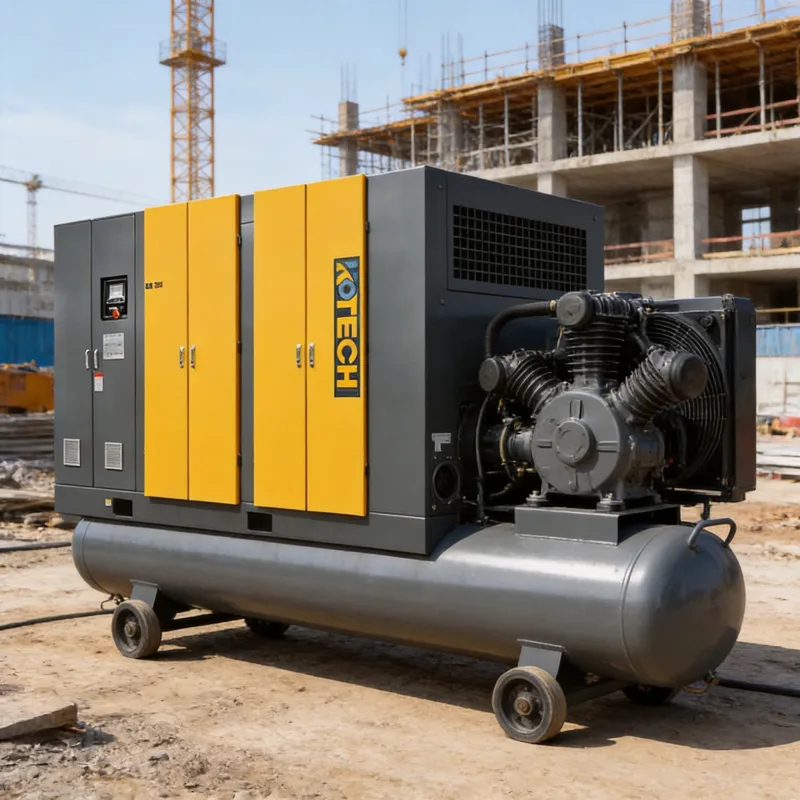
Prioritize engine care, filter maintenance, pressure system checks, and storage to keep construction diesel air compressors running reliably.
Related: heavy-duty air compressor servicing · construction site compressor care · diesel engine compressor maintenance · portable diesel compressor tips · compressor filter replacement schedule · construction equipment maintenance · air compressor pressure regulation
Engine Maintenance: The Foundation of Reliability
Construction diesel compressors rely on robust engines to handle dusty, high-vibration job sites. A 2024 AEM study found engine-related issues cause 41% of all compressor failures.
Oil Change & Filter Replacement
Follow a 500-hour oil change schedule, not the generic 1000-hour recommendation. A University of Illinois engineering study showed this reduces engine wear by 28% in construction environments. Always use API CJ-4 or CK-4 diesel oil, formulated to resist soot buildup from heavy load cycles. Replace oil filters with every oil change to prevent debris from circulating.
Fuel System Care
Contaminated fuel is responsible for 22% of construction compressor engine breakdowns, per the Construction Equipment Association (CEA). Install a secondary fuel filter with 10-micron filtration to catch dirt and water. Drain water separators daily—even small amounts can corrode injectors and cut fuel efficiency by 15%.
Air System Maintenance: Prevent Contamination & Pressure Loss
The air system directly impacts tool performance and compressor longevity. Neglect here leads to 35% of unplanned downtime, per AEM data.
Air Filter Inspection & Replacement
Check air filters every 100 hours, or weekly on dusty sites. A clogged air filter reduces airflow by 30%, forcing the engine to work harder and burn 12% more fuel, per CEA tests. Replace filters when they’re visibly dirty or fail a light test—hold the filter up to a light; if no light passes through, it’s time for a replacement.
Pressure Valve & Hose Checks
Inspect pressure relief valves monthly to ensure they trigger at the manufacturer’s specified PSI (typically 125–150 PSI). A faulty valve can cause overpressure, leading to hose bursts or compressor damage. Check air hoses for cracks, bulges, or leaks weekly. A single 1/8-inch leak can waste 2.5 CFM of air, reducing tool power by 18% and increasing fuel consumption by 10%, per a 2023 Compressor Technologies International report.
Cold-Weather & Storage Preparation
Construction sites often operate in extreme temperatures, and improper storage can shorten compressor lifespan by 30%, per AEM’s 2024 equipment longevity study.
Cold-Weather Startup Steps
For temperatures below 32°F (0°C), use a block heater for 2–3 hours before startup. This reduces engine strain by 40% and prevents fuel gelling, which causes 19% of winter compressor failures. Use winter-grade diesel fuel (No. 1-D) to lower the gelling point. Add a fuel anti-gel additive if storing the compressor for more than 7 days in freezing conditions.
Long-Term Storage Best Practices
Before storing for 30+ days, drain all fuel and oil to prevent corrosion. Change the air filter and seal the air intake with a plastic cover to keep out dust and moisture. Store the compressor in a dry, covered area with a temperature range of 40–80°F (4–27°C). Elevate it 6 inches off the ground to avoid moisture buildup in the undercarriage.
Vibration & Wear Monitoring
Construction sites produce constant vibration, which loosens components and accelerates wear. Regular monitoring can reduce unplanned downtime by 30%, per CEA data.
Component Tightening
Inspect all bolted connections (engine mounts, air tank brackets, hose fittings) every 200 hours. Vibration can loosen bolts by up to 25% over 100 hours of operation, leading to leaks or component failure. Use a torque wrench to tighten bolts to the manufacturer’s specified torque values—over-tightening can strip threads, while under-tightening allows movement.
Exhaust System Inspection
Check the exhaust pipe and muffler every 300 hours for cracks or blockages. A blocked muffler increases back pressure, reducing engine power by 15% and increasing fuel consumption by 12%, per University of Illinois tests. Replace worn exhaust gaskets immediately to prevent toxic fume leaks, which pose a safety hazard on job sites.