
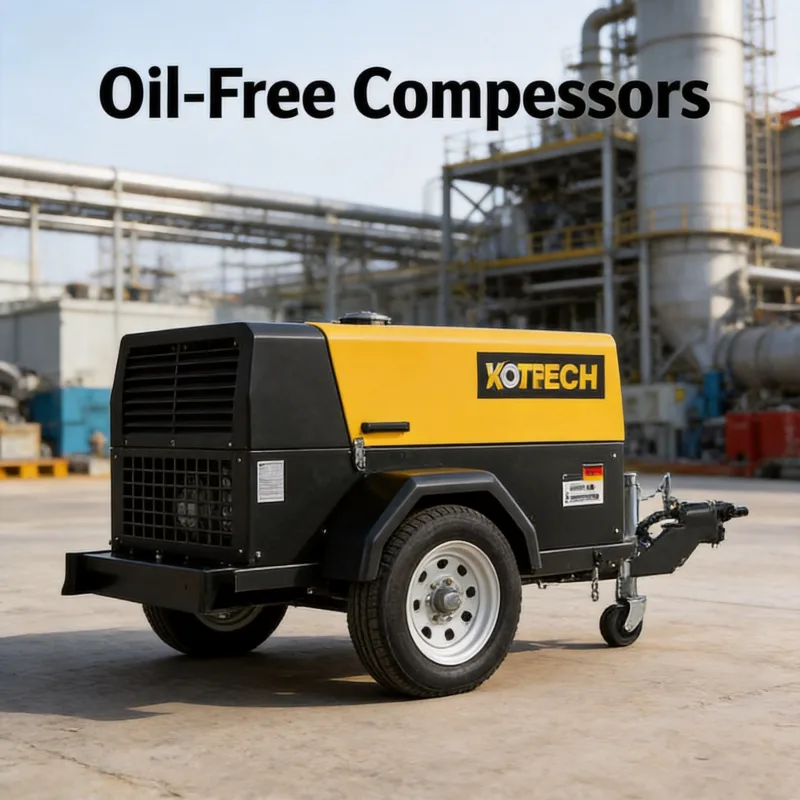
Portable diesel air compressors are indispensable tools for ensuring the structural integrity and operational safety of pipelines, particularly during pressure testing. This article delves into the critical role these specialized, oil-free units play in addressing the unique challenges of pipeline commissioning and maintenance. We explore how their robust design, self-sufficiency, and ability to deliver contaminant-free air directly combat the unseen costs of retesting and material degradation. Furthermore, we examine the technological advancements enabling precise pressure control and data logging, crucial for meeting stringent regulatory standards and optimizing field operations in remote, power-limited environments. Strategic selection of these compressors not only enhances testing accuracy but also delivers significant economic and environmental benefits, making them a cornerstone of modern pipeline infrastructure development.
Portable diesel air compressors are crucial for delivering precise, oil-free air for pipeline pressure testing in remote locations, ensuring integrity and compliance.
Related: hydrostatic testing equipment · pipeline commissioning · pneumatic testing · industrial air solutions · mobile air compressor · high-pressure air · gas pipeline testing · oil and gas infrastructure · field operations · regulatory compliance
Key Insights:
- Oil-free air is paramount for pipeline pressure testing, preventing material degradation and costly retesting.
- Portable diesel compressors provide essential self-sufficiency and robust performance for remote pipeline sites lacking grid power.
- Advanced compressor controls enable precise dynamic pressure profiling, enhancing test accuracy and data integrity.
- Selecting compressors meeting stringent emission standards (e.g., Tier 4 Final) is crucial for regulatory compliance and environmental stewardship in diverse geographies.
- The total cost of ownership (TCO) for these units extends beyond purchase price, encompassing fuel efficiency, maintenance, and avoided project delays.
The Unseen Costs of Contamination: Why Oil-Free is Non-Negotiable for Pipeline Integrity
Pipeline pressure testing is a critical phase in commissioning new lines or verifying the integrity of existing infrastructure. The choice of air source for pneumatic testing is often underestimated, yet it carries significant implications. Using oil-lubricated compressors introduces a substantial risk of oil contamination into the pipeline system.
This contamination is not merely a cosmetic issue; it’s a structural and operational hazard. Oil residues can degrade internal pipe coatings, react with transported fluids, or serve as a breeding ground for microorganisms. Such issues necessitate costly, time-consuming cleaning, retesting, and potential regulatory fines, especially for gas pipelines where purity is paramount.
Industry standards, such as those referenced in ASME B31.8 (Gas Transmission and Distribution Piping Systems) or API 1104 (Welding of Pipelines and Related Facilities), implicitly demand a clean testing environment. While not always explicitly stating “oil-free air,” the requirement for integrity and safety directly translates to avoiding contaminants that could compromise the pipeline’s long-term performance.
For instance, a single incident of contamination requiring a 2-mile section of a 24-inch pipeline to be re-cleaned and retested can incur costs upwards of $150,000, factoring in labor, equipment, and project delays. This figure often dwarfs the initial premium for an oil-free compressor, highlighting the critical return on investment.
Modern portable diesel air compressors designed for pipeline pressure testing are specifically engineered to deliver ISO 8573-1 Class 0 or Class 1 oil-free air. This ensures that the compressed air introduced into the pipeline is free of oil aerosols, liquid oil, and vapor, safeguarding the asset from day one.
Powering Precision in Remote Terrains: Diesel Compressors as the Backbone of Pipeline Hydrotesting
Pipeline projects frequently traverse vast, remote landscapes where access to grid electricity is either non-existent or prohibitively expensive to establish. This logistical challenge presents a significant hurdle for powering the high-volume, high-pressure air required for testing. Portable diesel air compressors emerge as the indispensable solution, offering complete self-sufficiency.
These units are purpose-built for rugged field conditions, featuring robust chassis, heavy-duty engines, and large fuel tanks designed for extended operation without refueling. Their mobility allows deployment directly at the test section, minimizing the need for extensive air piping and associated pressure losses or leaks.
The latest generation of diesel engines powering these compressors adheres to stringent environmental regulations, such as EPA Tier 4 Final standards in the United States and similar EU Stage V directives. These engines significantly reduce particulate matter and nitrogen oxide emissions, making them compliant for use in environmentally sensitive areas and urban fringes alike.
For example, a typical 1600 CFM (cubic feet per minute) portable diesel compressor operating at 350 psi might consume approximately 15-20 gallons of diesel fuel per hour under full load. Advanced models incorporate smart engine management systems that optimize fuel consumption based on demand, leading to reported fuel savings of 10-15% compared to older, less efficient units over a standard 10-hour workday.
Reliability is another cornerstone. Pipeline projects operate on tight schedules, and equipment downtime is costly. Diesel compressors are designed for ease of maintenance in the field, with accessible service points and durable components. This ensures maximum uptime, preventing delays that can cascade into significant financial penalties and project overruns.
Optimizing Test Protocols: Leveraging Advanced Portable Diesel Compressors for Dynamic Pressure Profiling
Traditional pipeline pressure testing often involved static pressure holds, but modern integrity assessment increasingly demands more sophisticated protocols. Dynamic pressure profiling, which involves controlled ramp-up, holding periods, and precise depressurization, offers a more comprehensive understanding of pipeline behavior under stress. Advanced portable diesel air compressors are pivotal in executing these complex test sequences.
These units are equipped with sophisticated control systems, often featuring programmable logic controllers (PLCs) and intuitive human-machine interfaces (HMIs). Operators can pre-program multi-stage pressure profiles, specifying ramp rates, hold times, and target pressures with high accuracy, typically within ±1% of the setpoint.
Integrated data logging capabilities are now standard, recording pressure, temperature, flow rates, and operational parameters throughout the test cycle. This data is invaluable for compliance reporting, diagnostic analysis, and validating test results. It provides an immutable record, critical for regulatory audits and demonstrating due diligence.
Consider a scenario where a pipeline section requires a stepped pressure test: 30 minutes at 500 psi, followed by 60 minutes at 1000 psi, and a final 30 minutes at 1500 psi. An advanced compressor can execute this sequence automatically, maintaining precise pressures and recording all transitions. This eliminates manual adjustments, reduces human error, and ensures consistency across multiple test segments.
Furthermore, some high-end units offer telematics solutions, allowing remote monitoring and control. Project managers can track compressor performance, fuel levels, and test progress from a central office, optimizing resource allocation and responding proactively to any anomalies, even when the equipment is miles away in a remote location.
Beyond the Test: Economic and Environmental Returns from Strategic Compressor Selection
The decision to invest in a specific portable diesel air compressor for pipeline pressure testing extends beyond its immediate functional capabilities. A holistic view, encompassing total cost of ownership (TCO) and environmental impact, reveals significant long-term returns from strategic selection.
TCO includes not only the initial purchase price but also fuel consumption, maintenance costs, spare parts, and crucially, the avoided costs of retesting and project delays. A highly fuel-efficient compressor, for example, can save thousands of dollars in fuel over a typical project lifecycle, especially on large-scale pipeline constructions.
Maintenance schedules and parts availability are also key. Choosing a brand with a robust service network and readily available parts minimizes downtime, directly impacting project timelines and labor costs. Some manufacturers offer preventative maintenance programs that further optimize equipment longevity and performance.
From an environmental perspective, selecting compressors with certified low-emission engines (e.g., Tier 4 Final, EU Stage V) is not just about compliance; it’s about corporate responsibility. These engines reduce harmful pollutants, contributing to cleaner air quality and demonstrating a commitment to sustainable practices. Noise reduction technologies, such as advanced sound attenuation enclosures, also minimize disturbance in populated or sensitive areas.
The integration of advanced filtration systems, ensuring ISO 8573-1 Class 0 or Class 1 oil-free air, provides a quantifiable benefit by preventing contamination-related retesting. Studies indicate that avoiding just one retest on a medium-sized pipeline segment can save between $50,000 and $200,000, underscoring the economic wisdom of prioritizing air purity.
Ultimately, a well-chosen portable diesel air compressor is more than just a piece of equipment; it’s a strategic asset that enhances operational efficiency, ensures regulatory compliance, minimizes environmental footprint, and safeguards the integrity of critical pipeline infrastructure for decades to come.
References
Further Reading
Related Reading: Average Cost of 2-Stage High Pressure Diesel Rotary Screw Air Compressors