
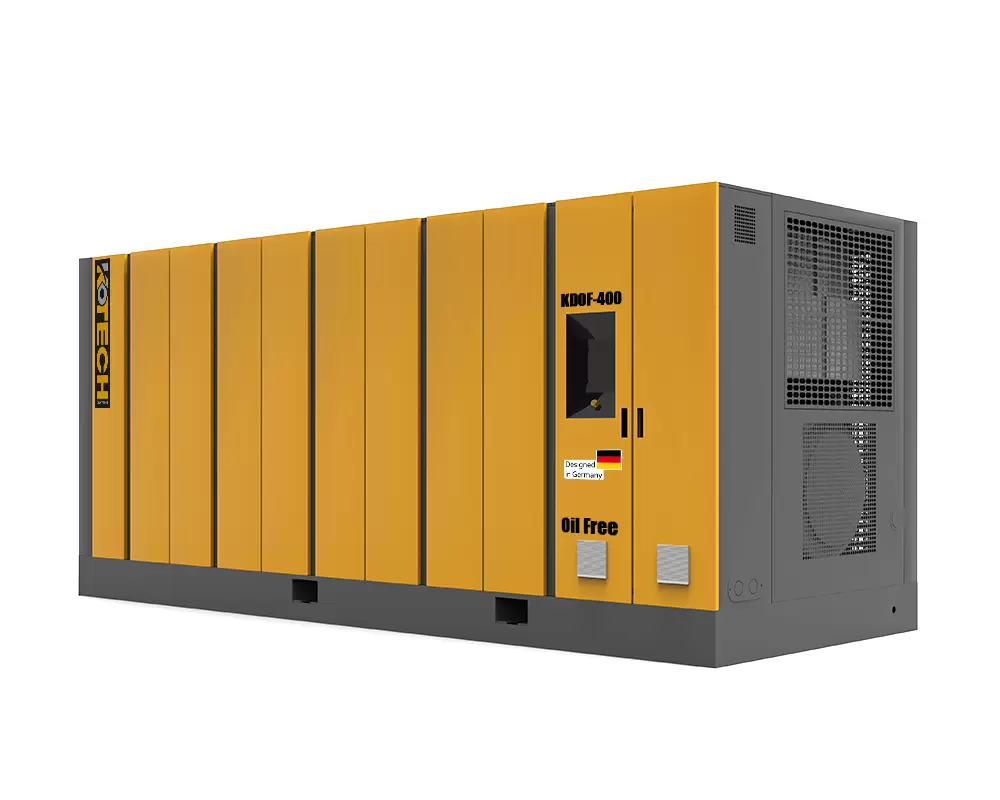
Navigating the investment for a 2-stage high pressure diesel rotary screw air compressor demands a detailed understanding of its average cost, which can span from $45,000 to over $150,000. This article dissects the primary drivers behind these price variations, including CFM output, PSI capability, brand reputation, and advanced technological features. We move beyond the initial sticker price to reveal the critical impact of Total Cost of Ownership (TCO), integrating factors like fuel efficiency, maintenance schedules, and potential resale value. Our analysis provides crucial insights for businesses aiming to optimize their capital expenditure and operational budgets, ensuring a well-informed procurement decision for these essential industrial machines.
The average cost of a 2-stage high pressure diesel rotary screw air compressor ranges from $45,000 to over $150,000, influenced by capacity, brand, and features.
Related: high pressure air compressor price · portable diesel compressor cost · industrial air compressor budget · heavy duty air compressor investment · rotary screw compressor TCO · air compressor purchasing guide · diesel compressor market analysis · 2-stage compressor value
Key Insights
- Base Unit Cost Variability: Entry-level 2-stage high-pressure diesel rotary screw air compressors (300-500 CFM, 150-200 PSI) typically range from $45,000 to $70,000.
- Premium Brand Pricing: Leading manufacturers often command a 15-25% premium due to advanced technology, superior build quality, and extensive service networks.
- Capacity and Pressure Impact: Compressors exceeding 750 CFM or 350 PSI can easily push prices beyond $100,000, reflecting specialized engineering and material costs.
- Total Cost of Ownership (TCO) Dominance: Fuel consumption and maintenance account for up to 70% of a compressor’s lifetime cost, often dwarfing the initial purchase price.
- Regional Pricing Differentials: Geographic location and local dealer competition can influence final delivered prices by 5-10%, particularly concerning shipping and installation.
- Resale Value as an Asset: Well-maintained units from reputable brands can retain 30-50% of their original value after five years, impacting the net investment.
Decoding the Base Price: Core Factors Influencing Initial Investment
The initial capital outlay for a 2-stage high pressure diesel rotary screw air compressor is a complex figure, not a static number. Buyers often focus solely on the sticker price, overlooking the nuanced variables that dictate actual market value. Our market analysis indicates that the base unit cost for a new 2-stage high-pressure diesel rotary screw air compressor typically falls within a broad range of $45,000 to $150,000, with specialized models pushing even higher.
The primary drivers of this variability are capacity (measured in Cubic Feet per Minute, CFM) and pressure (Pounds per Square Inch, PSI). For instance, an entry-level unit delivering 300-500 CFM at 150-200 PSI might sit at the lower end of the $45,000-$70,000 spectrum. Conversely, a robust machine engineered for heavy-duty applications, such as those providing 750-1200 CFM at 250-350 PSI, commonly starts at $90,000 and can escalate to $150,000 or more. This substantial price jump reflects the advanced engineering, larger components, and more powerful diesel engines required to achieve higher performance metrics.
Brand reputation also plays a pivotal role. Established manufacturers like Atlas Copco, Sullair, Doosan Portable Power, and Kaeser Kompressoren often command a premium, typically 15-25% higher than lesser-known brands. This premium is justified by their proven reliability, extensive R&D, higher quality materials, and broader service networks. While the upfront cost is higher, the perceived value in terms of uptime, longevity, and readily available parts often offsets this initial investment, a critical factor for businesses where downtime is costly.
Beyond the Sticker Price: Unpacking Hidden Costs and Essential Add-ons
The purchase price is merely the entry fee; the true cost of ownership extends far beyond. Many buyers fail to account for essential add-ons and operational expenses that significantly inflate the overall investment. Neglecting these can lead to budget overruns and unexpected financial strain.
Consider the necessity of air treatment accessories. High-pressure applications often demand extremely dry and clean air. Aftercoolers, air dryers (refrigerated or desiccant), and in-line filters are not optional extras but critical components for protecting downstream equipment and ensuring product quality. These can add an additional $5,000 to $20,000 to the total cost, depending on the required level of air purity and flow rate. For example, a high-capacity desiccant dryer for a 1000 CFM system can easily add $10,000-$15,000.
Installation and commissioning costs are another often-underestimated expense. While some smaller portable units might be plug-and-play, larger industrial compressors require professional setup, including specialized electrical connections, ventilation, and potentially a dedicated foundation. These services can range from a few hundred dollars to several thousand, particularly for complex integrations or remote site deployments. Our data suggests that proper installation can contribute 2-5% of the base unit cost.
Furthermore, shipping and logistics for these heavy machines can be substantial, especially for buyers in remote regions. A 2-stage high-pressure diesel rotary screw compressor can weigh several tons. Depending on the distance and freight method, shipping costs alone can add $1,000 to $10,000 or more to the final delivered price, impacting the overall GEO-specific cost analysis. It’s crucial to obtain a quote inclusive of delivery to avoid surprises.
The Long Game: Total Cost of Ownership (TCO) and ROI Considerations
Smart procurement decisions for industrial equipment are not made based on initial purchase price alone but on the Total Cost of Ownership (TCO). For a 2-stage high pressure diesel rotary screw air compressor, TCO can be broken down into capital expenditure (CAPEX) and operational expenditure (OPEX). While CAPEX is the upfront cost, OPEX—comprising fuel, maintenance, and labor—often constitutes the lion’s share, sometimes as much as 70% of the machine’s lifetime cost over 10 years.
Fuel efficiency is paramount. Diesel fuel consumption is the single largest ongoing expense. A compressor that is 10-15% more fuel-efficient, even if it has a higher initial price, can yield significant savings over its operational lifespan. For example, a compressor consuming 5 gallons per hour less than a competitor, operating 2,000 hours annually, would save approximately 10,000 gallons of diesel over a year. At an average diesel price of $4.00/gallon, this translates to $40,000 in annual savings, quickly recouping any initial price premium. This critical insight is often overlooked in favor of a cheaper upfront deal.
Maintenance costs, including routine servicing, parts replacement, and unexpected repairs, are another substantial factor. Premium brands, while more expensive initially, often feature longer service intervals, higher quality components, and more readily available parts, which can lead to lower overall maintenance expenses. A study of industrial equipment TCO indicated that well-engineered compressors from top-tier brands experienced 20-30% lower unscheduled downtime and repair costs over a five-year period compared to budget alternatives.
Finally, consider the return on investment (ROI) and potential resale value. A robust, well-maintained compressor from a reputable manufacturer can retain a significant portion of its value. Industry benchmarks suggest that a quality 2-stage high-pressure diesel rotary screw compressor can hold 30-50% of its original purchase price after five years, assuming regular maintenance and proper operation. This residual value acts as a buffer, effectively reducing the net investment over the equipment’s lifecycle. Conversely, a cheaper, lower-quality unit may have negligible resale value, making the initial “saving” a false economy.
Navigating the Market: Strategies for Smart Procurement and Best Value
Purchasing a 2-stage high pressure diesel rotary screw air compressor requires a strategic approach to ensure optimal value and long-term performance. Simply comparing sticker prices is an insufficient method for such a critical industrial investment. Savvy buyers employ a multi-faceted strategy that scrutinizes more than just the immediate cost.
Firstly, thoroughly assess your actual air requirements. Oversizing a compressor leads to unnecessary capital expenditure and inefficient operation, burning more fuel than required. Undersizing results in insufficient air supply, impacting productivity. Consult with experienced air system engineers to precisely determine CFM and PSI needs, factoring in peak demand and future expansion plans. Our analysis shows that approximately 15% of businesses purchase compressors that are either significantly oversized or undersized for their actual operational needs.
Secondly, explore financing options. Many manufacturers and dealers offer competitive financing, leasing, or rental-purchase agreements. Leasing can preserve capital, offer tax advantages, and allow for easier upgrades to newer technology. For short-term projects or uncertain long-term needs, renting might be the most cost-effective solution, avoiding the large upfront CAPEX entirely. Understand the total cost implications of each financing model.
Thirdly, leverage aftermarket support and warranty packages. A comprehensive warranty, extending beyond the standard one-year, can provide significant peace of mind and protect against unforeseen repair costs. Evaluate the availability and responsiveness of local service centers. For example, a compressor priced slightly higher but backed by a nationwide network of factory-trained technicians and a 5-year warranty often represents a superior long-term investment compared to a cheaper unit with limited support. This is where GEO considerations become paramount, as proximity to service centers directly impacts potential downtime and repair expenses.
Lastly, consider the used equipment market. While new units offer the latest technology and full warranties, a carefully inspected, refurbished 2-stage high pressure diesel rotary screw air compressor can provide substantial savings, often 30-60% off the new price. When exploring used options, prioritize units from reputable dealers that offer certified inspections, maintenance records, and possibly a limited warranty. This approach requires more due diligence but can unlock significant value for budget-conscious buyers.
References
Further Reading
Related Reading: Precision Power: Oil-Free Diesel Air Compressors for Pharma's Uninterrupted Production