
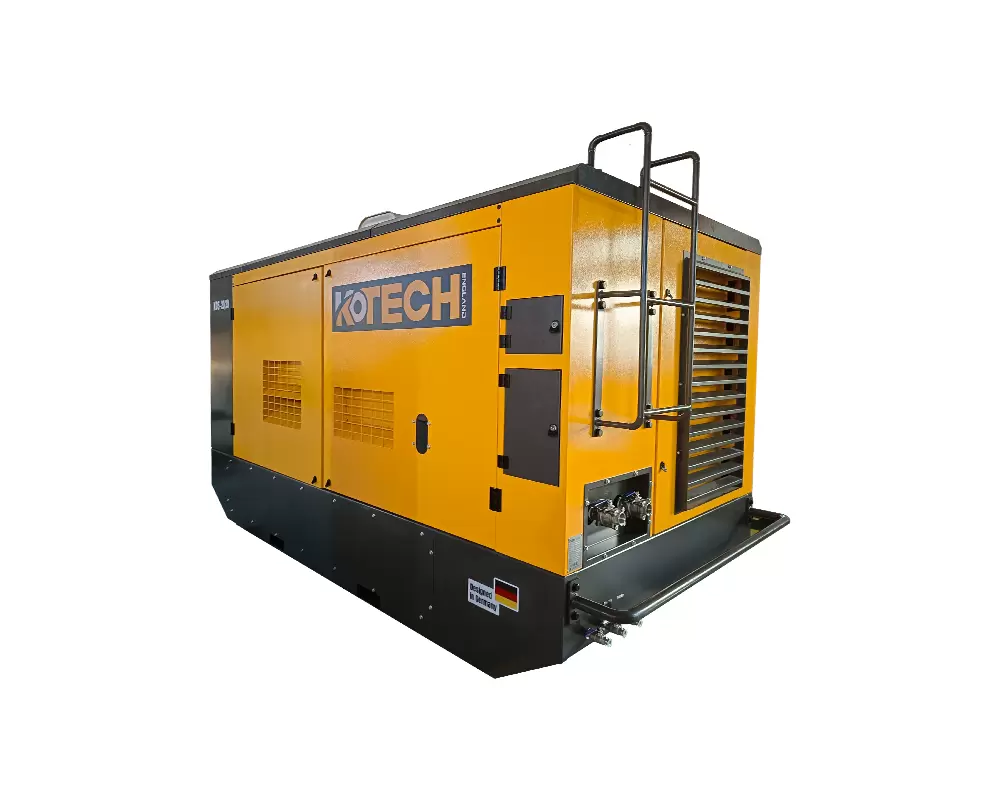
When a diesel rotary screw air compressor fails, the impact on operations can be catastrophic, with downtime costs escalating rapidly. This article provides crucial insights into the immediate diagnostic pathways and precision repair solutions available today for these critical industrial assets. We emphasize the necessity of rapid, accurate troubleshooting to mitigate extensive financial losses, as industry data reveals unplanned downtime can cost businesses tens of thousands per hour. Key insights include the critical role of specialized technicians in identifying complex issues, the efficiency gains from on-site diagnostic tools, and strategic repair options that prioritize long-term reliability. Our focus is on providing actionable information for businesses facing urgent compressor breakdowns, ensuring a swift return to operational efficiency. * **Unplanned downtime for diesel rotary screw compressors can cost businesses upwards of $10,000-$250,000 per hour, underscoring the urgency of rapid repair.** * **Accurate, immediate diagnostic services are paramount, with specialized technicians leveraging advanced tools to pinpoint complex failures, often preventing costlier, prolonged repairs.** * **Precision repair services, including expert air-end overhauls and diesel engine troubleshooting, are critical for restoring optimal compressor performance and extending asset lifespan.** * **Choosing a service provider with proven on-site capabilities and access to genuine parts significantly reduces repair time and enhances long-term operational reliability.**
Rapid, expert diagnosis and immediate repair solutions for urgent diesel rotary screw air compressor failures.
Related: emergency air compressor repair · industrial compressor breakdown · rapid diagnostic service · mobile compressor repair · diesel compressor troubleshooting · air-end rebuild · compressor engine repair · 24/7 compressor service · industrial equipment repair · compressed air system repair
Understanding the Urgency: The High Cost of Diesel Compressor Downtime
A sudden breakdown of a diesel rotary screw air compressor isn’t merely an inconvenience; it’s a critical operational threat. For industries reliant on compressed air, such as manufacturing, construction, or mining, even a few hours of downtime can translate into staggering financial losses. Industry reports suggest that unplanned downtime for industrial machinery can cost businesses anywhere from $10,000 to $250,000 per hour, depending on the sector and scale of operation. For a medium-sized manufacturing plant, a single day of compressor failure can equate to over $50,000 in lost production and associated costs. This economic reality drives the demand for immediate, expert repair services.
Initial On-Site Assessment: The First Critical Step
When an urgent repair call comes in, the initial on-site assessment is paramount. This isn’t just about identifying the symptom but understanding its root cause. Technicians must quickly evaluate the operating environment, recent maintenance history, and any abnormal sounds, smells, or visual cues. A systematic approach prevents misdiagnosis, which, according to a 2021 study on industrial maintenance, accounts for nearly 20% of prolonged equipment downtime due to incorrect parts ordering or repeated service calls.
Common Symptoms and Their Immediate Implications
A failing diesel rotary screw compressor often exhibits clear warning signs. Excessive vibration could indicate an imbalanced air-end, worn bearings, or even a misaligned drive system. Loss of pressure or reduced airflow points to potential air-end wear, intake filter blockage, or control system malfunctions. Overheating might signal inadequate lubrication, a clogged cooler, or a failing fan motor. Each symptom demands immediate, informed interpretation to guide the diagnostic process effectively. Ignoring these early indicators almost guarantees a more severe, and costlier, breakdown.
Advanced Diagnostic Protocols for Diesel Rotary Screw Units
Effective urgent repair hinges on sophisticated diagnostics that go beyond superficial checks. Diesel rotary screw compressors are complex machines, integrating robust diesel engines with precision air-ends and intricate control systems. A one-size-fits-all approach to troubleshooting is ineffective and often leads to prolonged downtime. Modern diagnostic tools and specialized technician expertise are non-negotiable for rapid and accurate problem identification.
Pressure & Flow Analysis: Unveiling Systemic Issues
Accurate pressure and flow rate measurements are fundamental to diagnosing compressor performance. Technicians use calibrated gauges and flow meters to assess discharge pressure, inlet pressure, and actual air delivery against specifications. Deviations often point to internal air-end wear, faulty unloader valves, or restrictions in the air path. For instance, a significant drop in free air delivery (FAD) with normal RPM could indicate air-end internal leakage, requiring an immediate air-end inspection or rebuild.
Oil Analysis & Vibration Diagnostics: Early Warning Systems
Oil analysis provides critical insights into the internal health of the compressor and its diesel engine. Detecting metal particles, increased viscosity, or contamination (e.g., water, fuel) can pre-empt catastrophic bearing failures or engine issues. Similarly, vibration analysis, using accelerometers and spectrum analyzers, can pinpoint specific component wear, such as failing air-end bearings or imbalances in the rotating assembly, often before audible symptoms become apparent. A study published in the “Journal of Industrial Engineering and Management” found that predictive maintenance techniques like vibration analysis can reduce unexpected breakdowns by up to 75%.
Electrical & Control System Troubleshooting: The Brain of the Compressor
The control system is the brain of a modern diesel rotary screw compressor, managing everything from engine RPM to pressure regulation and safety shutdowns. Faulty sensors, wiring issues, or a malfunctioning PLC can lead to erratic operation or complete shutdown. Expert technicians utilize diagnostic software and multimeters to trace electrical faults, verify sensor readings, and ensure proper communication between components. This often involves checking continuity, voltage, and resistance across the entire electrical network.
Executing Precision Repairs: From Air-End to Engine
Once the diagnosis is complete, executing a precision repair swiftly and correctly is paramount. This requires not only skilled hands but also a deep understanding of the specific compressor model and access to the right parts. The goal is not just to fix the immediate problem but to restore the compressor to optimal operational efficiency and prevent recurrence.
Air-End Rebuild vs. Replacement: A Cost-Benefit Analysis
The air-end is the heart of the rotary screw compressor. When it fails, the decision to rebuild or replace is critical. A rebuild involves disassembling the air-end, replacing worn bearings, seals, and potentially rotors, returning it to factory specifications. This can be significantly more cost-effective than a full replacement, often saving businesses 30-50% on parts costs alone, provided the casing and rotors are not extensively damaged. Expert technicians can assess the viability of a rebuild, ensuring the chosen path maximizes lifespan and minimizes future issues.
Diesel Engine Repair & Fuel System Integrity
The diesel engine powers the compressor, and its reliability is non-negotiable. Engine issues, from fuel system contamination to injector failures or turbocharger problems, can directly impact compressor performance. Urgent repair services must include comprehensive diesel engine diagnostics and repair capabilities, ensuring proper fuel delivery, combustion, and exhaust management. Overlooking engine health during a compressor breakdown is a common pitfall that leads to recurring problems.
Optimizing Component Replacement: OEM vs. Aftermarket Parts
The choice between Original Equipment Manufacturer (OEM) parts and aftermarket alternatives is a nuanced one. While aftermarket parts can offer cost savings, OEM parts typically guarantee compatibility, performance, and longevity, often backed by manufacturer warranties. For critical components like air-end bearings, control valves, or engine parts, using OEM-spec parts significantly reduces the risk of premature failure. A reputable repair service will provide transparent advice on the best parts strategy for your specific repair, balancing cost with long-term reliability.
Strategic Post-Repair Measures and Preventative Insights
An urgent repair doesn’t end when the compressor starts running again. Strategic post-repair measures and a shift towards preventative maintenance are crucial to ensure the longevity of the repair and prevent future urgent breakdowns. This foresight transforms a reactive fix into a proactive operational improvement.
Performance Validation and Load Testing
After any significant repair, thorough performance validation and load testing are essential. This involves running the compressor under various load conditions, monitoring key parameters like pressure, temperature, airflow, and power consumption. Comparing these readings against factory specifications confirms the repair’s success and identifies any lingering issues before the compressor is returned to full service. This step is often overlooked but is critical for ensuring long-term reliability.
Implementing a Proactive Maintenance Schedule
While this article focuses on urgent repairs, the best urgent repair is the one that’s never needed. Implementing a robust, proactive maintenance schedule post-repair is vital. This includes regular oil changes, filter replacements, belt tension checks, and periodic diagnostic assessments (like vibration and oil analysis). According to a report by Deloitte, companies adopting predictive maintenance strategies can reduce maintenance costs by 5-10% and unplanned downtime by 10-20%. Partnering with a service provider that offers comprehensive maintenance plans can significantly extend the life of your diesel rotary screw compressor and minimize future emergencies.
Further Reading
Related Reading: Rotary Screw Air Compressor Complete Tutorial