
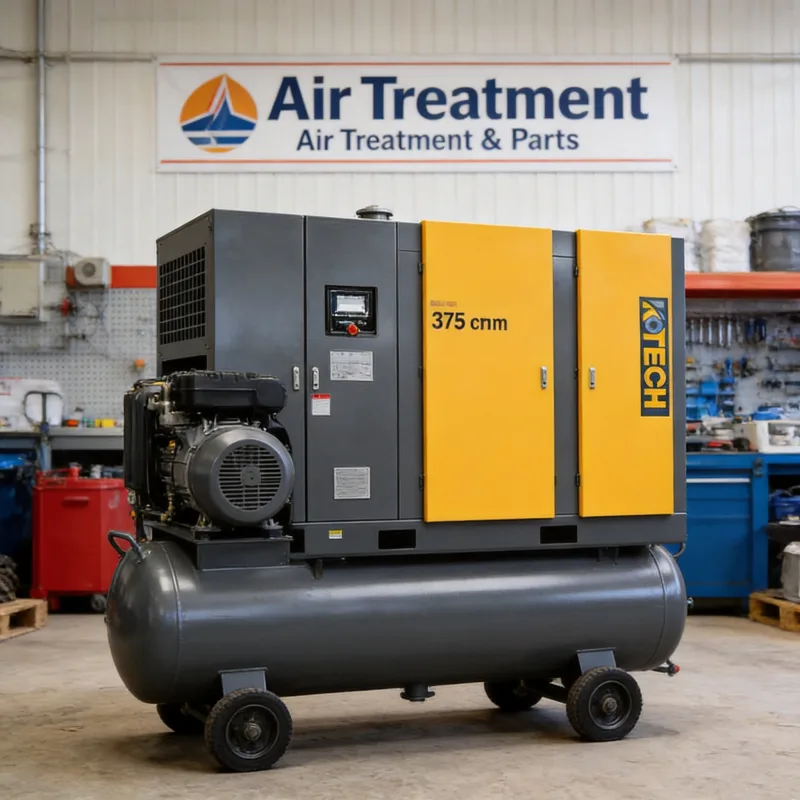
**Key Insights** * **Deepwater environments impose unique, extreme demands** that standard industrial compressors cannot meet, necessitating marine-grade, explosion-proof, and corrosion-resistant units. * **Total Cost of Ownership (TCO) in deepwater is dominated by reliability and uptime**, with single-day downtime costs exceeding $1 million, justifying upfront investment in specialized, certified compressors. * **Regulatory compliance (e.g., ABS, DNV-GL)** is non-negotiable, acting as a critical pre-qualification filter for potential suppliers and equipment. * **Integrated system solutions, including advanced filtration and remote monitoring**, significantly enhance operational efficiency and predictive maintenance capabilities in remote offshore settings. Procuring a reliable large capacity diesel air compressor for deepwater offshore drilling operations is a complex endeavor, demanding specialized knowledge beyond conventional industrial procurement. The extreme conditions—high salinity, explosive atmospheres, constant vibration, and remote operation—necessitate equipment engineered to withstand these unique challenges. This article dissects the critical technical specifications, vendor selection criteria, and operational considerations paramount for ensuring uninterrupted drilling operations and mitigating the catastrophic financial impact of equipment failure in ultra-deepwater environments. It emphasizes that reliability isn't a feature but a fundamental requirement, directly impacting project timelines and safety.
Sourcing reliable large capacity diesel air compressors for deepwater offshore drilling demands specialized vendors and stringent specifications.
Related: marine air compressor · high-pressure air system · deep-sea drilling equipment · offshore platform compressors · industrial air solutions · heavy-duty diesel compressor · subsea technology support · air treatment systems · robust compressor solutions · specialized drilling compressors
Unpacking the Deepwater Challenge: Why Standard Compressors Fail
Deepwater offshore drilling presents an environment unparalleled in its harshness, a crucible where only the most robust machinery survives. Standard industrial diesel air compressors, designed for terrestrial applications, are inherently ill-equipped for this domain. The primary culprits for their rapid failure offshore include relentless saltwater corrosion, the explosive potential of hydrocarbon gases, constant motion and vibration, and extreme temperature fluctuations. For instance, a compressor designed without marine-grade coatings and stainless steel components can see its operational lifespan reduced by up to 60% in a highly saline offshore environment within just 12-18 months, compared to its rated life onshore.
The financial stakes are astronomical. A single day of unscheduled downtime on an ultra-deepwater drilling rig can cost operators upwards of $1 million to $1.5 million, factoring in lost production, day rates, and mobilization costs. This grim reality underscores that reliability is not merely a desirable feature but the absolute bedrock of any equipment deployed in this sector. The air compressor, often overlooked in the shadow of the drill rig itself, is nonetheless a mission-critical component, powering everything from pneumatic tools and control systems to emergency blow-out preventer (BOP) activation.
Corrosion Resistance: A Non-Negotiable Baseline
The pervasive presence of saltwater spray and mist mandates superior corrosion resistance. Components must be constructed from marine-grade stainless steel (e.g., 316L), hot-dip galvanized steel, or protected by multi-layer marine epoxy coatings. Heat exchangers, intercoolers, and aftercoolers are particularly vulnerable and require specialized materials like cupronickel or titanium to prevent premature failure. Data from a major offshore operator indicated that compressors utilizing standard aluminum heat exchangers experienced a 40% higher failure rate due to galvanic corrosion within the first two years compared to units with cupronickel alternatives.
Explosion Protection: Adhering to ATEX/NEC Standards
Deepwater drilling platforms are classified as hazardous areas due to the presence of flammable gases and vapors. Therefore, all electrical and diesel-powered equipment, including air compressors, must comply with stringent explosion protection standards such as ATEX (Europe) or NEC Class I, Division 2 (North America). This involves flameproof enclosures, intrinsically safe circuitry, spark arrestors on exhaust systems, and automatic shutdown mechanisms in case of gas detection. Non-compliance is not only a safety hazard but also a legal and operational barrier, leading to immediate project suspension.
Critical Compressor Architectures for Sustained Offshore Performance
The choice of compressor technology—rotary screw versus reciprocating—and its specific configuration profoundly impacts its suitability for deepwater operations. While both have their merits, certain design features and system integrations are paramount for ensuring sustained, reliable performance in this demanding niche.
Rotary Screw Compressors: The Workhorse of Continuous Air Supply
For continuous, high-volume air demands typical of drilling operations, rotary screw compressors are generally preferred. Their continuous flow, relatively low vibration, and fewer moving parts contribute to higher uptime and reduced maintenance intervals compared to reciprocating units. Key features for offshore application include:
- **Variable Speed Drive (VSD) Technology:** VSD compressors adjust motor speed to match air demand, yielding significant fuel efficiency gains—often 8-12% under fluctuating load conditions common in drilling—and reducing wear on components.
- **Integrated Air Treatment:** Built-in coalescing filters, dryers (refrigerated or desiccant), and oil-water separators are crucial for delivering clean, dry air, protecting downstream equipment from moisture and oil contamination. According to a 2021 industry report, systems with integrated drying capabilities reduced pneumatic tool failures by 25% due to moisture ingress.
- **Robust Enclosures:** Sound-attenuated, weather-resistant, and corrosion-proof enclosures protect internal components from the elements and minimize noise pollution on the platform.
Reciprocating Compressors: The High-Pressure Specialist
While less common for primary continuous air, reciprocating compressors excel in specific high-pressure applications, such as BOP accumulator charging or specialized well control systems, where pressures can exceed 2000 psi. Their intermittent duty cycle and higher vibration characteristics necessitate specific considerations:
- **Vibration Isolation:** Heavy-duty anti-vibration mounts and skid designs are essential to mitigate the impact of reciprocating motion on the platform structure and adjacent equipment.
- **Multi-Stage Compression:** For very high pressures, multi-stage designs with intercooling are used to improve efficiency and reduce heat, extending component life.
Navigating Procurement: Key Considerations for Deepwater Diesel Air Compressors
The procurement process for deepwater-grade diesel air compressors extends far beyond simply comparing price tags. It’s a strategic decision demanding meticulous attention to regulatory compliance, vendor reputation, and the total cost of ownership (TCO) over the equipment’s lifespan.
Regulatory Compliance and Certification: The Gateway to Operation
Any compressor destined for deepwater drilling must carry certifications from recognized marine classification societies. These include:
- **ABS (American Bureau of Shipping)**
- **DNV-GL (Det Norske Veritas – Germanischer Lloyd)**
- **Lloyd’s Register**
- **Bureau Veritas**
These certifications ensure the equipment meets rigorous safety, environmental, and structural integrity standards for marine and offshore applications. A compressor without the appropriate classification is effectively unusable offshore. Furthermore, compliance with IMO (International Maritime Organization) regulations, particularly regarding emissions (e.g., Tier 4 Final for diesel engines), is increasingly critical.
Vendor Expertise and Track Record: Beyond the Brochure
Selecting a vendor with a proven track record in offshore and deepwater projects is paramount. Look for manufacturers and distributors who:
- **Specialize in Marine/Offshore Solutions:** They understand the unique engineering challenges and regulatory landscape.
- **Offer Customization:** Deepwater projects often have unique footprint constraints or power requirements. A vendor capable of tailoring solutions is invaluable.
- **Provide Global Service and Support:** Given the remote nature of operations, access to spare parts, technical assistance, and qualified service technicians worldwide is critical. Downtime due to a missing part can be catastrophic.
Total Cost of Ownership (TCO): A Holistic Financial View
The initial purchase price is merely one component of TCO. For deepwater operations, TCO encompasses:
- **Fuel Consumption:** A VSD diesel compressor, despite a higher upfront cost, can offer substantial savings over its operational life. For a 1000 CFM compressor operating 70% of the time, a 10% fuel efficiency gain can translate to over $50,000 annually in fuel savings, assuming diesel at $3.50/gallon.
- **Maintenance Costs:** Ease of access for routine maintenance, availability of spare parts, and extended service intervals contribute significantly to lower operational expenses.
- **Reliability and Uptime:** As discussed, the cost of failure far outweighs any savings from a cheaper, less reliable unit. Investing in premium components and robust design pays dividends in uninterrupted operations.
- **Environmental Compliance:** Meeting emission standards avoids penalties and ensures continued operational licenses.
Beyond Purchase: Ensuring Longevity and Operational Excellence
The journey doesn’t end with procurement. Sustained reliability and optimal performance of deepwater air compressors depend heavily on ongoing operational practices and technological integration.
Predictive Maintenance and Remote Monitoring: Proactive Uptime
Modern deepwater compressors often feature advanced telemetry and IoT integration. These systems allow for:
- **Real-time Performance Monitoring:** Tracking parameters like pressure, temperature, oil levels, and fuel consumption.
- **Predictive Analytics:** AI-driven algorithms can detect subtle anomalies, predicting potential failures before they occur, allowing for scheduled maintenance during planned downtime.
- **Remote Diagnostics:** Technicians can troubleshoot issues from onshore, reducing the need for costly and time-consuming offshore visits. A study found that predictive maintenance strategies can reduce unplanned downtime by 75% and maintenance costs by 25-30% compared to reactive approaches.
Strategic Spares and Consumables Management
Given the logistical challenges of offshore supply chains, a comprehensive spares strategy is critical. This includes:
- **Onboard Inventory:** Maintaining a sufficient stock of critical wear parts (filters, belts, sensors, seals) and essential consumables (oil, coolant).
- **Consignment Stock Agreements:** Partnerships with vendors for rapid delivery of larger components or specialized parts.
- **Component Modularity:** Compressors designed with modular components facilitate quicker repairs and replacements, minimizing Mean Time To Repair (MTTR).
Training and Competency
Well-trained personnel are the first line of defense against equipment failure. Rig operators and maintenance crews must be thoroughly trained on the specific compressor models, including routine checks, troubleshooting, and safety protocols. Ongoing training and competency assessments ensure that the crew can effectively manage and maintain these complex systems.
In conclusion, the quest for a reliable large capacity diesel air compressor for deepwater offshore drilling operations is a strategic investment in operational continuity and safety. It necessitates a deep understanding of environmental demands, stringent adherence to regulatory standards, meticulous vendor selection, and a commitment to advanced maintenance practices. Prioritizing these factors ensures that the chosen compressor is not just a piece of equipment, but a resilient cornerstone of successful deepwater endeavors.
Further Reading
Related Reading: Tailored Diesel Air Compressor Fleet Maintenance for Industrial Businesses