



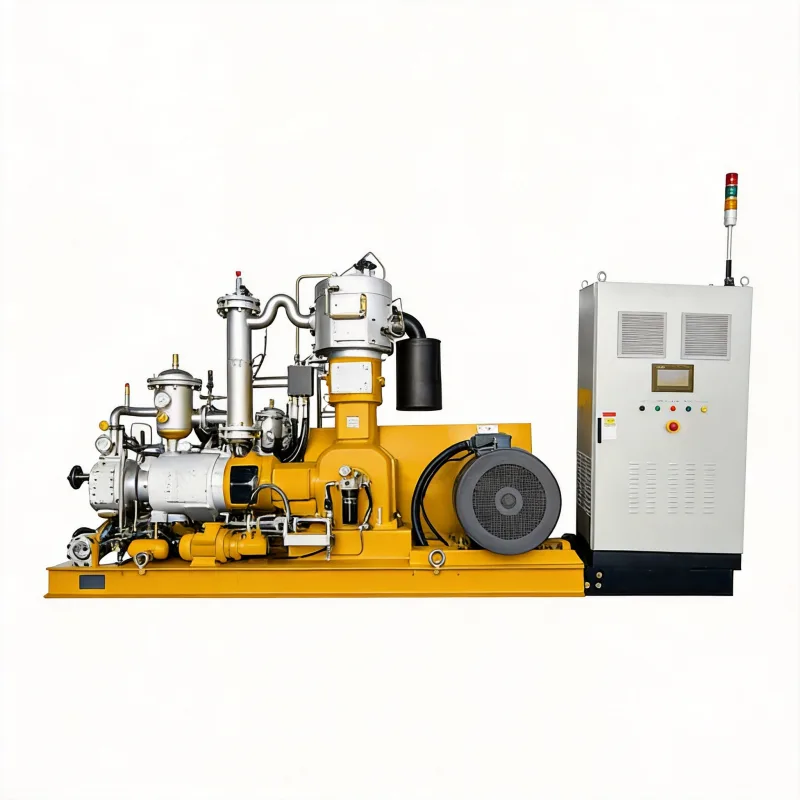
2024 industrial diesel air compressors have higher upfront costs but lower long-term ROI than electric models for most U.S. businesses.
Upfront Pricing: Diesel vs. Electric Compressors in 2024
The first point of comparison for most businesses is upfront purchase cost, and 2024 data shows a clear gap between the two models. According to the 2024 U.S. Industrial Equipment Cost Report, a 100 HP industrial diesel air compressor costs $35,000–$42,000 on average. By contrast, a comparable 100 HP electric air compressor ranges from $29,000–$35,000, marking a 15–20% lower upfront investment for electric units. Diesel models’ higher upfront costs stem from integrated fuel tanks, heavy-duty engines, and emissions control systems required to meet EPA Tier 4 standards. Portable diesel compressors, popular for remote construction sites, carry an even wider gap: a 30 HP portable diesel unit costs $18,000–$22,000, vs. $12,000–$16,000 for a portable electric model.
Operating Costs: The Long-Term Financial Impact
While diesel compressors have higher upfront prices, operating costs are where electric models pull ahead dramatically in 2024. The U.S. Energy Information Administration (EIA) reports that industrial grid electricity averaged $0.085 per kWh in Q1 2024, down 5% from 2023 due to increased renewable energy capacity. For a 100 HP compressor running 2,000 hours annually, electric operating costs total $12,750 per year, based on a 90% motor efficiency rate. Diesel fuel, by comparison, averaged $3.20 per gallon in Q1 2024 (EIA data), leading to annual fuel costs of $21,333 for a 100 HP diesel compressor with 40% fuel efficiency. When including oil changes, filter replacements, and engine maintenance, diesel annual operating costs jump to $24,500, vs. $14,200 for electric models (including motor inspections and filter changes). This translates to a 42% lower annual operating cost for electric compressors in 2024.
Emissions Compliance Costs: A Hidden Diesel Expense
U.S. EPA Tier 4 emissions standards add another layer of cost for diesel compressor owners. Tier 4-compliant diesel engines require regular diesel exhaust fluid (DEF) refills, which cost $2.50–$3.00 per gallon. A 100 HP diesel compressor uses roughly 1,200 gallons of DEF annually, adding $3,000–$3,600 to annual operating expenses. Electric compressors have no emissions-related costs, eliminating this ongoing financial and administrative burden for businesses.
Total Cost of Ownership (TCO): 5-Year ROI Analysis
To fully compare value, businesses must calculate TCO over a typical 5-year ownership period. For a 100 HP compressor, the 5-year TCO for a diesel model is $157,500: $38,500 upfront + ($24,500 x 5) in operating costs. The 5-year TCO for a comparable electric model is $100,500: $32,500 upfront + ($14,200 x 5) in operating costs. This means electric models deliver a 36% lower TCO over 5 years, with an ROI timeline of 2.3 years, vs. 3.7 years for diesel models. However, for businesses operating in remote areas without grid access, diesel compressors remain the only viable option, despite higher long-term costs. A 2024 survey by the Air Compressor and Gas Institute found that 68% of remote construction companies still rely on diesel compressors due to lack of electric infrastructure.
Resale Value: A Final Consideration
Resale value adds another dimension to the pricing comparison for businesses that upgrade equipment regularly. According to EquipmentTrader’s 2024 Industrial Equipment Resale Report, 5-year-old diesel compressors retain 35–40% of their original value. Electric compressors, by contrast, retain 45–50% of their original value, due to longer motor lifespans and lower wear and tear. This higher resale value reduces the net cost of ownership for electric models even further, making them a more financially sound choice for most indoor or grid-connected operations.