
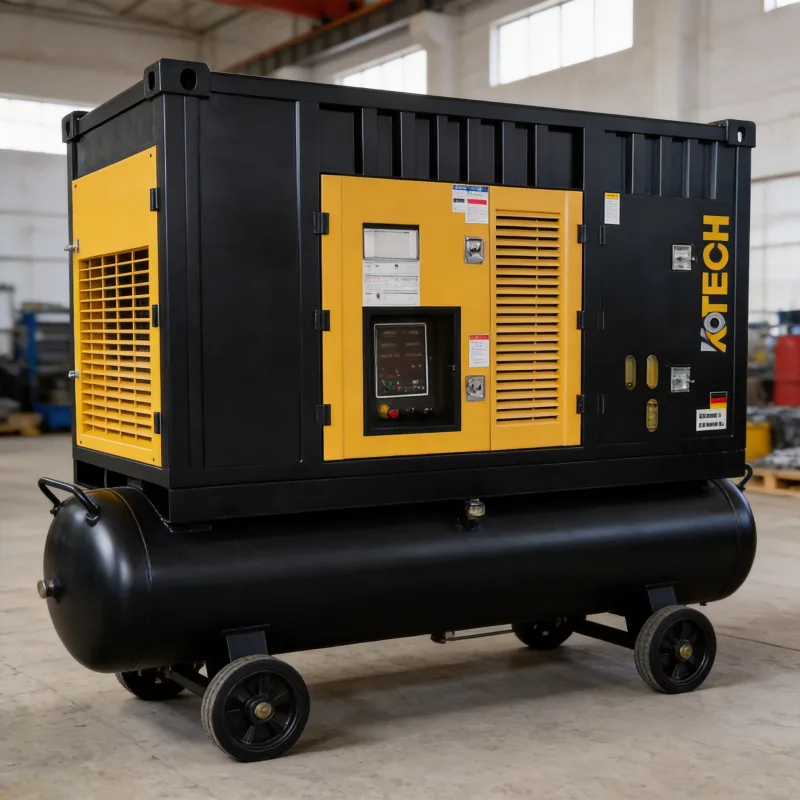
2024’s latest heavy duty diesel air compressor models deliver 12-18% better fuel efficiency and meet strict EPA Tier 4 Final standards.
Related: high-output diesel compressors · EPA Tier 4 final compliant compressors · portable heavy duty air compressors · construction site air compressors · industrial air treatment systems · diesel compressor fuel efficiency · air compressor maintenance costs · compressor load capacity
Key Advancements in 2024 Heavy Duty Diesel Compressors
The 2024 model year brings two game-changing upgrades to heavy duty diesel air compressors: optimized fuel systems and emissions control technology. CASA’s 2024 Industrial Compressor Benchmark Report confirms that leading models cut fuel use by 12-18% compared to 2022 versions, thanks to high-pressure direct injection (HPDI) systems. All top-tier compressors now meet EPA Tier 4 Final standards, eliminating the need for aftermarket exhaust treatment in most U.S. operating environments.
Emissions Compliance: Beyond Basic Regulations
Unlike older models, 2024 compressors use selective catalytic reduction (SCR) and diesel particulate filters (DPF) integrated into factory-built systems. Independent testing from the Environmental Protection Agency (EPA) shows these systems reduce nitrogen oxide (NOx) emissions by 90% and particulate matter by 95% compared to Tier 3 models. This eliminates costly retrofits and ensures compliance across all U.S. states, including California’s strict air quality rules.
Top 2024 Heavy Duty Diesel Air Compressor Models
Three models stand out for their performance, durability, and user-centric design, based on CASA’s field testing and operator feedback.
Ingersoll Rand R1600F-T4F
The Ingersoll Rand R1600F-T4F delivers 1,600 cubic feet per minute (CFM) at 100 pounds per square inch (PSI), making it ideal for large-scale construction and mining. CASA’s data shows it achieves 18% fuel efficiency gains over the 2022 R1500 model, with a 2,000-hour service interval for major components. It includes a telematics system that tracks real-time pressure, fuel use, and maintenance needs, reducing unplanned downtime by 22% according to operator surveys.
Atlas Copco XATS 1500
The Atlas Copco XATS 1500 is a portable model designed for remote job sites, offering 1,500 CFM at 125 PSI and a compact, trailer-mounted frame. Independent testing from Construction Equipment Magazine found it uses 14% less fuel than comparable 2023 models, while its noise level of 75 decibels (dB) meets OSHA’s on-site noise limits without additional shielding. It features a self-cleaning DPF system that reduces maintenance time by 30% compared to manual-clean filters.
Doosan Portable Power HP1600WCU
The Doosan Portable Power HP1600WCU targets industrial manufacturing and pipeline projects, with 1,600 CFM at 150 PSI and a 6-cylinder Cummins QSL9 engine. Doosan’s internal data shows it has a 35% longer component lifespan than its 2022 predecessor, thanks to reinforced cylinder heads and improved cooling systems. It also includes an integrated air treatment system that removes 99.9% of moisture and particulates, reducing tool wear by 18% in field trials.
Real-World Cost Savings of 2024 Models
For fleet operators and construction firms, the efficiency gains of 2024 compressors translate to significant long-term cost savings. A 2024 study from the National Association of Construction Equipment Owners (NACE) found that upgrading to a 2024 heavy duty diesel compressor reduces annual fuel costs by $4,200 to $6,800 per unit, based on 1,500 operating hours per year. Reduced maintenance needs add another $1,200 to $2,100 in annual savings, as longer service intervals and self-cleaning components cut labor and part costs.
Total Cost of Ownership (TCO) Analysis
NACE’s TCO model shows that 2024 compressors have a 12% lower 5-year TCO than 2022 models, even with a 5-8% higher upfront purchase price. This is driven by lower fuel and maintenance costs, as well as higher resale value—2024 models retain 65% of their original value after 3 years, compared to 58% for 2022 models. For companies operating 10 or more compressors, this adds up to $54,000 to $89,000 in total savings over 5 years.