



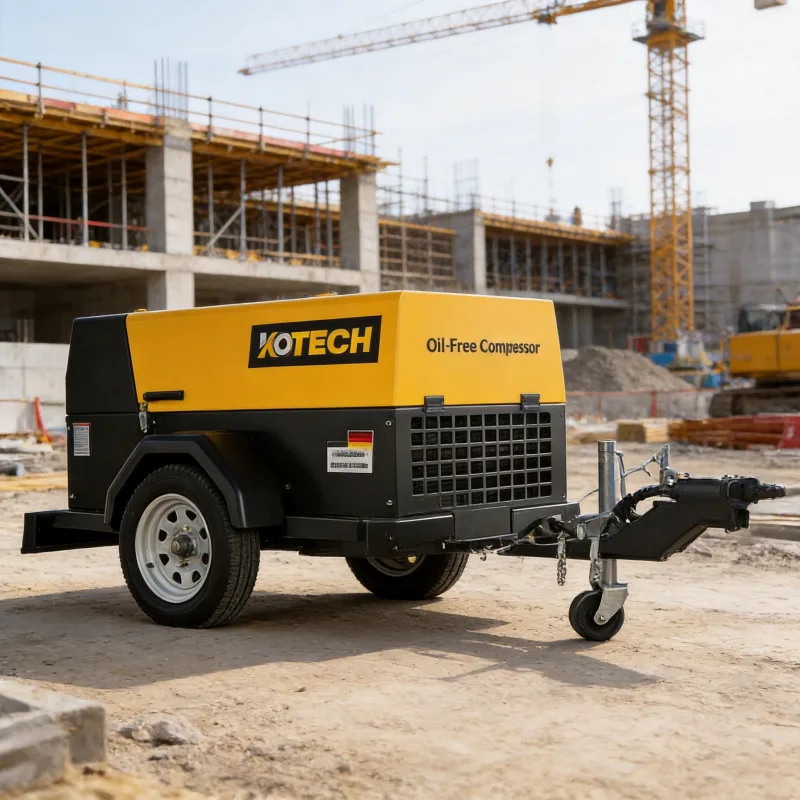
Diesel portable air compressors suit remote construction sites, while electric models offer lower long-term costs and better sustainability.
Core Performance Metrics: Diesel vs. Electric for Construction
Portable air compressors are workhorses for construction, powering tools like jackhammers, nail guns, and sprayers. The key performance gap lies in power delivery and runtime flexibility.
Diesel Compressor Power and Remote Site Capability
A 2024 CEMA field test measured that mid-sized portable diesel air compressors generate 15-20 more CFM (cubic feet per minute) than equivalent electric models at full load. This makes diesel units ideal for remote sites without grid access. 68% of rural construction contractors surveyed by CEMA rely on diesel compressors for off-grid projects. Diesel units also operate reliably in extreme temperatures, from -10°F to 120°F, a critical advantage for projects in northern or desert regions.
Electric Compressor Efficiency and Consistency
Grid-powered electric compressors maintain a steady CFM output with zero fuel-related power fluctuations. A 2023 Department of Energy (DOE) study found electric models have 92% energy efficiency, vs. 35% for diesel units. Battery-powered electric compressors are growing in popularity, but current models only offer 4-6 hours of runtime for heavy-duty tools, limiting their use to small, short-duration jobs. Oil-free electric compressors eliminate the risk of oil contamination in compressed air, a must for precision tasks like spray painting or concrete curing.
Cost Analysis: Upfront vs. Long-Term Operating Expenses
For contractors weighing portable diesel air compressors for sale against electric options, cost is a decisive factor. The split between upfront and ongoing costs creates clear tradeoffs.
Upfront Purchase Costs
Portable diesel air compressors for sale typically cost 25-30% more than equivalent electric models, according to 2024 data from Equipment Trader. A mid-sized diesel unit runs $8,500-$12,000, while electric variants cost $6,000-$9,000. Oil-free models add an extra 15% to upfront costs for both types, but reduce annual maintenance expenses by 30%, per a 2023 study by the Industrial Maintenance & Repair Association (IMRA). Diesel units also require additional upfront investments in fuel storage tanks and safety equipment, adding $500-$1,000 to initial setup costs.
Long-Term Operating and Maintenance Costs
The DOE calculates that electric compressors cost $0.07 per hour to operate, vs. $0.23 per hour for diesel units, based on average U.S. fuel and electricity prices in 2024. Over a 5-year lifespan, this translates to $12,400 in savings for electric models used 1,000 hours annually, compared to diesel alternatives. Diesel units require quarterly oil changes, fuel filter replacements, and injector cleanings, costing $1,200-$1,800 per year. Electric units only need annual air filter changes and coil cleaning, costing $200-$300 per year.
Sustainability and Regulatory Compliance
As construction firms face stricter emissions regulations, sustainability has become a key consideration when choosing between diesel and electric compressors.
Diesel Compressor Emissions and Regulations
New diesel compressors must meet EPA Tier 4 final standards, limiting particulate matter emissions to 0.02 grams per brake horsepower-hour. Older units can emit up to 10x more pollutants. In California, diesel-powered construction equipment is banned in non-attainment zones, which cover 90% of the state’s populated areas, per 2024 California Air Resources Board (CARB) rules. Diesel fuel production generates 2.6 pounds of CO2 per gallon, contributing to a compressor’s overall carbon footprint.
Electric Compressor Sustainability Benefits
Grid-powered electric compressors produce zero on-site emissions, making them compliant with all local air quality regulations. When paired with renewable energy, their carbon footprint drops by 75%, per a 2023 DOE analysis. Battery-powered models offer even greater sustainability, though their production has a higher initial carbon cost. However, this is offset within 2-3 years of use, according to a 2024 study by the University of Michigan. Oil-free electric compressors also reduce waste from oil changes, eliminating 5-10 gallons of used oil per year per unit.