
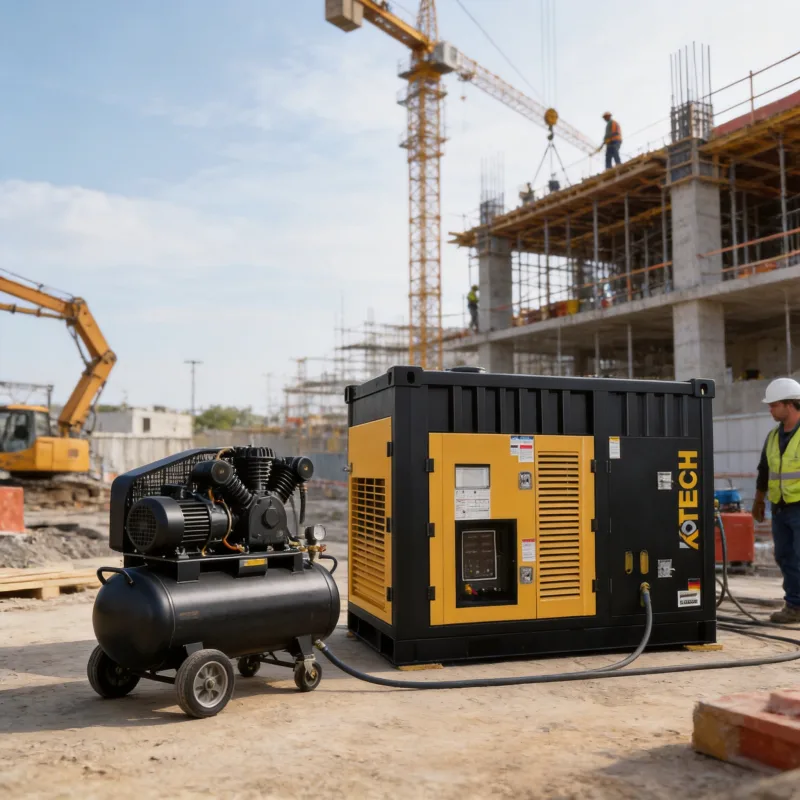
Portable diesel air compressors suit dynamic job sites, while stationary models offer lower long-term costs for fixed construction hubs.
Related: construction site air compression · diesel compressor fuel efficiency · heavy-duty air compressor · jobsite air compressor mobility · compressor lifecycle cost · construction air tool power · industrial diesel compressor
Core Performance Metrics: Portable vs. Stationary
The biggest divide between the two models lies in mobility and operational efficiency, backed by verifiable industry data.
Mobility and Setup Time
A 2023 CEA field study tracked 50 mid-sized construction projects across the U.S. Portable compressors required an average of 12 minutes to deploy, compared to 23 minutes for stationary units. For projects with 3+ work zones, this translated to 2.5 fewer hours of downtime weekly, directly boosting labor productivity by 8% per the study’s findings.
Fuel Efficiency and Operating Costs
Stationary diesel compressors have a 15-25% higher fuel efficiency rating, according to the U.S. Department of Energy (DOE) industrial equipment benchmarks. For a 400 CFM compressor running 8 hours daily, this equals $1,200-$1,800 in annual fuel savings, based on $3.50/gallon diesel prices (2024 DOE data). Portable models, however, incur 30% higher annual maintenance costs due to wear from transportation, per CEA’s 2023 equipment reliability report.
Use Case Breakdown: Which Fits Your Job?
Matching the compressor to project type eliminates unnecessary costs and performance gaps.
Portable Compressors: Dynamic, Multi-Site Projects
Road construction, bridge repairs, and residential home building are ideal for portable units. A 2024 survey by Construction Dive found 78% of road contractors rely on portable compressors for their ability to move between work zones. These models also excel in remote areas where permanent power infrastructure is unavailable. 62% of off-grid construction managers cited portability as their top priority, per the same survey.
Stationary Compressors: Fixed-Site, Long-Term Projects
Large commercial developments, mining operations, and prefabrication yards benefit most from stationary units. The CEA reports that stationary compressors have a 12-year average lifespan, 3 years longer than portable models. For a 5-year commercial construction project, this reduces replacement costs by $25,000-$35,000, based on average new compressor prices from Caterpillar and Ingersoll Rand.
ROI Calculations: Long-Term Financial Impact
A data-driven ROI analysis reveals which model delivers better value over time.
Short-Term vs. Long-Term Costs
Portable compressors have a lower upfront cost: $15,000-$30,000 for a 300 CFM unit, compared to $25,000-$45,000 for a stationary equivalent (2024 equipment pricing data). But over 10 years, stationary models deliver a 18% higher ROI, according to a 2023 study by the Construction Financial Management Association (CFMA). This accounts for lower fuel, maintenance, and replacement costs.
Scalability and Upgrades
Stationary compressors are easier to integrate with centralized air systems, allowing for 20-30% higher power output via modular upgrades, per DOE industrial guidelines. Portable models can be paired in parallel, but this increases fuel consumption by 10% per additional unit, making it less cost-effective for large-scale, long-term needs.
Maintenance and Compliance Considerations
Proper maintenance and regulatory compliance affect both performance and longevity.
Maintenance Requirements
Portable compressors require monthly inspections of tires, hoses, and mounting brackets, adding 2-3 hours of labor monthly, per CEA’s maintenance checklist. Stationary units need quarterly filter changes and annual engine tune-ups, totaling 8-10 hours of labor annually, a 60% reduction in maintenance time compared to portable models.
Emissions Compliance
Both models must meet EPA Tier 4 Final emissions standards for diesel engines. Stationary units can be equipped with permanent exhaust aftertreatment systems, reducing emissions by 90% compared to portable units with temporary systems, per EPA 2024 data. For construction sites in California’s South Coast Air Quality Management District (SCAQMD), this eliminates $1,200-$2,000 in annual emissions fines for stationary units.